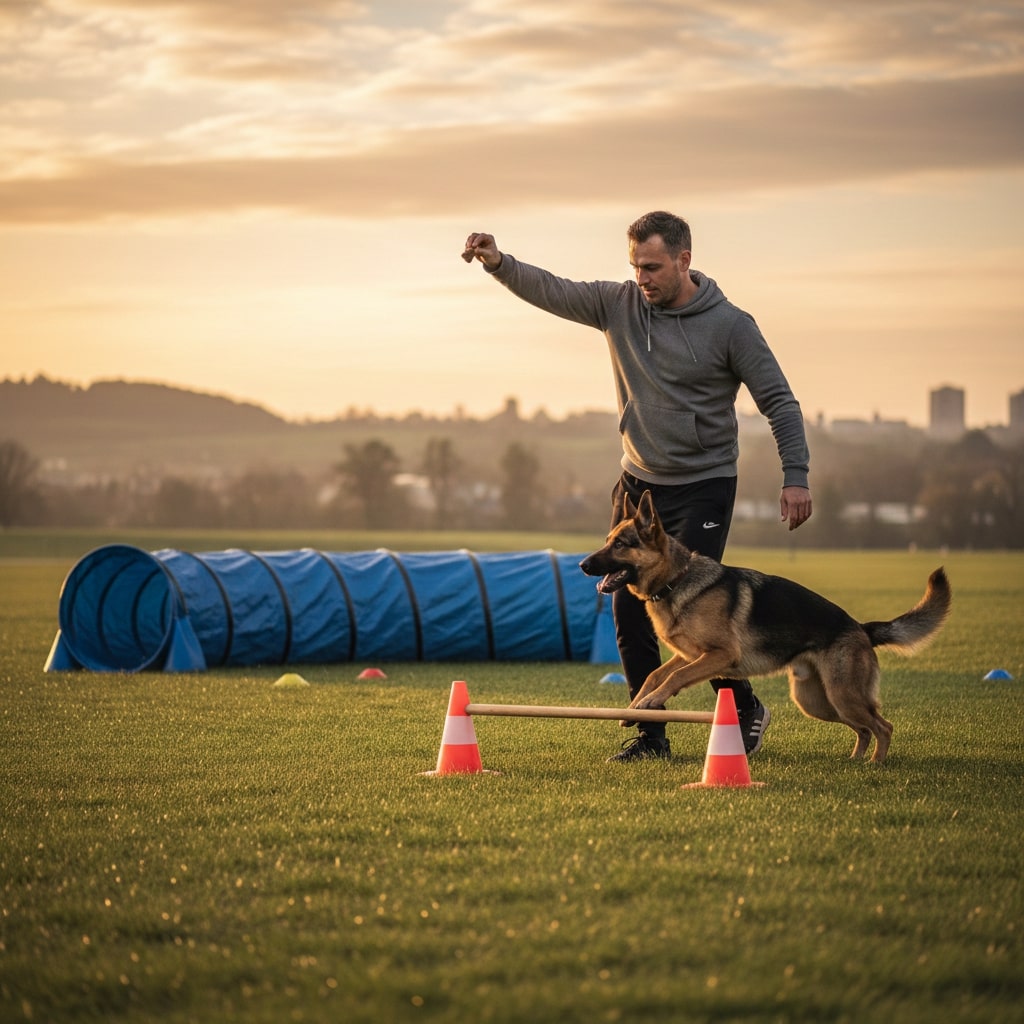
It typically takes 4 to 6 months to train a dog in basic obedience commands (sit, stay, come) and house manners. However, achieving full reliability and off-leash control usually requires 1 to 2 years of consistent practice. Puppies may grasp potty training in weeks, while behavioral modification for issues like anxiety or aggression can take 6 months or longer depending on severity.
Summary Table
| Training Goal | Estimated Timeline | Success Indicators |
| Potty Training | 4 – 6 Months | No accidents for 4+ weeks; signals to go out. |
| Crate Training | 1 – 4 Weeks | Enters willingly; sleeps calmly through the night. |
| Basic Obedience | 6 – 10 Weeks | Reliable sit, stay, down, and recall in quiet areas. |
| Leash Manners | 2 – 4 Months | Public access is reliable; performs specific tasks. |
| Behavior Modification | 6 – 12+ Months | Reduction in triggers; self-regulation improves. |
| Service Dog Work | 18 – 24 Months | Public access reliable; performs specific tasks. |
The Real Truth About Dog Training Timelines
Training is not a linear event with a finish line. It is a developmental process that evolves as your dog matures. While you can “teach” a command in five minutes, “training” that command so the dog performs it anywhere, anytime, takes months of repetition.
Most owners see a “U-shaped” curve in progress. Puppies learn quickly, adolescents (6-18 months) often regress and “forget” training, and mature adults (2+ years) settle into reliable habits.
Read Also:
Factor 1: Age and Developmental Stage
- Puppies (8-16 weeks): This is the critical socialization period. Their brains are like sponges. They learn basic concepts fast but have zero attention span.
- Adolescents (6-18 months): Hormones kick in. A dog that knew “sit” perfectly may suddenly ignore you. This is not a training failure; it is a developmental phase requiring patience.
- Adults/Seniors: Old dogs can learn new tricks, often with better focus than puppies, but they may have ingrained habits that take longer to unlearn.
Read Also: Parasites in Dogs
Factor 2: Breed and Temperament
- Working Breeds (e.g., Border Collies, Shepherds): These dogs are bred to work with humans. They may learn a new command in 5-10 repetitions but require intense mental stimulation to prevent boredom behaviors.
- Independent Breeds (e.g., Hounds, Terriers): These dogs were bred to work alone or at a distance. They may require 40-50 repetitions and higher-value rewards to find “what’s in it for them.”
Factor 3: Training History
A “blank slate” puppy from a reputable breeder often learns faster than a rescue dog with a history of punishment or neglect. If you are untraining a bad habit (counter-conditioning), expect the process to take twice as long as teaching a new behavior from scratch.
Phase 1: The Foundation (Months 1- 3)
During the first few months, your goal is not a perfect “heel” but rather building a communication system and trust.
Potty Training
- Timeline: 4 to 6 months for full reliability.
- Process: Take the puppy out every hour, immediately after naps, eating, or play.
- Pitfall: Thinking the dog is trained after one dry week. Regression is common until the bladder fully develops.
Socialization
- Timeline: Critical window closes around 16 weeks.
- Goal: Positive exposure to 100 new people, sounds, and surfaces.
- Note: This is more important than obedience commands at this stage. A poorly socialized dog will have behavioral issues that take years to fix.
Read Also: Can Dogs Eat French Fries?
Phase 2: Basic Obedience (Months 4–6)
At this stage, you are teaching the core vocabulary. Most professional group classes last 6 to 8 weeks and cover these essentials.
The “Big 5” Commands
- Sit: Usually mastered in 1-2 weeks.
- Down: Can take 2-3 weeks; difficult for small dogs or deep-chested breeds.
- Stay: Starts with 2 seconds, builds to 2 minutes over months.
- Come (Recall): The most critical safety cue. Teaching the concept is fast; proofing it against squirrels takes roughly a year.
- Loose Leash Walking: The hardest skill for most owners. Expect 3-4 months of daily practice before your arm stops being pulled.
The Role of Consistency
If you let the dog pull on the leash on Tuesday but correct them on Wednesday, training will take three times as long. Everyone in the household must use the same cues and rules.
Phase 3: Proofing and Adolescence (Months 6 – 18)
This is where most owners give up. Your dog reaches sexual maturity and becomes more interested in the environment than in your treats.
Distraction Training
You must “proof” commands by practicing in increasingly difficult environments.
- Level 1: Living room (Low distraction).
- Level 2: Backyard (Medium distraction).
- Level 3: Front yard/Quiet park (High distraction).
- Level 4: Busy pet store/Dog park (Extreme distraction).
Moving to a new level too fast causes failure. If your dog fails a command, go back to the previous level.
Phase 4: Advanced or Specialized Training (1 – 2 Years)
For service work, dog sports, or off-leash reliability, training extends well beyond the first year.
Service Dogs
- Timeline: 18 to 24 months minimum.
- Requirement: Service dogs must ignore food on the floor, navigate crowds without sniffing, and perform specific medical or mobility tasks. This requires hundreds of hours of “public access” training.
Canine Good Citizen (CGC)
- Timeline: 6 to 12 months.
- Goal: A 10-step test by the AKC that certifies a dog has good manners in public. It is an excellent milestone for pet owners to aim for.
Read Also: Can Dogs Eat Ice Cream?
How to Speed Up the Process
You cannot force a dog to mature faster, but you can optimize how they learn.
Use High-Value Reinforcement
Dry kibble rarely works outdoors. Use “A-grade” rewards like boiled chicken, cheese, or freeze-dried liver when introducing new concepts or working in distracting areas.
Micro-Sessions
Dogs have short attention spans. Three 5-minute sessions a day are far superior to one 15-minute session.
- Morning: 5 minutes of “Sit/Stay” while waiting for breakfast.
- Noon: 5 minutes of leash walking practice.
- Evening: 5 minutes of trick training or recall games.
Capture Good Behavior
Don’t just train during “sessions.” If your dog lies down calmly while you watch TV, drop a treat between their paws. This “captures” calmness and teaches them that relaxing is rewarding.
When Training Takes Longer: Behavior Modification
If you are dealing with reactivity (barking/lunging), separation anxiety, or resource guarding, the standard timelines do not apply.
- Emotional Change: You are changing how the dog feels, not just what they do. This requires desensitization and counter-conditioning.
- Timeline: Expect 6 to 12 months of daily work to see a significant reduction in triggers.
- Pro Tip: Hire a Certified Professional Dog Trainer (CPDT) or behaviorist. Trying to fix aggression without guidance often makes it worse.
Conclusion
So, how long does it take to train a dog? You will likely have a well-behaved companion by the one-year mark, but the bond and communication you build will continue to deepen for the rest of the dog’s life. Embrace the journey, celebrate the small wins, and remember that regression is just part of the process.