
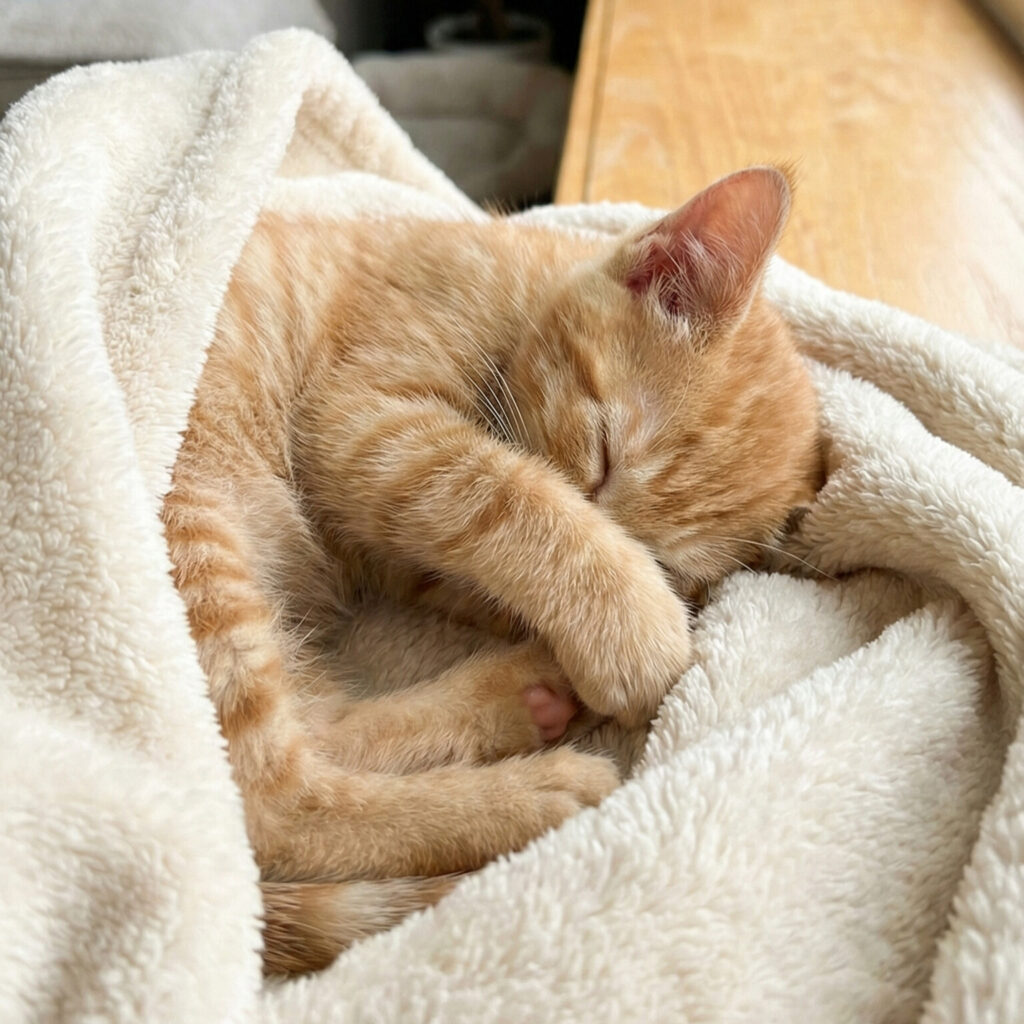
Kittens generally sleep between 18 and 22 hours per day. Newborn kittens sleep almost constantly, waking only to nurse. As they mature into older kittens (around 3 to 6 months), their sleep time decreases slightly but remains high, usually averaging 16 to 20 hours daily. This extensive sleep is essential for their rapid brain and body development.
Summary Table: Kitten Sleep by Age
| Age Stage | Average Daily Sleep | Activity Level | Key Sleep Characteristic |
| Newborn (0–2 weeks) | 22+ hours | Very Low | Only wakes to eat and stay warm. |
| Transitional (2–4 weeks) | 20–22 hours | Low | Starts exploring and crawling. |
| Socialization (5–8 weeks) | 18–20 hours | Medium | Bursts of play followed by crashes. |
| Older Kitten (3–6 months) | 16–18 hours | High | Intense play and deep sleep cycles. |
| Adolescent (6–12 months) | 14–16 hours | High | Establishing adult sleep patterns. |
How Long Do Kittens Sleep Each Day?
New cat owners are often surprised by just how much time their new pet spends sleeping. It is common for first-time owners to worry that their kitten is lethargic or sick because they seem to be asleep more than they are awake. However, sleep is the most important activity for a growing feline.
While an adult cat might sleep 12 to 16 hours a day, a kitten is a growing machine that requires significantly more rest. Understanding why they sleep so much and what is normal for their age will help you raise a healthy and happy cat.
Read Also: When Do Kittens Open Their Eyes?
Why Sleep Is Vital for Growth
Sleep is not just about resting for a kitten. It is an active biological process. When a kitten is awake, they burn huge amounts of energy trying to regulate their body temperature, digest food, and learn how to move their limbs.
The real work happens when they close their eyes. During deep sleep, the pituitary gland releases a specific growth hormone. This hormone is necessary for building strong bones and muscles. If a kitten does not sleep enough, they may not grow at a healthy rate.
Additionally, sleep helps the immune system. A well-rested kitten is better at fighting off infections and viruses. Since young kittens have fragile immune systems, this downtime is a survival mechanism. It keeps them safe, quiet, and hidden from predators while their bodies focus on strengthening their internal systems.
Sleep Patterns by Age
Kitten sleep habits change rapidly during the first year of life. As their brain develops and their senses sharpen, their sleep schedule will shift from constant slumber to a mix of high-energy play and deep naps.
Newborns (0 to 2 Weeks)
At this stage, a kitten is helpless. Their eyes and ear canals are closed. They rely entirely on their mother.
- Duration: They sleep about 90% of the time, often more than 22 hours a day.
- Behavior: You will rarely see them awake. They wake up only to nurse and be groomed by their mother.
- Sleep Type: Much of this is “active sleep” or REM sleep. You might see their bodies twitch or their mouths move. This is normal and shows their nervous system is developing.
The Transitional Stage (2 to 4 Weeks)
Their eyes begin to open, and their ears perk up. The world becomes a bigger place, but they still tire very easily.
- Duration: Sleep drops slightly to around 20 to 22 hours a day.
- Behavior: They start to crawl and may interact briefly with littermates. These interactions are exhausting for them.
- Sleep Type: They begin to experience deeper, quieter sleep periods. They settle into a cycle of waking, eating, eliminating, and going right back to sleep.
The Socialization Stage (5 to 8 Weeks)
This is when kittens become fun and interactive. They are learning to walk, run, and pounce.
- Duration: They sleep roughly 18 to 20 hours a day.
- Behavior: You will notice a “burst and crash” pattern. The kitten will have 20 minutes of intense energy where they run around wildly. Then, they will suddenly stop and fall asleep exactly where they are.
- Sleep Type: They are becoming more independent and may start sleeping away from their mother or siblings for short periods.
Older Kittens (3 to 6 Months)
The kitten now looks like a miniature cat. They are extremely active and curious.
- Duration: Sleep averages 16 to 18 hours a day.
- Behavior: This is the age of exploration. They spend more time awake investigating their environment.
- Sleep Type: They start to adopt the sleeping positions of adult cats. They might seek out sunbeams or high perches for their naps.
Adolescence (6 Months to 1 Year)
The kitten is reaching their full size. Their sleep patterns now closely resemble those of an adult cat.
- Duration: They sleep about 14 to 16 hours a day.
- Behavior: They are awake for longer stretches. They settle into a routine based on the household schedule.
- Sleep Type: They are fully crepuscular now, meaning they are most active at dawn and dusk.
Understanding the “Kitten Twitch”
One of the most common questions new owners ask involves twitching. You might look at your sleeping kitten and see their paws paddling, their ears flicking, or their whiskers trembling. Some owners worry this is a seizure or a sign of distress.
In almost all cases, this is Activated Sleep or REM (Rapid Eye Movement) sleep.
During REM sleep, the kitten’s brain is highly active. This is the phase where dreaming occurs. For a kitten, this brain activity is crucial. It acts as a workout for their nervous system. It helps form the neural pathways necessary for coordination and balance.
You should not wake a kitten during this phase. Waking them up can interrupt this vital brain development. If the twitching is accompanied by other symptoms like foaming at the mouth or rigid stiffness, that is a medical emergency. However, soft twitching and paddling are healthy signs of a dreaming kitten.
Read Also: How Kittens Learn Social Skills
The Crepuscular Instinct
You might notice that your kitten sleeps soundly while you are working during the day but decides to attack your toes at 4:00 AM. This is not because they are nocturnal. It is because cats are crepuscular.
Biology dictates that cats are most active during the twilight hours of dawn and dusk. In the wild, this is when their prey (like mice and birds) is most active. Even though your kitten is a pampered house pet, they still have these hunting instincts hardwired into their DNA.
This instinct explains the “zoomies.” You might see your kitten sprint across the house for no apparent reason early in the morning or right as the sun goes down. This is a release of pent-up energy during their peak biological waking hours.
Tips for Managing Early Morning Wake-Ups:
- Play before bed: distinct interactive play sessions right before you sleep can help tire them out.
- Feed late: A small meal right before bed triggers digestion, which induces sleepiness.
- Ignore them: If you get up to feed or play with them at 4:00 AM, you are training them to wake you up.
Is My Kitten Sleeping Too Much?
While 20 hours of sleep is normal, there is a difference between a sleepy kitten and a lethargic sick kitten. Since kittens are fragile, you need to know the signs of illness.
A healthy sleeping kitten is recharging. When they wake up, they should be bright, alert, and ready to eat or play. A sick kitten will be different.
Signs of Potential Illness
- Difficulty Waking Up: If you cannot easily wake the kitten, or if they wake up but seem confused and groggy, this is a red flag.
- Limpness: When you pick them up, their body should have some tone. If they feel completely limp or like a ragdoll, they need a vet.
- Loss of Appetite: A healthy kitten never turns down food. If they sleep through meal times and refuse to eat when woken, something is wrong.
- Pale Gums: Check their gums. They should be bubblegum pink. If they are pale or white, the kitten might have anemia (often caused by fleas) or low blood sugar.
Hypoglycemia Warning
Young kittens cannot store much energy. If they go too long without eating, their blood sugar drops. This condition is called hypoglycemia. It can cause them to become unresponsive and comatose.
If a young kitten is sleeping unusually long and feels cold to the touch, rub some maple syrup or corn syrup on their gums and call a veterinarian immediately.
Read Also: How to Stop Cats From Waking You at Night
Creating the Perfect Sleep Environment
Since your kitten spends up to 22 hours a day sleeping, the quality of that sleep matters. You can help them grow and feel secure by providing the right environment.
Safety First
Kittens will fall asleep anywhere. This includes dangerous places like inside the dryer, behind reclining chairs, or under warm car hoods. Always check these areas. Create safe zones so they do not feel the need to hide in dangerous spots.
Warmth is Key
Newborn kittens cannot regulate their own body temperature. They rely on their mother or pile up with siblings to stay warm. If you have a solo kitten, you must provide a heat source.
A heating pad set to low, wrapped in a thick towel, works well. Be sure the kitten can crawl off the heat source if they get too warm.
The “High Up” Factor
As kittens reach the 8-week mark, they start seeking height. Being high up gives them a vantage point to see predators (or the family dog). Cat trees or window hammocks are excellent for older kittens. It gives them a sense of security which leads to deeper, more restful sleep.
Quiet Zones
Kittens need deep sleep to grow. If their bed is in the middle of a loud living room with TV noise and kids running around, they will only get light sleep. Place a bed in a quiet corner or a spare room where they can retreat when they are truly exhausted.
Summary of Key Takeaways
Raising a kitten involves a lot of watching them sleep. It is a peaceful and adorable part of pet ownership.
- Expect 18 to 22 hours of sleep daily for young kittens.
- Do not worry about twitching during sleep; it is normal brain development.
- Be aware of crepuscular habits; they will be most active at dawn and dusk.
- Monitor for lethargy; if they won’t eat or cannot stand up, see a vet.
- Provide warmth and security; kittens need a safe place to recharge.
By respecting their need for rest, you are directly contributing to their physical size, immune health, and brain function. Let them sleep now so they can have the energy to play with you later.