
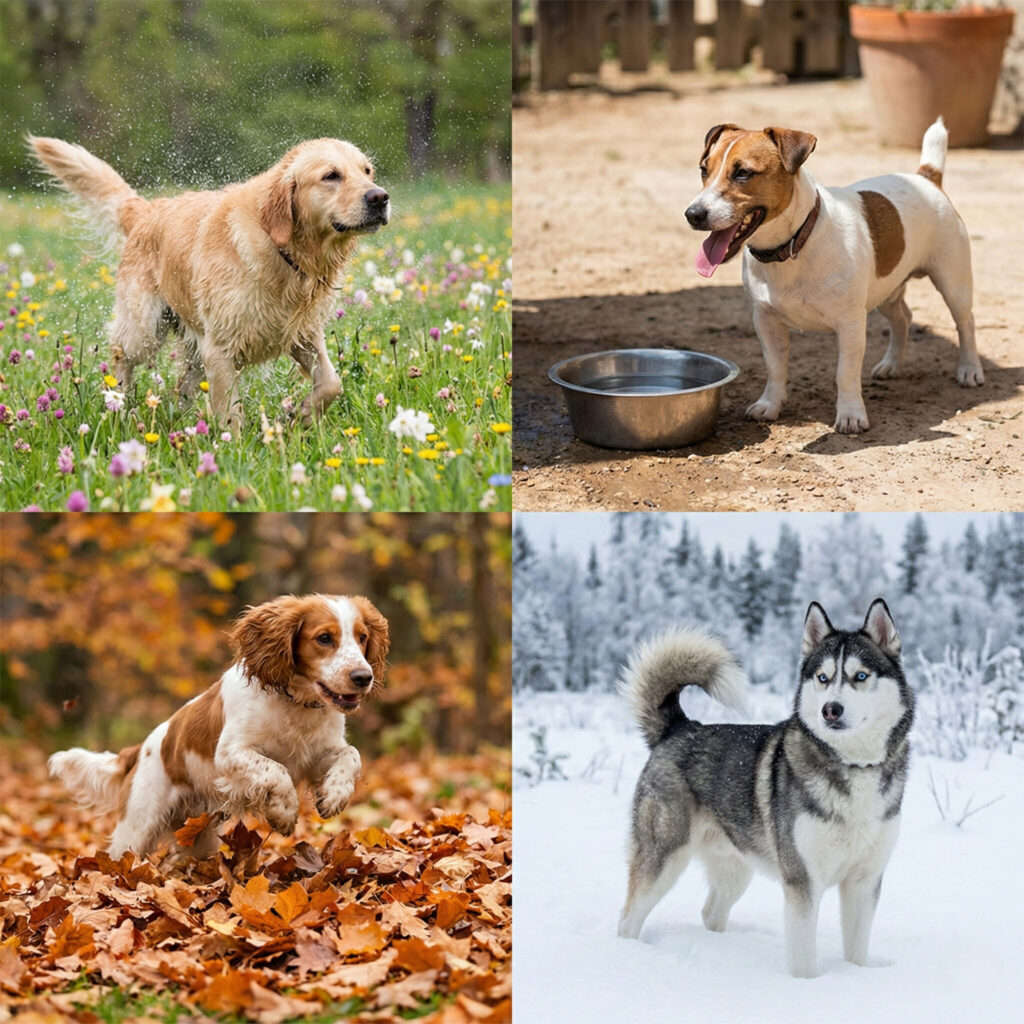
Dogs handle seasonal changes through a combination of biological adjustments and behavioral shifts. Biologically, their coats adapt by shedding in spring and thickening in fall to regulate body temperature. Behaviorally, their energy levels and appetites often fluctuate with the weather; they may be more active in mild seasons and seek shelter during extreme heat or cold. Dogs rely heavily on their owners to recognize these changes and provide appropriate care, such as grooming, temperature-appropriate shelter, hydration, and adjusted exercise routines, to navigate each season safely and comfortably.
Summary Table
| Season | Key Biological & Behavioral Changes | Important Care Tips for Owners |
| Spring | Increased shedding of winter coat. Potential for seasonal allergies. Higher energy levels due to milder weather. | Brush frequently to manage shedding. Monitor for allergy signs like itching or sneezing. Gradually increase outdoor exercise. Ensure flea and tick prevention is current. |
| Summer | Risk of overheating and heatstroke. Increased thirst and panting. Tendency to seek shade and cooler surfaces. | Provide constant access to fresh, cool water. Avoid strenuous exercise during midday heat. Never leave a dog in a parked car. Protect paws from hot pavement. |
| Fall | Increased shedding of the winter coat. Potential for seasonal allergies. Higher energy levels due to milder weather. | Continue regular grooming. Monitor food intake and weight. Use reflective gear for walks in low light. Watch out for autumn hazards like moldy leaf piles. |
| Winter | Seeking warmth and shelter. Potential for dry, cracked paws from cold and salt. Reduced outdoor activity levels. | Provide warm indoor bedding. Consider coats for short-haired breeds. Protect paws with balm or booties and wipe them after walks to remove de-icing salts. Offer indoor mental enrichment games. |
How Dogs Handle Seasonal Changes: A Year-Round Guide
Dogs are incredibly adaptable animals, capable of living in various climates around the world. However, the transition from one season to another brings about significant changes in their bodies and behaviors. Just as humans adjust their wardrobes and activities based on the weather, dogs experience their own set of shifts.
Understanding how dogs handle seasonal changes is essential for any pet owner who wants to keep their furry companion healthy, comfortable, and happy throughout the entire year.
This comprehensive guide will explore what to expect during each season and provide practical tips on how to best support your dog through these natural transitions.
Spring: The Season of Renewal and Shedding
Spring is characterized by warming temperatures, longer days, and a burst of new life. For dogs, this season often signals a period of renewal and increased activity after the deeper rest of winter. The most noticeable change for many dog owners during spring is shedding.
Dealing with the Spring Shed
As the weather warms up, dogs that have grown thick winter coats need to shed that excess fur to prevent overheating. This natural process, often called “blowing coat,” can result in a significant amount of loose hair around your home.
The amount of shedding varies greatly by breed, with double-coated breeds like German Shepherds, Huskies, and Golden Retrievers shedding the most profusely.
To manage spring shedding, daily brushing is highly recommended. Using tools like an undercoat rake or a deshedding tool can help remove loose fur effectively before it ends up on your furniture and clothes.
Regular baths can also help loosen dead hair, but be sure to use a dog-specific shampoo to avoid drying out their skin.
Seasonal Allergies in Dogs
Just like humans, dogs can suffer from seasonal allergies that flare up in the spring. The air becomes filled with pollen from trees, grasses, and weeds, which can trigger allergic reactions in sensitive dogs.
Unlike humans who typically get runny noses and watery eyes, seasonal allergies in dogs most commonly manifest as skin irritation.
Signs of allergies in dogs include excessive scratching, licking of paws, rubbing their face on carpets or furniture, and inflamed or red skin. In some cases, you might notice sneezing or watery eyes, but skin issues are primary.
If you suspect your dog has seasonal allergies, consult your veterinarian. They can recommend appropriate treatments, such as antihistamines, medicated shampoos, or other allergy management strategies to provide relief.
Ramping Up Activity Safely
The pleasant spring weather often leads to increased energy levels in dogs. They may be more eager to go for long walks, play fetch, and explore outdoors.
While this is great for their physical and mental health, it’s important to increase their activity level gradually, especially if they have been relatively sedentary during the winter months. Sudden, intense exercise can lead to muscle strains or joint injuries.
Spring also means the re-emergence of external parasites like ticks and fleas, as well as mosquitoes that carry heartworm disease. Ensure your dog is up-to-date on all their parasite prevention medications before spending more time outdoors.
Summer: Managing Heat and Staying Hydrated
Summer brings sunshine and fun, but high temperatures and intense sun pose significant risks for dogs. Dogs do not have the same cooling mechanisms as humans; they cannot sweat through their skin to cool down.
Their primary method of thermoregulation is panting, and to a lesser extent, sweating through their paw pads. This makes them much more susceptible to overheating and heatstroke.
The Importance of Hydration
Keeping your dog well-hydrated is paramount during the summer months. Always ensure your dog has unlimited access to clean, cool water both indoors and outdoors. If you are outside with your dog, bring a portable water bottle and a collapsible bowl.
Encourage them to drink frequently, especially during and after any activity. Adding ice cubes to their water bowl at home can help keep it cool and appealing.
Read Also: Best Routine for Busy Dog Owners
Preventing Heatstroke
Heatstroke is a medical emergency that can be fatal. It occurs when a dog’s body temperature rises dangerously high, and they are unable to cool themselves down. It is crucial to avoid strenuous exercise during the hottest parts of the day, typically between 10 a.m. and 4 p.m. Plan walks for early mornings or late evenings when temperatures are lower.
Watch closely for signs of heatstroke, which include excessive panting that doesn’t stop, drooling, lethargy, bright red gums and tongue, vomiting, diarrhea, and uncoordinated movement.
If you observe any of these signs, immediately move your dog to a cool, shaded area, offer small amounts of tepid water, and contact a veterinarian right away.
Never leave your dog alone in a parked car, even on mildly warm days, and even with the windows cracked. The inside of a car can act like a greenhouse, with temperatures skyrocketing to lethal levels within minutes.
Sun Protection for Dogs
Dogs can get sunburned, particularly on areas with thin hair or no pigment, such as the nose, ears, and belly. White or light-colored dogs are at higher risk. You can apply pet-safe sunscreen to these vulnerable areas if your dog will be spending time in direct sunlight. Consult your vet for product recommendations.
Also, be mindful of hot surfaces. Asphalt, concrete, and sand can absorb an immense amount of heat from the sun and become hot enough to burn your dog’s paw pads.
A simple test is to place the back of your hand on the pavement for seven seconds. If it’s too hot for your hand, it’s too hot for your dog to walk on. Stick to grassy areas or walk during cooler times of the day.
Fall: Preparing for Cooler Weather
As summer fades into autumn, temperatures begin to drop, and daylight hours become shorter. Your dog’s body will start to respond to these environmental cues to prepare for the upcoming winter.
Changes in Coat and Appetite
In response to cooler temperatures, many dogs will begin to grow a thicker undercoat to provide better insulation.
You might notice an increase in shedding again during early to mid-fall as their summer coat is replaced by heavier winter fur. Regular brushing continues to be important to manage this transition.
Some dogs may also experience an increase in appetite during the fall. Their bodies may require more calories to generate body heat and maintain their temperature in cooler weather.
Monitor their weight and body condition closely. If they seem hungrier but are maintaining a healthy weight, a slight increase in food might be appropriate.
However, always consult your veterinarian before making significant changes to their diet to prevent unhealthy weight gain.
Autumn Hazards to Watch For
Fall presents its own unique set of hazards. Piles of fallen leaves can be tempting for dogs to play in, but they can harbor moisture, which promotes the growth of mold and bacteria. Ingesting moldy leaves can make your dog sick. Leaf piles can also hide pests like ticks, which remain active well into the fall until hard frosts occur.
Be cautious of certain plants that are prevalent in autumn. Autumn crocus and chrysanthemums can be toxic to dogs if ingested.
Mushrooms also tend to pop up more frequently in damp fall weather, and many varieties are poisonous. It is best to prevent your dog from eating any wild mushrooms.
Visibility During Shorter Days
With the sun setting earlier, your evening walks will likely take place in twilight or darkness. To ensure safety, it is important to make both yourself and your dog visible to drivers and other pedestrians.
Invest in reflective gear for your dog, such as a reflective collar, leash, or a safety vest. You can also attach a small blinking light to their collar for added visibility.
Winter: Staying Warm and Safe in the Cold
Winter brings cold temperatures, snow, ice, and biting winds. While some dog breeds, like Siberian Huskies and Alaskan Malamutes, are built for cold weather and thrive in it, many others require extra care and protection to stay safe and comfortable.
Cold Weather Safety Precautions
The general rule of thumb is that if it’s too cold for you to stand outside without a coat, it’s likely too cold for your dog to be outside for extended periods. Small dogs, short-haired breeds, puppies, and senior dogs are more susceptible to the cold. For these dogs, a well-fitting sweater or coat can provide much-needed insulation during walks.
When your dog is outside in cold weather, monitor them closely for signs of being too cold. Shivering, whining, anxious behavior, slowing down, or lifting their paws off the ground are all indications that it’s time to bring them inside to warm up. Limit the duration of outdoor walks during extreme cold spells.
Just as cars can get dangerously hot in summer, they can become like refrigerators in winter, holding in the cold. Avoid leaving your dog unattended in a vehicle during cold weather.
Essential Paw Care
Winter can be particularly harsh on a dog’s paws. Snow and ice can accumulate between their paw pads, forming uncomfortable ice balls. Furthermore, the salt and de-icing chemicals used on roads and sidewalks can cause dryness, cracking, and chemical burns on paw pads.
To protect their paws, you can apply a paw wax or balm before going outside to create a barrier. Dog booties are another excellent option that provides complete protection from cold surfaces, sharp ice, and harmful chemicals.
After every walk, make it a habit to wipe your dog’s paws thoroughly with a damp cloth and dry them well to remove any salt or chemicals they may have stepped in. Keeping the hair between their pads trimmed short can also help prevent ice accumulation.
Indoor Enrichment Activities
When outdoor conditions are too severe for long walks or play sessions, it’s important to provide your dog with mental stimulation indoors to prevent boredom and destructive behaviors.
Engage their minds with puzzle toys that require them to work for treats. Teach them new tricks or commands.
Play indoor games like hide-and-seek with toys or treats, or set up a small indoor obstacle course. These activities can help burn off energy and keep them content when stuck inside.
Conclusion
Dogs are remarkably resilient creatures, but the changing seasons do have a tangible impact on their physiology and behavior. By understanding the biological processes like shedding and coat changes, and being aware of the specific risks associated with each season, from summer heatstroke to winter frostbite, you can take proactive steps to ensure your dog’s well-being year-round.
Regular veterinary check-ups, consistent grooming adapted to the season, and keen observation of your dog’s individual needs are key to helping them navigate seasonal shifts successfully.
With a little extra care and attention to the changing environment, you can help your canine companion stay healthy, comfortable, and happy through spring, summer, fall, and winter.