
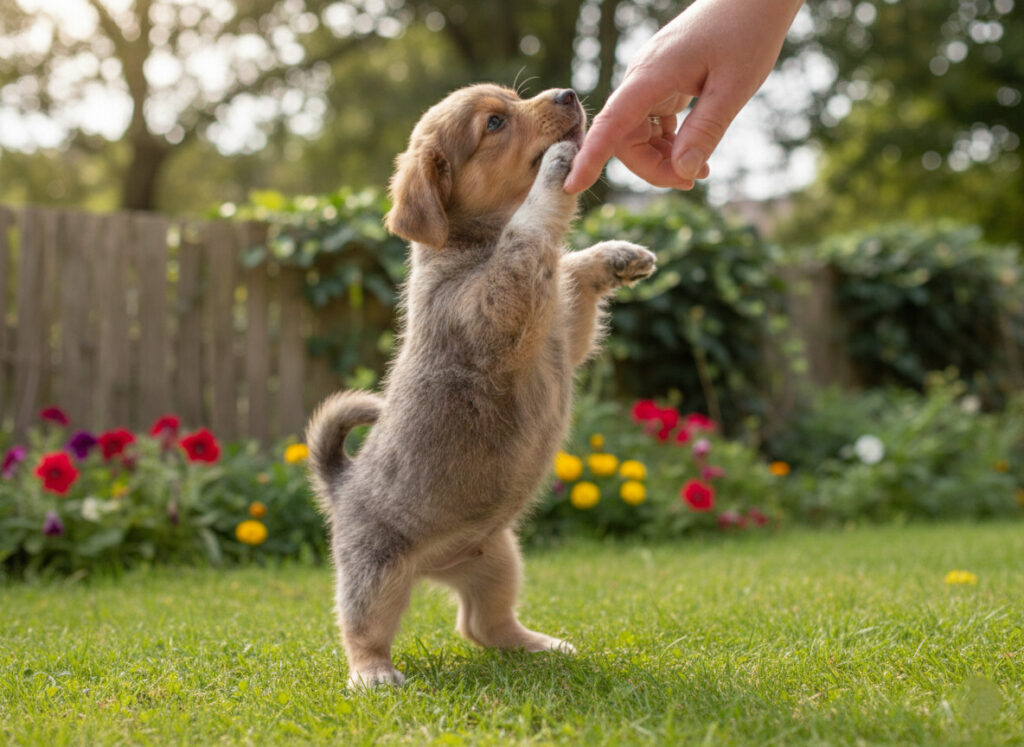
Puppies learn bite inhibition through feedback loops, primarily with their littermates and mother. When a puppy bites too hard during play, the other dog will yelp and stop interacting. This teaches the puppy that using too much force causes the fun to end. Owners can replicate this process by making a high-pitched sound (like “Ouch!”) when the puppy mouths them, followed by immediately stopping play. This conditions the puppy to understand that human skin is fragile and that a “soft mouth” is required to keep the game going.
Summary Table, Puppies Bite Inhibition
| Concept | Description | Actionable Tip |
| Bite Inhibition | The ability to control the force of a bite. | Focus on force reduction before stopping biting completely. |
| Littermate Learning | Puppies teach each other limits through play. | Don’t separate puppies from litters before 8 weeks. |
| The “Ouch” Method | Using a vocal cue to mark painful bites. | Say “Ouch!” sharply, then go limp or turn away. |
| Redirection | Moving the puppy’s focus from skin to toys. | Always have a chew toy within arm’s reach. |
| Time-Outs | Removing attention when the puppy is overexcited. | Step over a baby gate for 20-30 seconds if biting persists. |
| Teething | Biological urge to chew due to gum pain. | Provide frozen carrots or specialized teething toys. |
What Is Bite Inhibition? (Soft Mouth)
Many owners make the mistake of trying to stop their puppy from mouthing them entirely right away. This is actually counter-productive.
Bite inhibition is not about stopping the biting; it is about controlling the force.
If you teach a puppy never to put their mouth on human skin, they never learn how to modulate their jaw pressure. Later in life, if that dog is frightened or injured and reacts instinctively to bite, they will bite with full force because they never learned the concept of a “soft mouth.”
The Two Phases of Training
To train this effectively, you must follow a specific order:
- Phase 1: Force Reduction. You allow the puppy to mouth you, but you teach them to do it gently. You want to eliminate the painful bites while tolerating the gentle mouthing.
- Phase 2: Frequency Reduction. Once the puppy consistently uses a soft mouth, you then teach them to stop mouthing human skin altogether.
How Do Puppies Learn Bite Inhibition?
Getting a new puppy is an exciting experience, but it often comes with a painful surprise: razor-sharp puppy teeth. Many new owners are shocked by how much their adorable new pet wants to bite their hands, ankles, and clothing. This is not a sign of aggression. It is a completely natural behavior. However, just because it is natural does not mean you should ignore it.
Teaching your dog to control the pressure of their mouth is arguably the most important lesson they will ever learn. This skill is called bite inhibition.
If a dog does not learn bite inhibition as a puppy, they may accidentally injure a child or another animal later in life when they are startled or in pain. A dog with good bite inhibition might snap if their tail is stepped on, but they will likely just make contact without breaking the skin. A dog without this training provides no such safety margin.
This guide will walk you through exactly how puppies learn this skill naturally and how you can continue that education in your home.
Read Also: How Training Improves a Dog’s Mental Health
The Biology: How Puppies Learn from the Litter
Long before a puppy enters your home, their education has already begun. From the moment they can walk and interact, puppies use their mouths to explore the world. They do not have hands to grab things, so they use their teeth.
The Role of Littermates
Between four and eight weeks of age, puppies spend the majority of their time wrestling with their brothers and sisters. This play is crucial. You will often hear growling, snapping, and lunging. It looks like fighting, but it is actually a complex social game.
During this play, one puppy will inevitably bite another too hard. The victim will let out a high-pitched yelp and immediately stop playing. They might turn their back or walk away.
This sends a clear message to the biter: “You hurt me, so the game is over.”
Because the biting puppy wants to keep playing, they learn to adjust. Next time, they will bite with less pressure. If they bite gently, the wrestling continues. If they bite hard, the fun stops. Through hundreds of these interactions, the puppy learns to inhibit the force of their jaws.
The Role of the Mother
The mother dog (the dam) is also a strict teacher. If a puppy bites her too hard while nursing or playing, she will not hesitate to correct them.
She might stand up and walk away, leaving the puppy without access to milk or comfort. If the behavior is persistent, she may use a low growl or pin the puppy down gently to signal that the behavior is unacceptable.
Step-by-Step Training Guide
1. The Vocal Cue
You need to explain to your puppy that human skin is much more sensitive than the thick fur of their littermates.
When you are playing with your puppy and they bite you hard enough to cause pain:
- Immediately say “Ouch!” or “Ay!” in a high-pitched voice. Do not scream, but make it startling.
- Let your hand go completely limp. Do not jerk it away, as this can trigger a chase instinct where the puppy tries to grab the moving object.
- Stop moving and stop interacting.
2. The Reaction
If the puppy backs off or looks surprised, praise them calmly and resume play. You have successfully communicated that the hard bite caused a “system malfunction” in their human playmate.
3. Troubleshooting
If your puppy gets more excited when you yelp, do not use the high-pitched voice. For some hunting breeds (like Terriers), a squeaky noise sounds like prey and makes them bite harder. In this case, use a calm but firm marker word like “Too bad” or “Oops” and then withdraw attention.
4. The Time-Out
Sometimes, a vocal cue is not enough. If you say “Ouch” and the puppy continues to bite hard, you need a stronger consequence. This is where the “removal of attention” comes in.
- Give the vocal cue (“Ouch!”).
- If they bite again, stand up and ignore them for 10 to 20 seconds.
- If they follow you and nip at your ankles, step over a baby gate or go into another room and close the door.
- Wait for 20 to 30 seconds.
- Return to the room and resume play calmly.
The lesson here is simple: Biting hard makes the human disappear.
5. Redirection
Puppies have a biological need to chew. If you stop them from biting your hand, you must give them an alternative. This is called redirection.
Always keep a toy handy. When the puppy approaches with an open mouth:
- Intercept them by offering a chew toy or a rope bone.
- When they bite the toy, praise them enthusiastically.
- Engage in play with the toy.
You are teaching them: “My hand is boring and fragile. This toy is fun and durable. Bite the toy.”
Managing the “Witching Hour”
Most puppies have a specific time of day, usually in the early morning or evening, where they go crazy. Trainers often call this the “zoomies” or the “witching hour.” During this time, bite inhibition often goes out the window. The puppy is overstimulated and tired.
If your puppy is frenzied and biting everything:
- Do not try to train. They are too overstimulated to learn.
- Enforce a nap. Put the puppy in their crate or pen with a stuffed food toy.
- Check their needs. Have they eaten? Do they need to go potty?
Overtired puppies are like overtired toddlers; they get cranky and physical. A nap is usually the best cure for frantic biting.
Read Also: Common Signs Your Dog Needs to See a Vet
The Role of Teething
Between 12 and 16 weeks of age, your puppy will start losing their baby teeth and growing their adult teeth. This process is painful. Their gums will be sore and inflamed.
During this period, the urge to bite increases significantly. They are not trying to be naughty; they are trying to soothe their gums.
How to help a teething puppy
- Frozen Carrots: Give them a whole, large carrot that has been frozen. The cold soothes the gums, and the carrot is safe to eat.
- Ice Cubes: Many puppies love chasing and crunching on ice cubes.
- Frozen Washcloth: Wet a clean washcloth, twist it into a rope shape, and freeze it. Let the puppy chew on the cold cloth (supervise them so they don’t swallow it).
Common Training Mistakes to Avoid
Training bite inhibition requires patience. Avoid these common pitfalls that can make the problem worse.
1. Physical Punishment
Never hit your puppy, tap their nose, or hold their mouth shut. These methods are outdated and dangerous. They can make the puppy hand-shy or fearful. A fearful puppy is much more likely to bite aggressively in self-defense. Violence begets violence.
2. Rough Play with Hands
Do not use your bare hands to wrestle with your puppy. If you wave your hands in their face or push them around roughly, you are inviting them to bite your hands. Always put a toy between your hand and the puppy’s mouth.
3. Inconsistency
Everyone in the household must follow the same rules. If Dad lets the puppy bite his hands because he plays rough, but Mom tries to train the puppy not to bite, the puppy will be confused.
The training will fail. Sit down with your family and agree on the vocal cue and the reaction.
4. Moving Too Fast
Remember the phases. Do not expect the puppy to stop biting completely in the first week. Focus on softening the bite first. If you feel gentle teeth on your skin, that is progress compared to a hard chomp.
When to Seek Professional Help
For 99% of puppies, mouthing is normal play behavior. However, there are rare instances where biting can be a sign of true aggression or resource guarding.
You should contact a professional dog trainer or behaviorist if:
- The puppy stiffens their body and stares at you before biting.
- The biting is accompanied by deep, guttural growling (different from play growling).
- The puppy bites when you approach their food bowl or a specific toy.
- The bites are breaking the skin deeply and frequently despite your training efforts.
Conclusion
Teaching a puppy bite inhibition is one of the most demanding parts of dog ownership. It requires months of consistency. There will be days when your hands are scratched and your patience is thin.
Remember that this is a developmental phase. Your puppy is not trying to hurt you; they are learning how to interact with a new species. By providing clear feedback, telling them when it hurts and rewarding them when they are gentle, you are shaping a safe, reliable adult dog.
Be consistent with your “Ouch” cues, generous with your chew toys, and patient with their progress. The work you put in now will result in a dog that you can trust completely, even when play gets rough.