
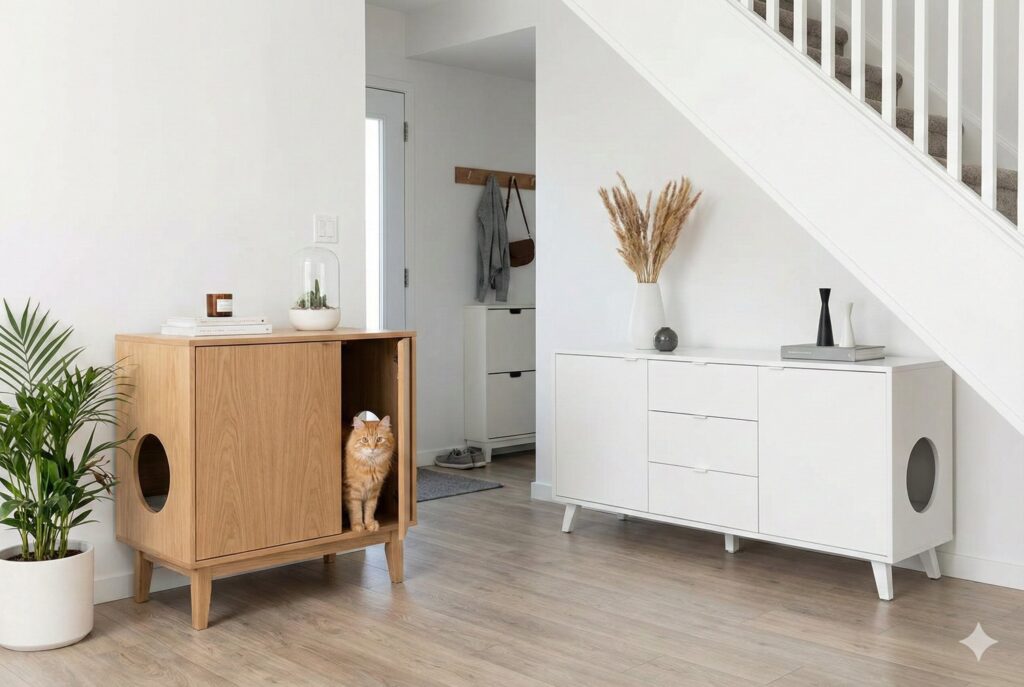
Let’s face it: we love our cats, but we don’t love their litter boxes. Even the cleanest cat owners struggle with the reality of having a plastic tray of litter sitting in their living room or bathroom. It ruins the décor, takes up valuable floor space, and can be a source of lingering odors.
The good news is that you don’t have to choose between a stylish home and a happy cat. Hiding the litter box has become a massive trend in interior design, with solutions ranging from high-end furniture pieces to clever DIY hacks. Whether you live in a small apartment or a large house, disguising the litter station helps reduce litter tracking, contains smells, and reclaims your space.
This guide covers over 10 creative ways to hide your cat’s bathroom, split into store-bought furniture solutions and DIY projects you can tackle this weekend.
Why You Should Hide Your Litter Box
Before we jump into the ideas, it is helpful to understand why enclosing the litter box is beneficial for both you and your pet.
- Odor Control: Enclosed spaces help trap odors better than open trays, especially if you use a carbon filter or odor-absorbing litter.
- Less Mess: A hidden box usually means high sides or a designated entryway, which significantly reduces the amount of litter your cat kicks onto the floor.
- Privacy for Cats: Many cats feel vulnerable when doing their business. An enclosed space offers them security and privacy.
- Aesthetics: The most obvious benefit is visual. You replace an eyesore with a piece of furniture that complements your home.
Top Store-Bought Hidden Litter Box Furniture
If you are not handy with tools or want a quick solution, the market is full of specialized furniture designed to look great while functioning as a bathroom for your cat.
1. The Mid-Century Modern Side Cabinet
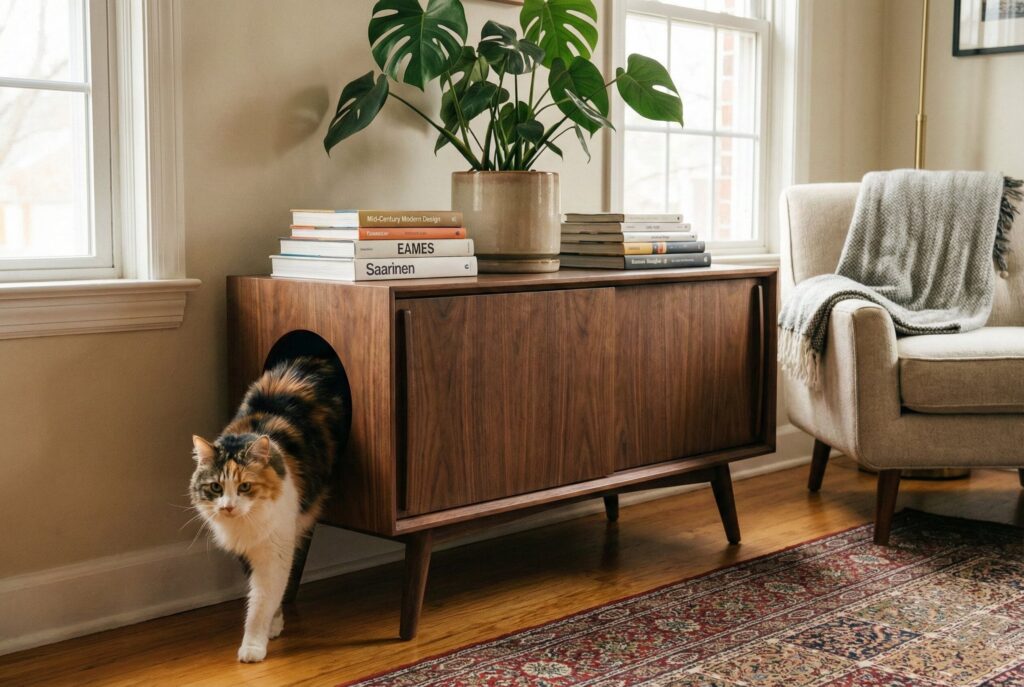
This is one of the most popular options because it blends seamlessly into living rooms or bedrooms. From the outside, it looks like a standard mid-century modern credenza or side table with sleek wooden legs and clean lines. Inside, it houses the litter tray with a side entrance for the cat.
Why it works: It offers a large surface area for you to place lamps, books, or plants, making it a functional piece of furniture.
2. The Faux Planter Box
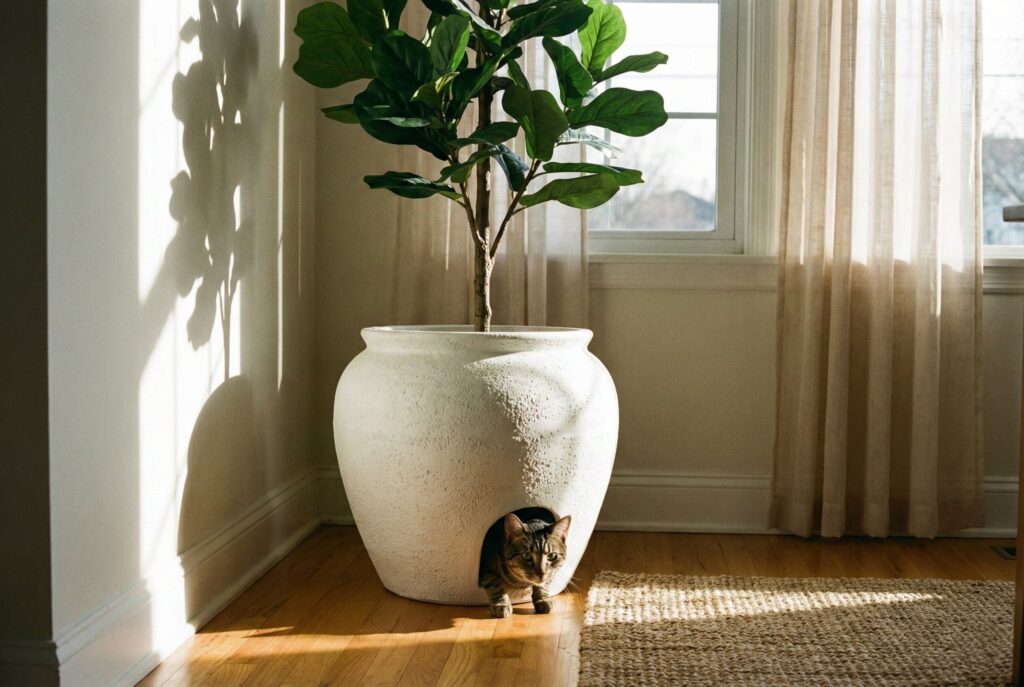
For those who want to add greenery to their home without sacrificing space, the planter litter box is a genius invention. These look like large, potted terracotta or ceramic planters holding a faux palm or fern. The base of the “pot” is actually a hollowed-out enclosure where the litter pan sits.
Why it works: It is perfect for corners. The plant adds vertical height and life to the room, disguising the box completely.
3. The Bathroom Vanity Bench
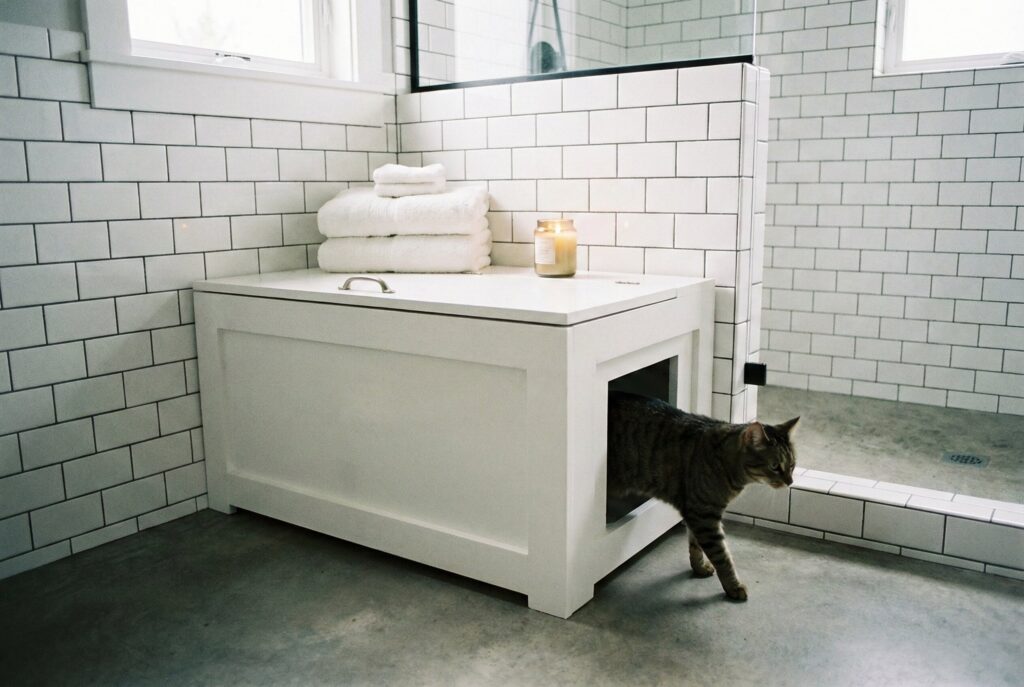
Bathrooms are common spots for litter boxes, but they are often cramped. A litter box bench is a long, low enclosure that can double as seating or a shelf for towels. It hides the box completely and fits neatly against a wall.
Why it works: It maximizes vertical space in small bathrooms. You can sit on it while getting ready, or use the top for storage baskets.
4. The Wicker Hamper Hideaway
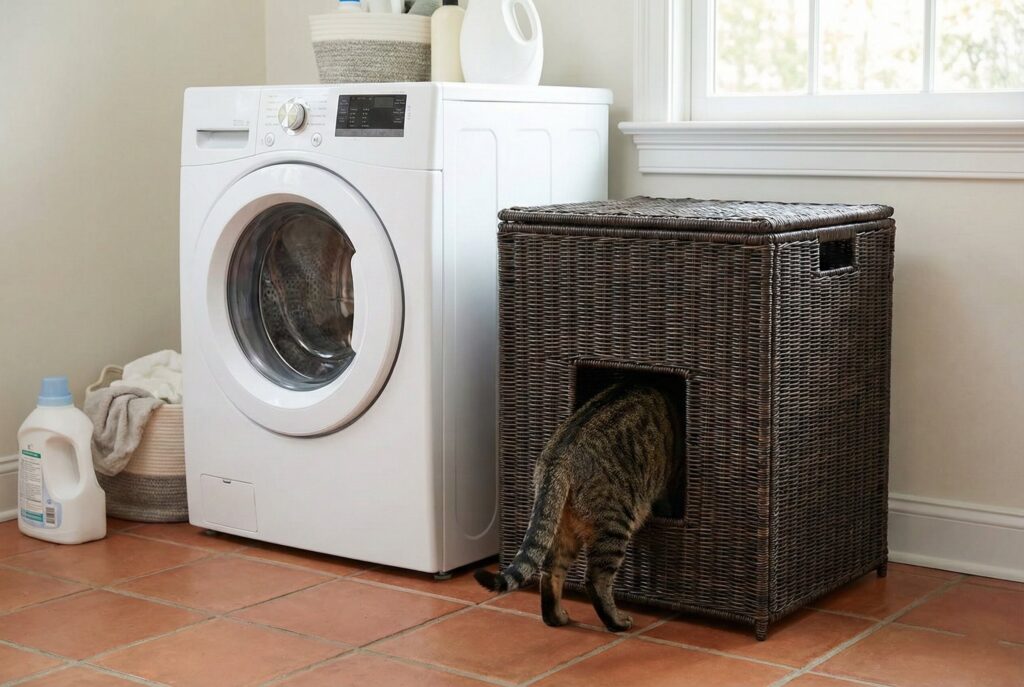
If your style is more bohemian or rustic, a wicker style enclosure is ideal. These look like standard laundry hampers or large storage baskets. They are lightweight, breathable, and often come with a mud-room aesthetic.
Why it works: The texture of the wicker helps mask the purpose of the box. It looks natural in laundry rooms or bedrooms.
5. The Modern Cat Tower Combo
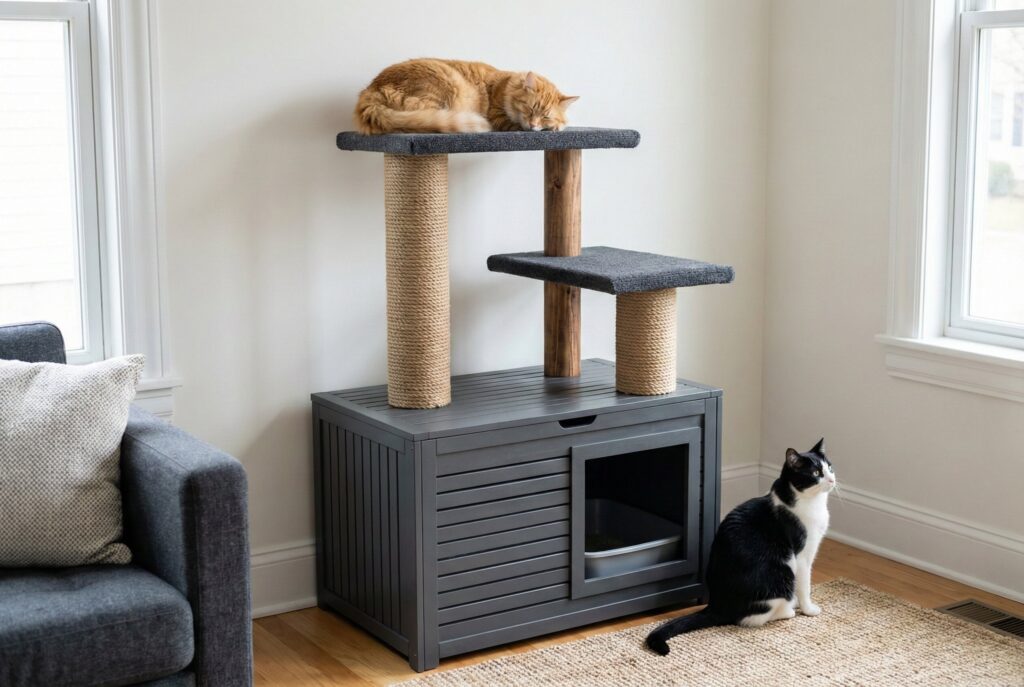
Cats love height, and they need a bathroom. Some innovative furniture combines both. This unit features a litter box enclosure at the heavy base for stability, with scratching posts and platforms rising above it.
Why it works: It saves massive amounts of floor space by combining two essential cat items into one vertical footprint.
Best DIY Hidden Litter Box Hacks
If you have a specific space to fill or want to save money, DIY projects allow for total customization. Here are some effective ways to build your own hidden litter station.
6. The IKEA Cabinet Hack (Besta or Kallax)
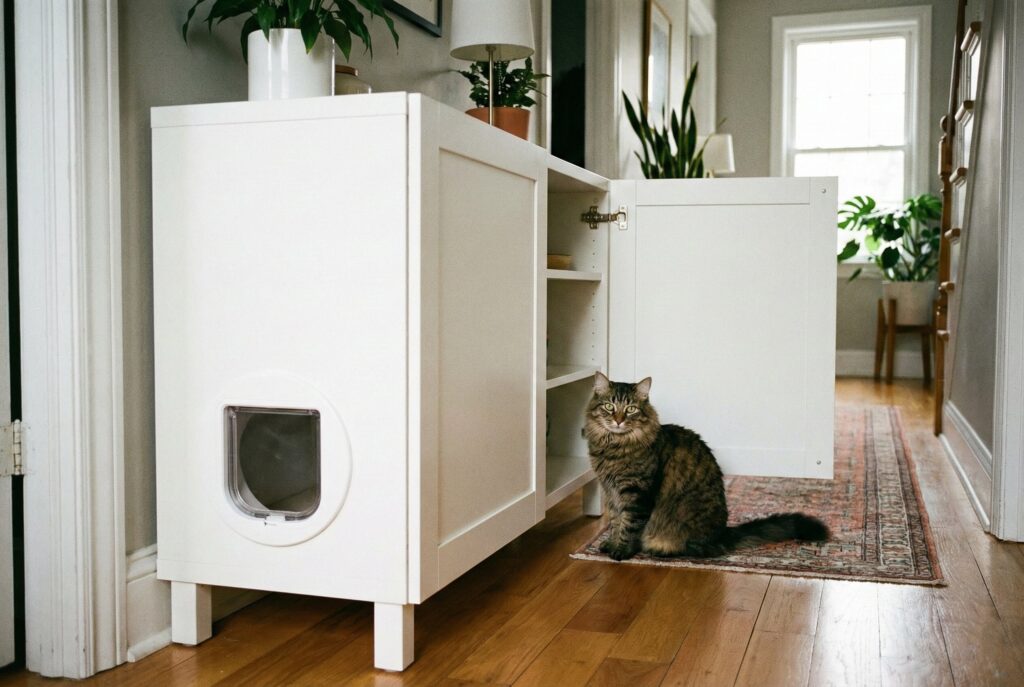
This is a classic DIY project. By taking a standard storage unit like an IKEA Besta or Kallax, you can remove an internal divider and add a door to create a spacious litter cabinet. You simply cut a hole in the side or the door for the cat to enter.
DIY Tip: Use waterproof contact paper or a plastic liner inside to protect the wood from accidents.
7. The Closet Floor cutout
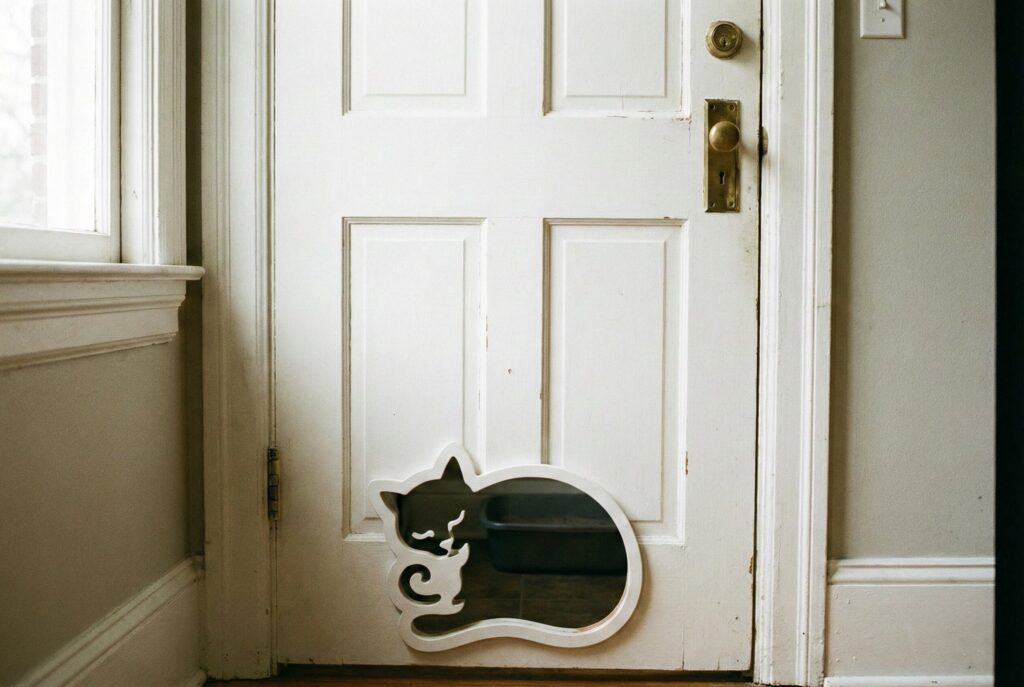
If you have a spare closet in a hallway or guest room, you can dedicate the floor space to the litter box. The “hack” involves cutting a cat-shaped door into the bottom of the closet door or the wall drywall.
Why it works: The box is completely out of the main living area. You still have full use of the hanging space above in the closet.
8. Under-Stair Storage Nook
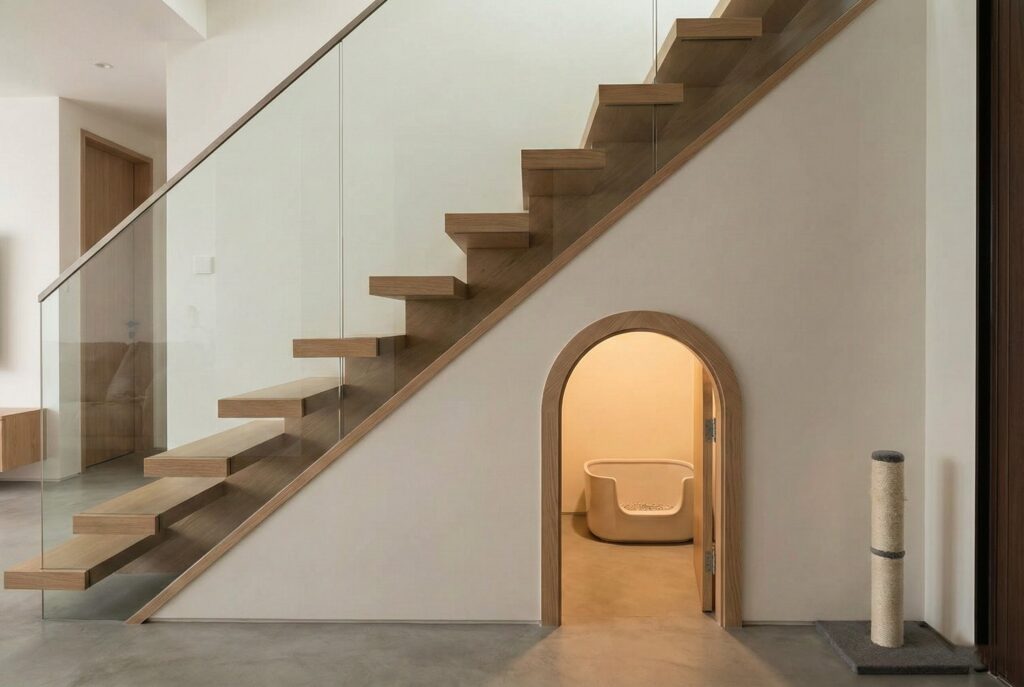
The space under a staircase is often dead space. By cutting an opening into the drywall or the cabinet door under the stairs, you create a “Harry Potter” cupboard for your cat. This is often large enough to store extra litter bags and scoops as well.
Why it works: It utilizes a central location that is usually wasted. It is also excellent for soundproofing if your cat scratches loudly.
9. The Curtain Concealment
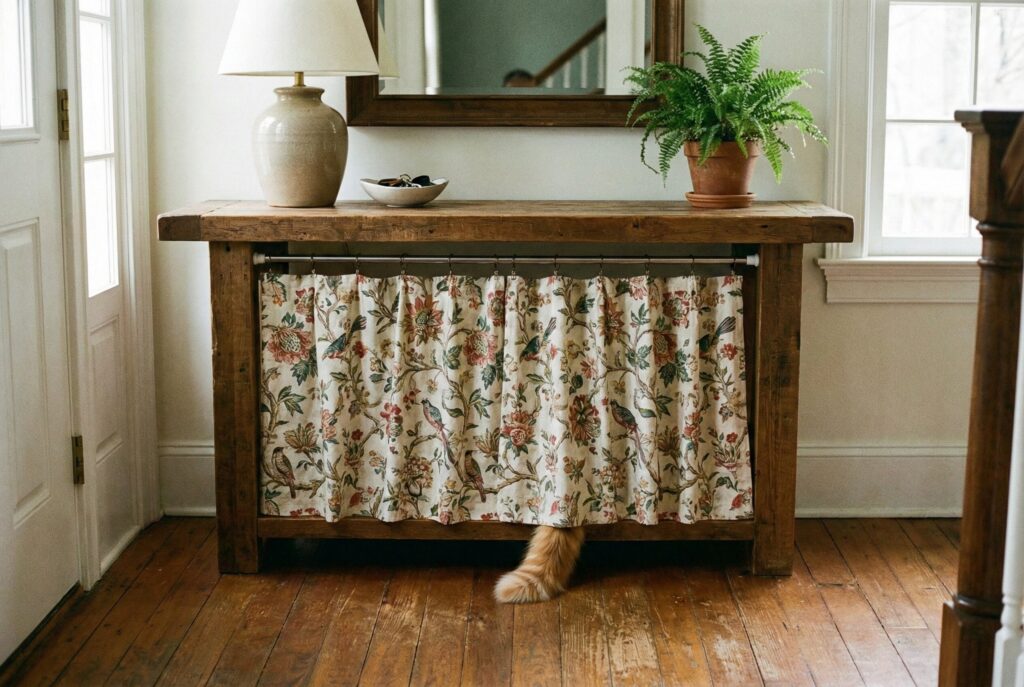
For a no-build solution, use tension rods and fabric. If you have an open lower shelf on a bookshelf, a console table, or a bathroom sink with open legs, you can install a small tension rod and hang a short curtain. The litter box sits behind the curtain.
Why it works: It is incredibly cheap and requires no power tools. You can change the fabric easily to match seasonal décor.
10. The Repurposed Chest or Trunk
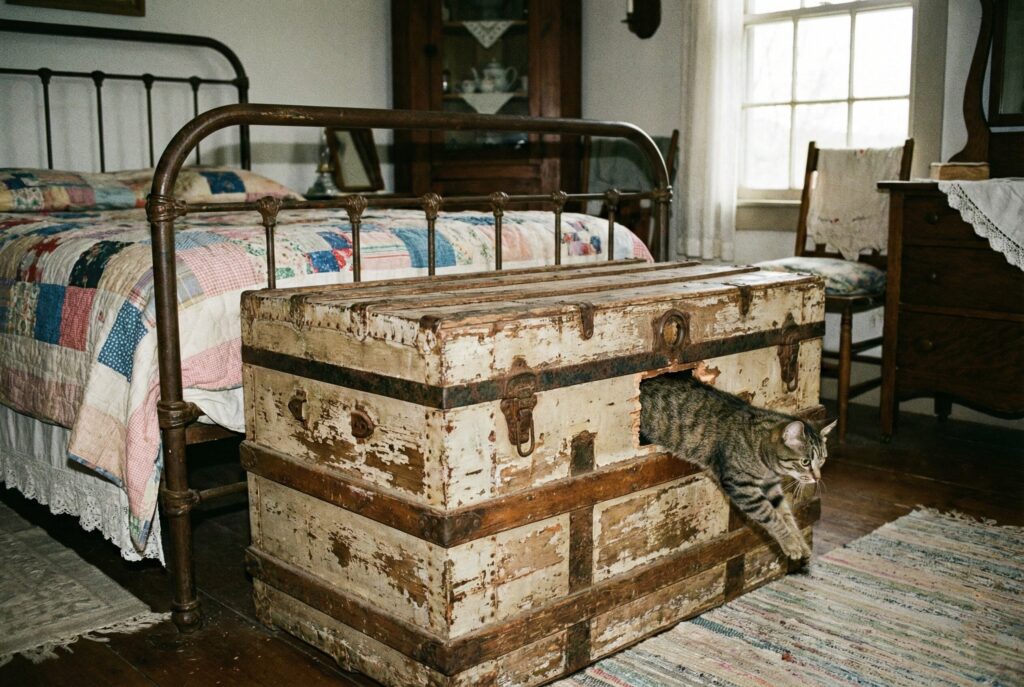
Vintage steamer trunks or wooden chests make fantastic litter box enclosures. You cut an entry hole in the back or side (preserving the front aesthetic) and use the hinged lid for easy cleaning access.
Why it works: It adds a unique, vintage character to the room. The solid wood construction is durable and blocks odors well.
Creative Placement Ideas
Sometimes it isn’t about the furniture, but where you put it.
11. The Garage Access Tunnel
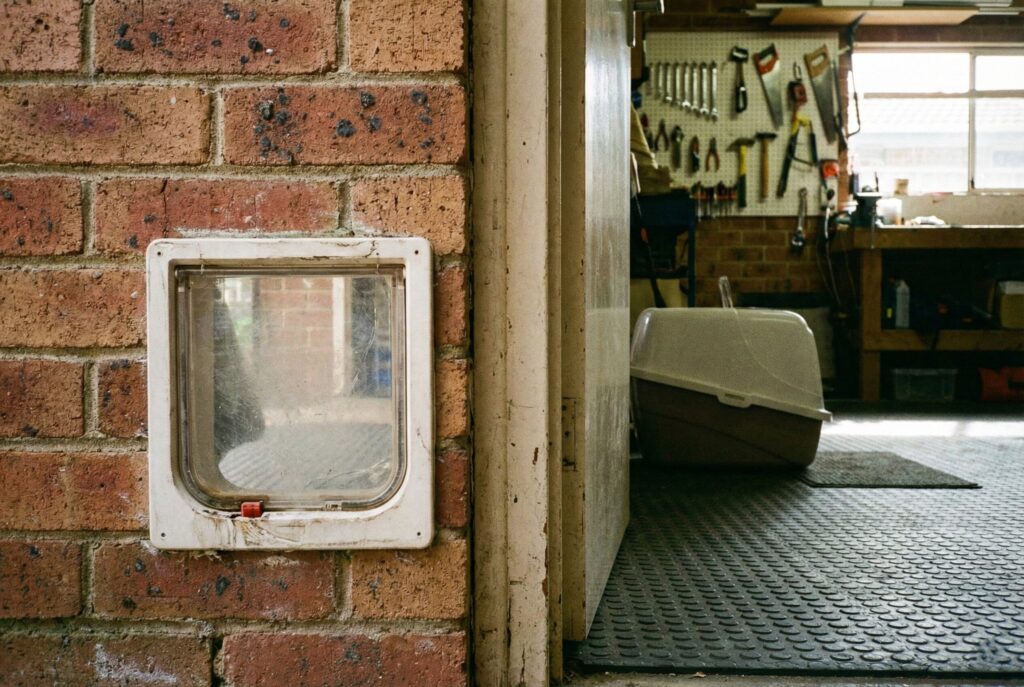
If you have an attached garage, you can put the litter box in the garage and install a cat door in the wall connecting the house to the garage. This keeps all mess and smell completely out of your living zone. Note: Ensure the garage is temperature-controlled or safe for your pet.
12. Laundry Room Cabinetry Integration
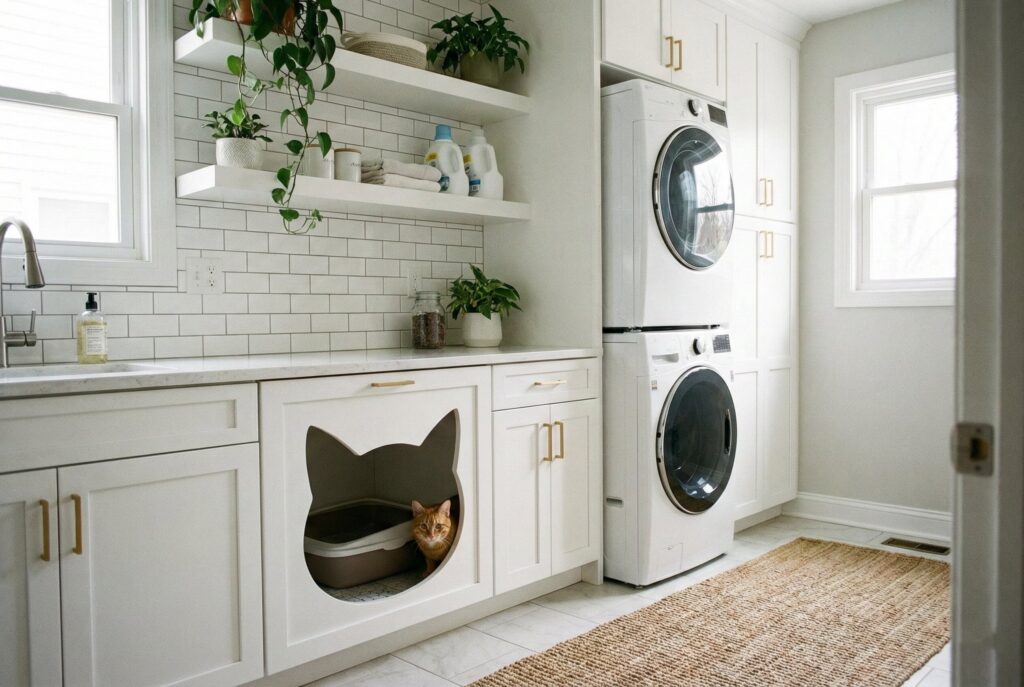
When designing a laundry room, leave a bottom cabinet shell empty. Instead of a door, install a custom front with a cutout, or leave it open for easy access.
Key Features to Look For
When choosing or building your hidden litter box solution, keep these critical “entities” and features in mind to ensure safety and hygiene.
Ventilation
Never seal a litter box completely. Ammonia from cat urine can build up and cause respiratory issues for your pet. Ensure the back of the cabinet has ventilation holes or that the entry hole is large enough for airflow.
Size and Dimensions
Always measure your current litter pan before buying furniture. Many “standard” enclosures are too small for large breeds like Maine Coons or for jumbo high-sided litter pans. The internal dimensions must allow the cat to stand up and turn around comfortably.
Material Durability
MDF (Medium Density Fiberboard) acts like a sponge if it gets wet. If your cat misses the box, MDF will swell and hold odors forever. Look for solid wood, plastic, or high-pressure laminates. If using MDF, seal all internal edges with silicone caulk or waterproof paint.
Ease of Cleaning
If it is hard to clean, you won’t clean it as often. The best designs feature:
- Hinged lids for top access.
- Double front doors that swing wide open.
- Slide-out trays.
Training Your Cat to Use a Hidden Box
Switching from an open pan to an enclosed hidden box can be confusing for some cats. Follow these steps for a smooth transition:
- Placement: Put the new furniture in the exact same spot where the old open box was.
- Transition: Leave the door of the new furniture open or take the lid off initially so it feels like the old box.
- Litter: Use the same brand of litter. Do not change the litter type at the same time you change the box location.
- Attractant: Use a litter attractant herb or catnip near the entry hole to encourage investigation.
Frequently Asked Questions (FAQ)
Do cats like covered litter boxes?
Most cats adapt well to covered boxes, provided they are kept clean. However, some anxious cats prefer open sightlines to see potential “threats.” If your cat refuses the enclosed box, try removing the door flap to make it feel more open.
How do I stop the furniture from smelling?
Use a high-quality clumping litter and scoop daily. Place a box of baking soda or a charcoal filter inside the cabinet (but out of the cat’s reach). Wipe down the interior walls of the furniture weekly with an enzyme cleaner.
Is a hidden litter box safe for kittens?
Yes, but ensure the entry hole is low enough for them to climb into. Avoid very tall top-entry boxes for tiny kittens, as they may struggle to jump out.
Can I put a litter box in a kitchen cupboard?
It is generally not recommended to place litter boxes in areas where food is prepared due to the risk of toxoplasmosis and bacteria spreading. A laundry room, bathroom, or hallway is a safer sanitary choice.
What is the best material for a DIY litter box enclosure?
Melamine (the material used in kitchen cabinets) is excellent because it is moisture-resistant and easy to wipe clean. If using wood, apply a high-gloss, waterproof paint or varnish to the interior.
Final Thoughts on Clutter-Free Living
Hiding the litter box is one of the highest-impact changes you can make for your home’s interior design. It removes the visual clutter of plastic trays and bags of litter, replacing them with functional, beautiful surfaces.
Whether you choose a high-end mid-century cabinet or hack a simple storage unit, the goal remains the same: a happy cat and a beautiful home. By integrating the litter station into your furniture, you reclaim your square footage and maintain a fresher, cleaner environment for everyone.