

If you share your home with a cat, you already know they have a natural obsession with heights. Cats are instinctual climbers who feel safest when observing their territory from a high vantage point. A hanging cat bed is one of the best ways to provide this vertical space while saving valuable floor space in your home.
Whether you want a quick store-bought solution or a weekend DIY project, adding a hanging cat bed to your living space provides crucial feline enrichment. This guide covers the top hanging cat bed ideas, blending both ready-to-buy options and creative DIY projects. We will also dive into the safety requirements and training tips to ensure your indoor cat actually uses their new favorite spot.
Why Do Cats Love Hanging Beds?
Before diving into the ideas, it helps to understand the feline psychology behind elevated spaces. Optimizing your home for a cat involves more than just a litter box and food bowls; it requires vertical territory.
- Security and Safety: In the wild, cats climb trees to avoid larger predators. Elevated beds tap into this instinct, giving them a secure spot where they cannot be sneaked up on by dogs, toddlers, or other pets.
- Temperature Regulation: Heat rises. A hanging bed mounted higher up on a wall or near a sunny window allows your cat to soak up warmth, which is especially important for short-haired breeds and senior cats.
- Territory Observation: Cats are natural hunters and observers. A window perch or wall hammock gives them a wide field of vision to watch birds, traffic, and household activities.
- Space Saving: For pet owners living in apartments or small homes, bulky cat trees take up too much room. Hanging beds utilize vertical wall or window space, keeping your floor plan open and clean.
Top Store-Bought Hanging Cat Bed Ideas
If you are not the crafty type, there are plenty of excellent, ready-to-use hanging cat beds on the market. Here are the best store-bought options that range from simple window perches to aesthetic boho swings.
1. The Suction Cup Window Hammock
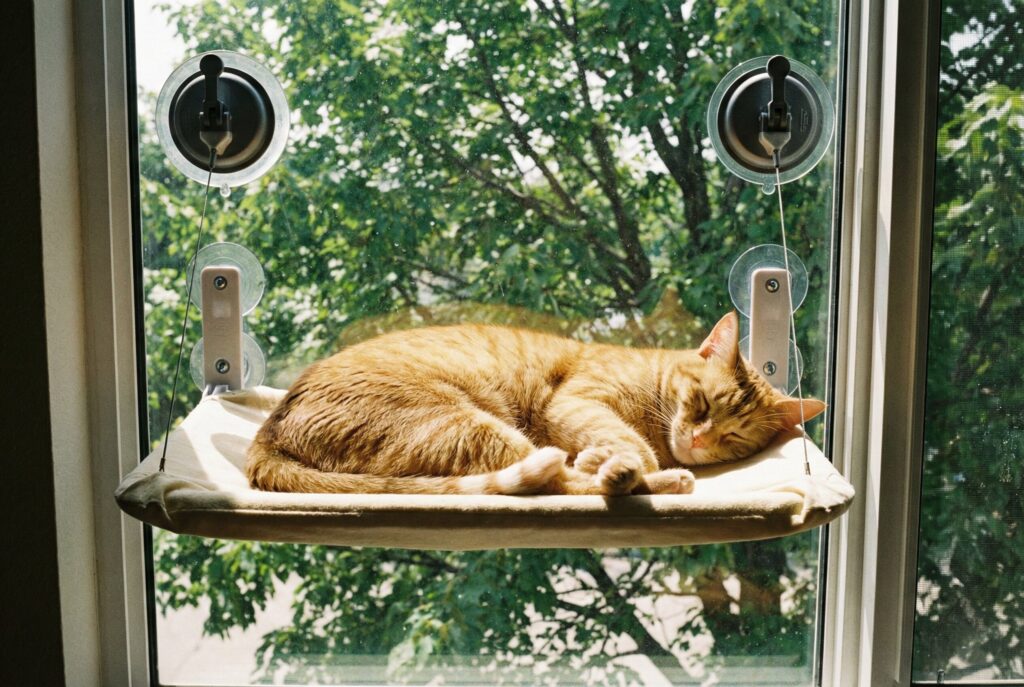
The suction cup window hammock is a classic favorite for a reason. It requires zero tools to install and gives your cat a front-row seat to “cat TV” (the outdoors). These beds consist of a sturdy frame, a breathable fabric cover, and industrial-strength suction cups.
What to Look For:
- Weight Capacity: Look for models that can hold at least 30 to 40 pounds, even if your cat is small. This ensures the suction cups will not fail when your cat jumps onto the bed.
- Cable Supports: Many high-quality window beds use stainless steel cables attached to the top suction cups for added stability.
- Washable Covers: Ensure the fabric can be removed and tossed in the washing machine to easily manage shedding.
2. The Cozy Radiator Cat Bed
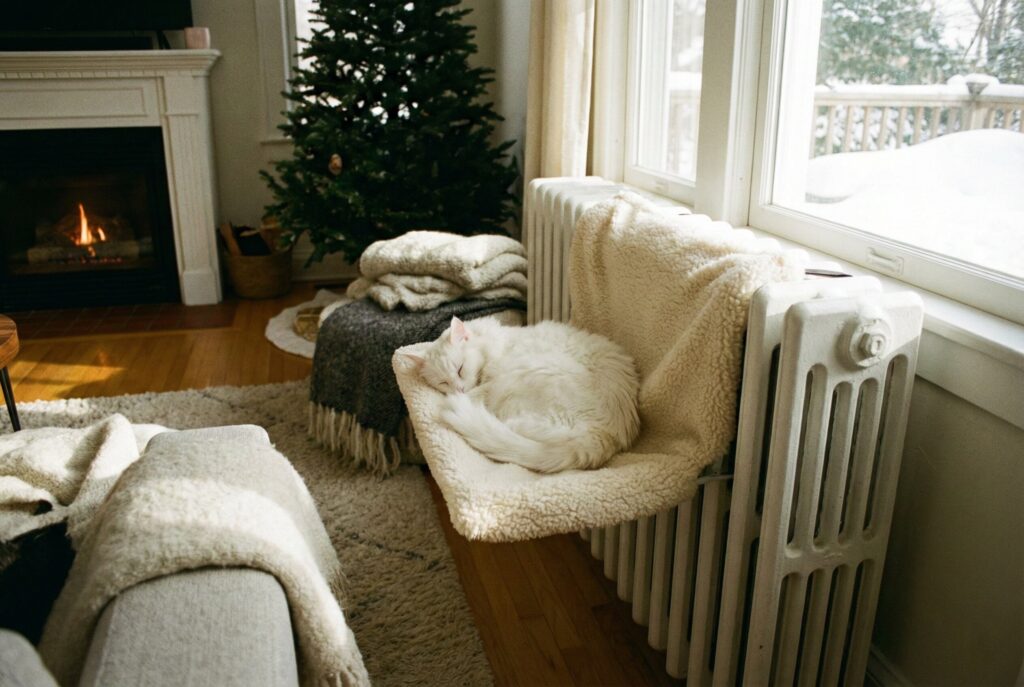
If you live in a colder climate and have traditional radiators, a radiator cat bed is a brilliant solution. These beds feature strong metal frames that hook directly over the top of a radiator, suspending a soft, plush bed right next to the heat source.
What to Look For:
- Frame Material: Ensure the metal frame is rust-proof and strong enough to resist bending under your cat’s weight.
- Heat-Safe Fabric: The cover should be made of thick, heat-resistant fleece or faux fur to prevent burning while trapping the warmth.
- Adjustable Hooks: Find a bed with adjustable mounting hooks so it can fit different radiator widths securely.
3. Macrame Boho Cat Swing
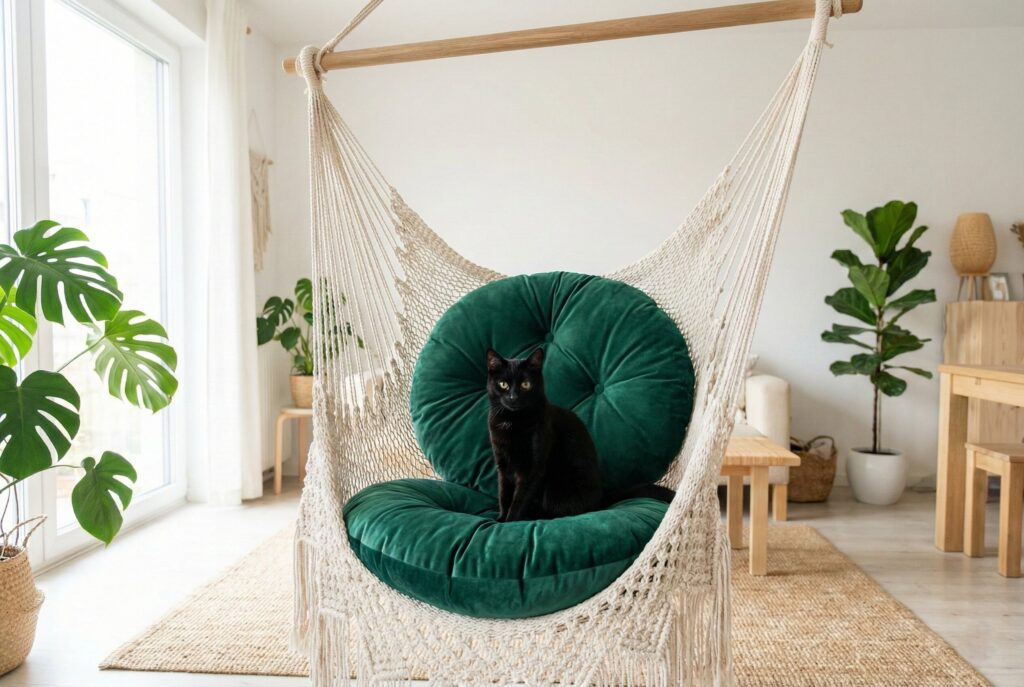
For the interior design enthusiast, a macrame cat swing acts as both pet furniture and wall art. Woven from durable cotton cords, these hanging beds usually drop from the ceiling or a wall bracket, featuring a solid base where a round cushion sits.
What to Look For:
- Hardware Included: Check if the swing comes with heavy-duty ceiling anchors. Do not use standard drywall hooks; this bed must be anchored into a ceiling joist.
- Base Stability: The bottom hoop should be rigid (usually metal or wood) so the bed does not fold in on the cat when they step onto it.
- Cushion Quality: Since the macrame itself is hard rope, a thick, high-density foam cushion is necessary for comfort.
4. Wall-Mounted Wooden Cat Hammock
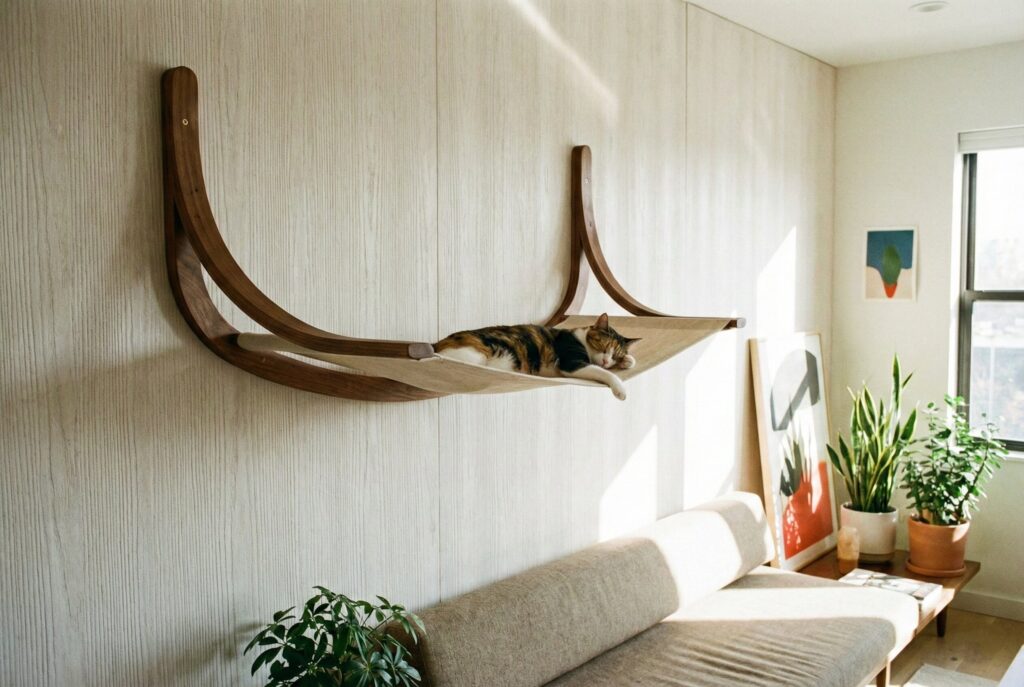
Wall-mounted wooden hammocks are ideal for creating a permanent “cat superhighway” along your walls. These are sleek, modern, and incredibly sturdy. They usually consist of two solid wood brackets and a piece of thick canvas stretched between them.
What to Look For:
- Mounting Distance: The distance between the wooden brackets usually needs to align with standard wall studs (16 or 24 inches apart) for maximum safety.
- Fabric Durability: Look for heavy-duty cotton canvas or twill that can withstand scratching and stretching.
- Wood Finish: Choose a finish that matches your existing home decor, and ensure any stains or varnishes used are non-toxic to pets.
5. Over-the-Door Cat Condo
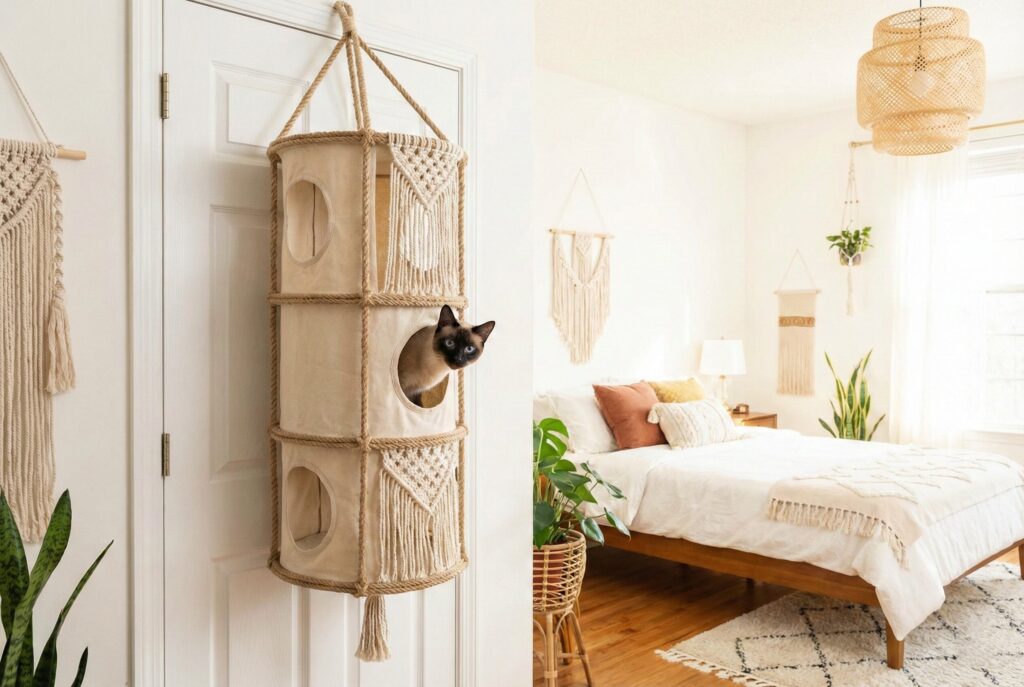
If you cannot drill into your walls or windows, an over-the-door hanging bed is a fantastic space-saver. These usually feature multiple tiers or compartments made of heavy nylon or canvas, suspended by metal brackets that slip over the top of a standard interior door.
What to Look For:
- Bracket Thinness: The metal brackets must be thin enough to allow your door to open and close without scraping the doorframe.
- Rigid Inserts: The floors of each tier should have rigid plastic or wooden inserts so the fabric does not sag uncomfortably under your cat’s weight.
- Stabilization: Look for models that have a strap or anchor at the bottom to prevent the condo from swinging wildly when the door is opened.
6. Wire Crate or Cage Hammock
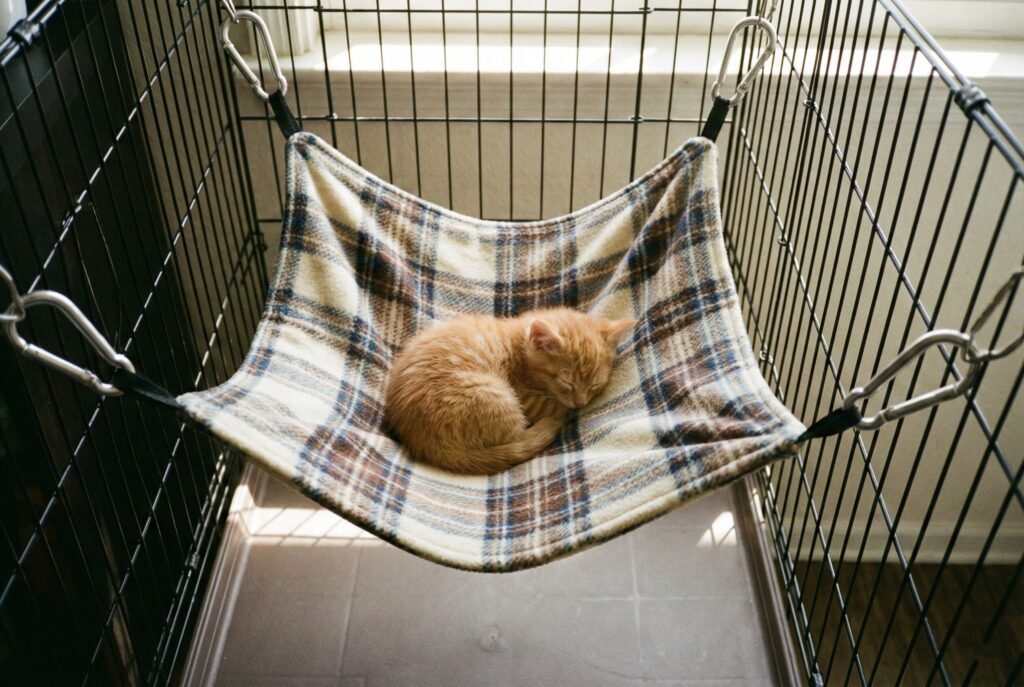
While mostly used for ferrets or rats, large cage hammocks are perfect for kittens or cats who spend time in large enclosures (like at a shelter, during a move, or while recovering from surgery). These are simple fabric squares with metal clips on all four corners.
What to Look For:
- Strap Durability: Cats are heavier than small animals, so the nylon straps connecting the fabric to the clips must be double-stitched.
- Hardware: Opt for stainless steel carabiner clips rather than cheap plastic hooks, which will snap under a cat’s weight.
Creative DIY Hanging Cat Bed Ideas
If you prefer building custom pet furniture, DIY hanging beds are budget-friendly and highly customizable. Here are five practical ideas you can craft at home.
7. The Upcycled T-Shirt and PVC Hammock
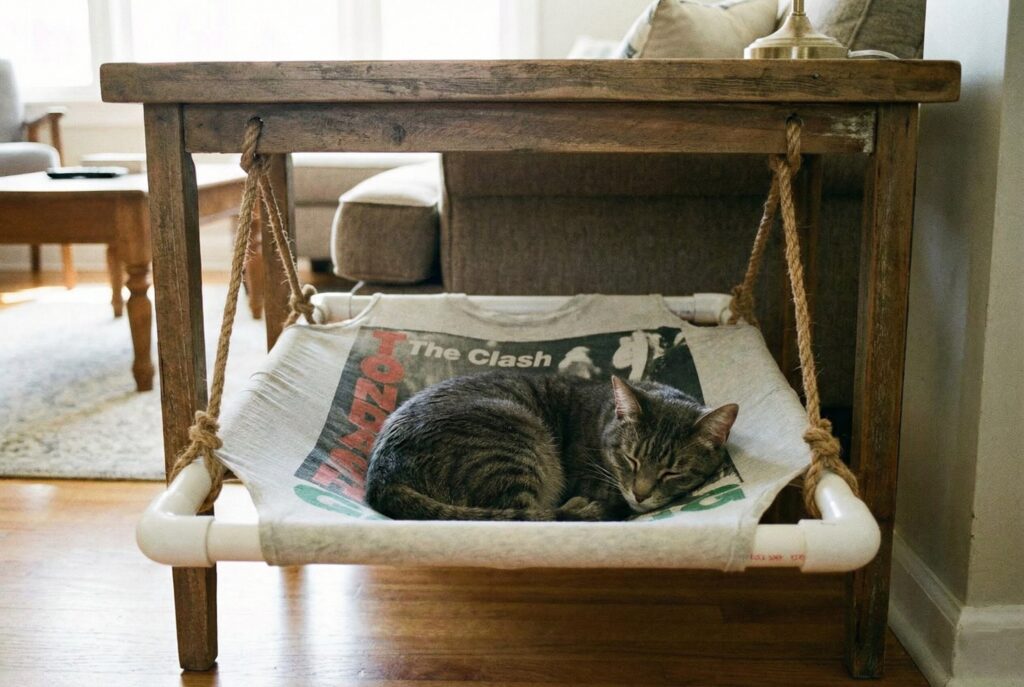
This is one of the easiest beginner DIY projects. By using an old t-shirt and some cheap PVC pipes from the hardware store, you can build a sturdy hammock in under an hour.
Materials Needed:
- 4 pieces of PVC pipe (cut to equal lengths, e.g., 18 inches each)
- 4 PVC corner joints
- 1 large, heavy-duty t-shirt
- Nylon rope
How to Build It:
- Assemble three sides of the PVC square using the corner joints.
- Slide the large t-shirt over the three-sided frame, just like you are dressing a person. Put the neck hole and sleeves neatly tucked underneath.
- Insert the final piece of PVC pipe and secure the last corner joints to complete the square inside the shirt.
- Tie the nylon rope tightly around the four corners of the PVC frame.
- Hang the ropes securely under a sturdy table, chair, or from a ceiling hook.
8. DIY Wall-Mounted Basket Bed
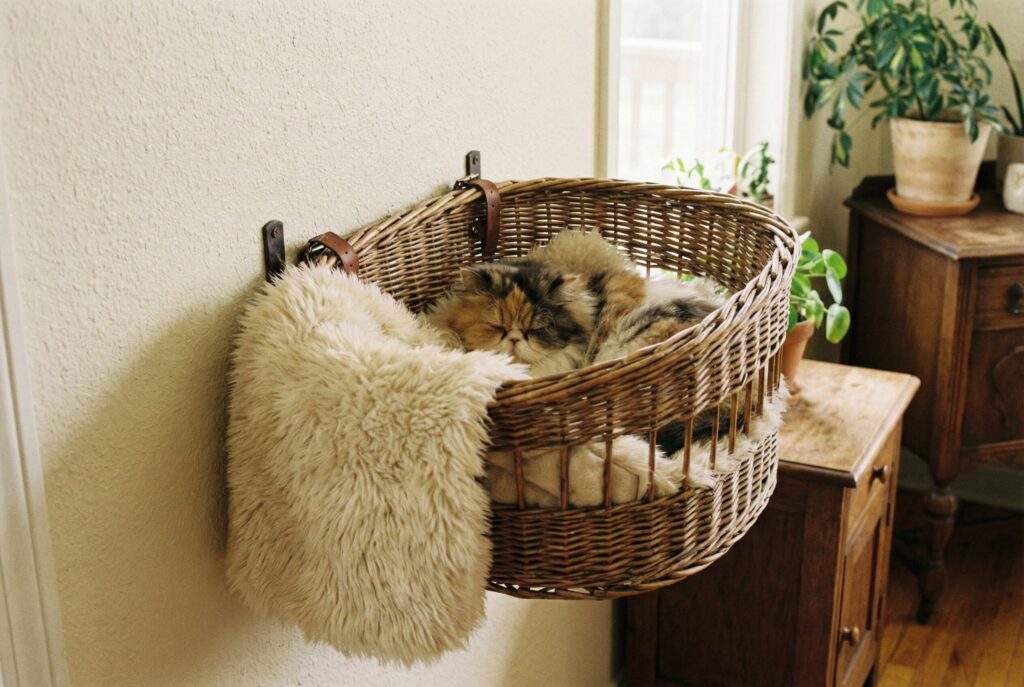
Repurposing a sturdy wicker or wire basket is a great way to create a rustic, farmhouse-style wall bed.
Materials Needed:
- 1 sturdy wicker basket (preferably with one flat side, like a half-basket, or cut one side flat)
- Heavy-duty washers and wood screws
- Power drill and stud finder
- A soft cushion or folded blanket
How to Build It:
- Use a stud finder to locate the wooden studs behind your drywall. This is non-negotiable; drywall anchors will eventually rip out of the wall under a jumping cat’s force.
- Hold the flat side of the basket against the wall over the stud.
- Place a heavy-duty washer on a long wood screw. The washer is crucial because it prevents the screw head from slipping through the woven wicker gaps.
- Drill the screw directly through the back of the basket into the wall stud. Repeat this with at least 3 to 4 screws to ensure total stability.
- Line the inside of the basket with a soft blanket.
9. Hand-Knotted Macrame Window Swing
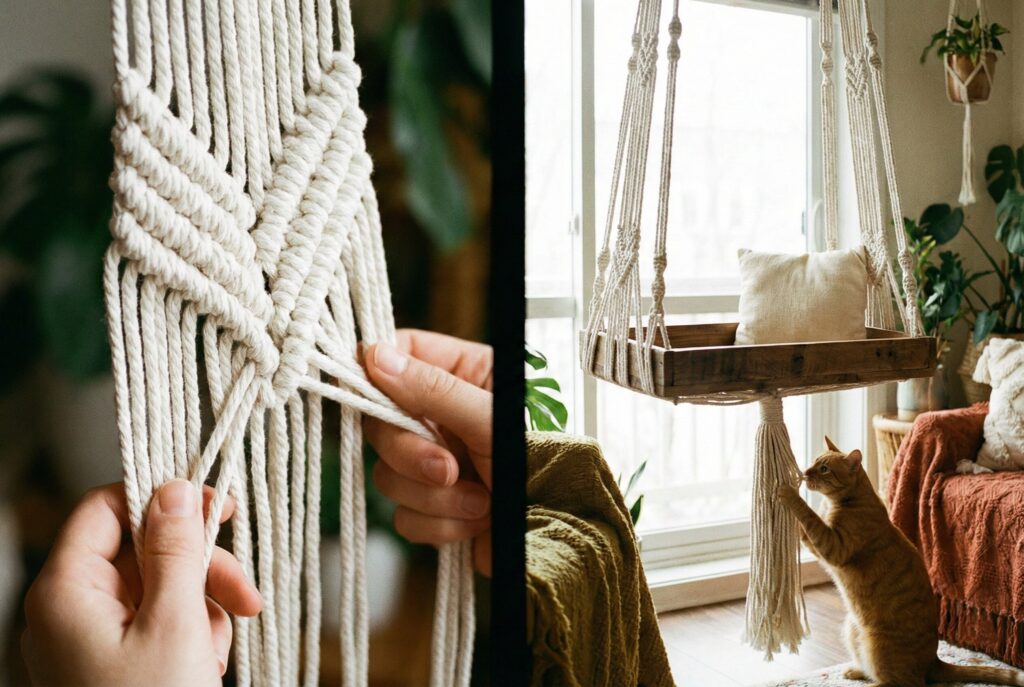
If you know basic macrame knots (like the square knot and the wrap knot), you can make a custom swing for a fraction of the retail price.
Materials Needed:
- 100 feet of 4mm or 5mm cotton macrame cord
- A solid wooden tray or a heavy-duty wooden hoop for the base
- A strong metal O-ring for hanging
- Ceiling hook
How to Build It:
- Cut your cord into 8 long strands (about 12 feet each).
- Fold the strands in half and loop them through the metal O-ring. Secure them with a wrap knot at the top. You now have 16 cords hanging down.
- Divide the cords into 4 groups of 4. Tie a series of square knots down each group to create the four “arms” of the swing.
- Once the arms are long enough, bring the cords together to cradle the wooden tray or hoop.
- Secure all the cords tightly underneath the wooden base with another large wrap knot, leaving a decorative tassel hanging down.
- Add a cushion and hang from a ceiling joist.
10. The Under-Chair Fabric Hammock
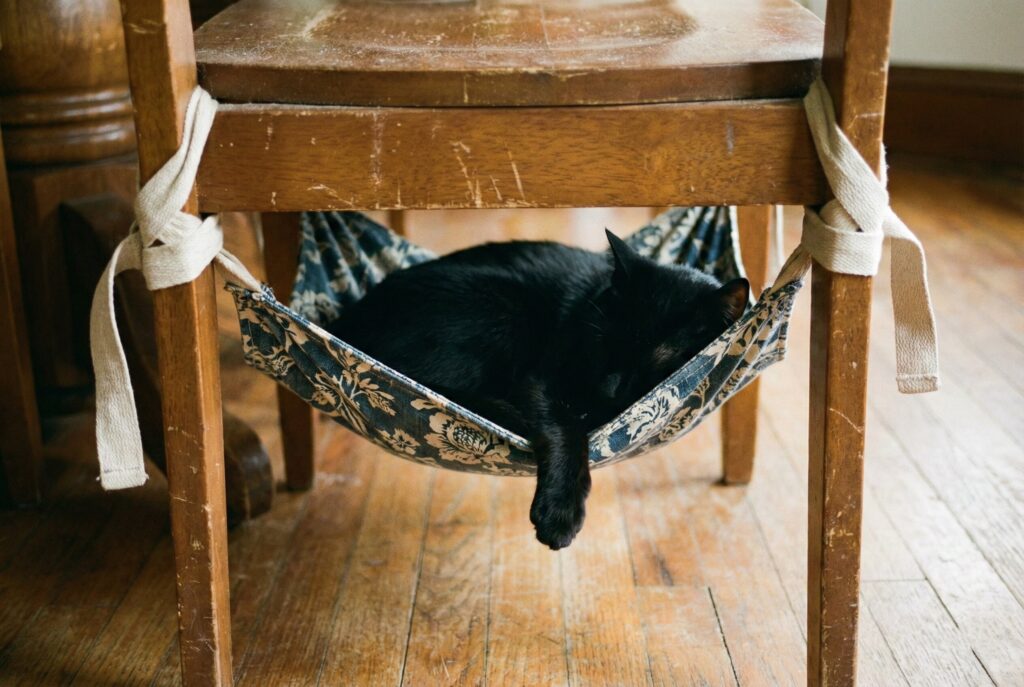
Cats love hiding in enclosed, dark spaces. Utilizing the wasted space underneath a dining or living room chair creates a perfect hidden sanctuary.
Materials Needed:
- A square piece of heavy canvas or denim (measure the space between your chair legs first)
- 4 strips of strong nylon webbing or thick ribbon
- Sewing machine or heavy-duty needle and thread
How to Build It:
- Cut the canvas into a square that is slightly smaller than the footprint of the chair legs.
- Hem the edges of the canvas to prevent fraying.
- Sew a strip of nylon webbing (about 12 inches long) securely to each of the four corners of the canvas. Sew them using an “X” pattern for maximum strength.
- Tie the webbing tightly around the four legs of the chair, high enough off the ground so the canvas does not touch the floor when the cat sits in it.
11. DIY PVC Pipe Window Perch
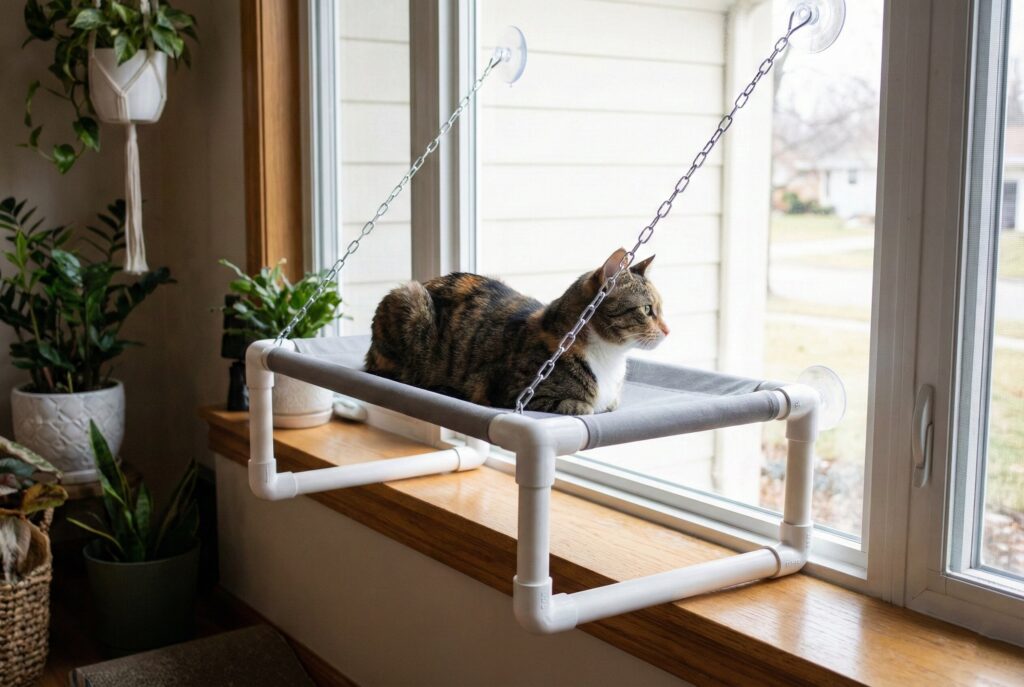
If you want the functionality of a store-bought suction cup bed but want to customize the size for a very large cat (like a Maine Coon), building a PVC frame is the best route.
Materials Needed:
- PVC pipes and corner joints (custom cut to your desired size)
- Durable fabric for the bed sleeve
- 2 small link chains
- 4 industrial-strength suction cups (purchased from a hardware store)
How to Build It:
- Build a rectangular frame using the PVC pipes.
- Sew a fabric sleeve and slide the PVC frame into it before sealing the final side.
- Drill small holes in the front two corners of the PVC frame to attach your chains.
- Attach the bottom two suction cups directly to the back of the PVC frame (the side that touches the window).
- Attach the top two suction cups to the other ends of the chains.
- Mount the bed to a clean glass window.
Crucial Safety Tips for Hanging Cat Beds
Hanging beds are fantastic, but safety must always come first. A falling bed can severely injure your cat and cause them to fear elevated spaces forever.
- Always Find the Stud: If you are drilling into a wall, drywall anchors are never enough for a moving, jumping animal. You must use a stud finder and drill heavy-duty wood screws directly into the wooden wall studs.
- Check Ceiling Joists: Similarly, ceiling hooks for macrame swings must go into the structural ceiling joists. Do not use butterfly toggles in plain drywall ceilings.
- Clean Windows Thoroughly: Suction cups fail because of microscopic dust and grease on the glass. Before installing a window hammock, scrub the glass with a mixture of vinegar and water, then wipe it dry with a microfiber cloth. Soak the suction cups in warm water for 5 minutes to soften the plastic, dry them, and press them firmly onto the glass.
- Regular Inspections: Check suction cups weekly. Check wall screws monthly to ensure they are not wiggling loose from the wall due to the vibration of your cat jumping.
How to Train Your Cat to Use a Hanging Bed
You spend time and money installing a beautiful hanging bed, and your cat ignores it to sleep in a cardboard box. This is incredibly common. Cats are naturally suspicious of new items in their territory. Here is how to gently encourage them.
- Start Low: If possible, mount the bed lower to the ground at first so it is easy to inspect.
- Scent Familiarity: Place a blanket or piece of clothing that your cat already sleeps on into the new hammock. Your cat relies heavily on scent; if the new bed smells like a factory, they will avoid it.
- Use Catnip and Treats: Sprinkle a generous pinch of premium catnip onto the fabric. Place a few of their absolute favorite treats right in the center of the bed.
- Do Not Force It: Never pick your cat up and forcefully place them into the hanging bed. This removes their sense of agency and will immediately create a negative association with the bed. Let them discover it on their own terms.
- Praise and Reward: When you finally see them investigating or stepping into the bed, offer calm verbal praise and a treat.
Elevating your cat’s resting space is one of the most impactful things you can do for their mental and physical well-being. Whether you buy a sleek window hammock or craft a beautiful macrame swing, your feline friend will undoubtedly appreciate the upgrade to their vertical territory.