
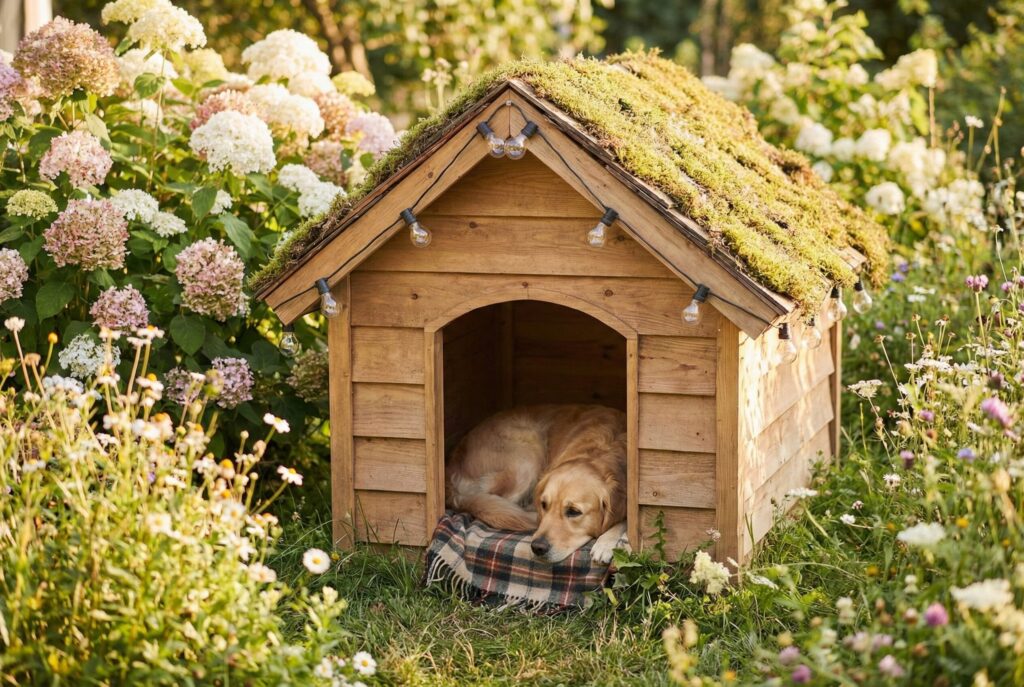
Every dog deserves a space they can call their own. While your bed might be their favorite spot, a dedicated dog house offers security, comfort, and protection from the elements. Building a DIY dog house is more than just a weekend project; it is a gesture of love that allows you to customize a shelter perfectly suited to your dog’s size and personality.
Whether you have a sprawling backyard or a cozy apartment, there is a design here for you. From upcycled pallets to sleek modern architecture, these ideas range from beginner-friendly to expert-level carpentry.
This guide explores over ten creative dog house designs, complete with material lists and style tips to help you build the ultimate canine retreat.
Why Build Instead of Buy?
Before diving into the designs, consider why DIY is often the superior choice. Commercial dog houses can be expensive and often use flimsy plastic or thin wood that lacks proper insulation. When you build it yourself, you control the quality. You can choose rot-resistant cedar, add rigid foam insulation for winter warmth, and ensure the dimensions allow your dog to stand and turn around comfortably. Plus, you can match the aesthetics of your own home, boosting your curb appeal.
1. The Classic A-Frame Cottage
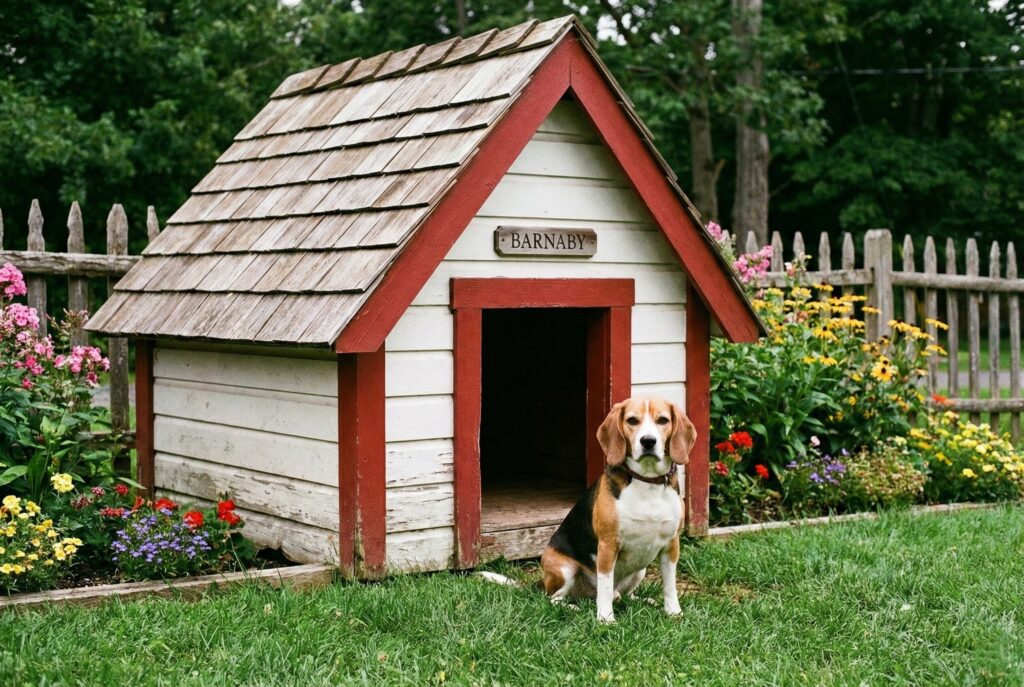
This is the quintessential dog house. The peaked roof sheds rain and snow effectively, making it perfect for regions with harsh weather. It provides plenty of headroom and creates a cozy “den” feeling that dogs naturally crave.
Why it works: It is timeless, structurally sound, and relatively easy to frame.
Best for: Medium to large dogs who need outdoor shelter.
- Materials: 2×4 lumber, plywood sheets, asphalt shingles, exterior paint.
- Difficulty: Beginner to Intermediate.
2. The Modern Minimalist Cube
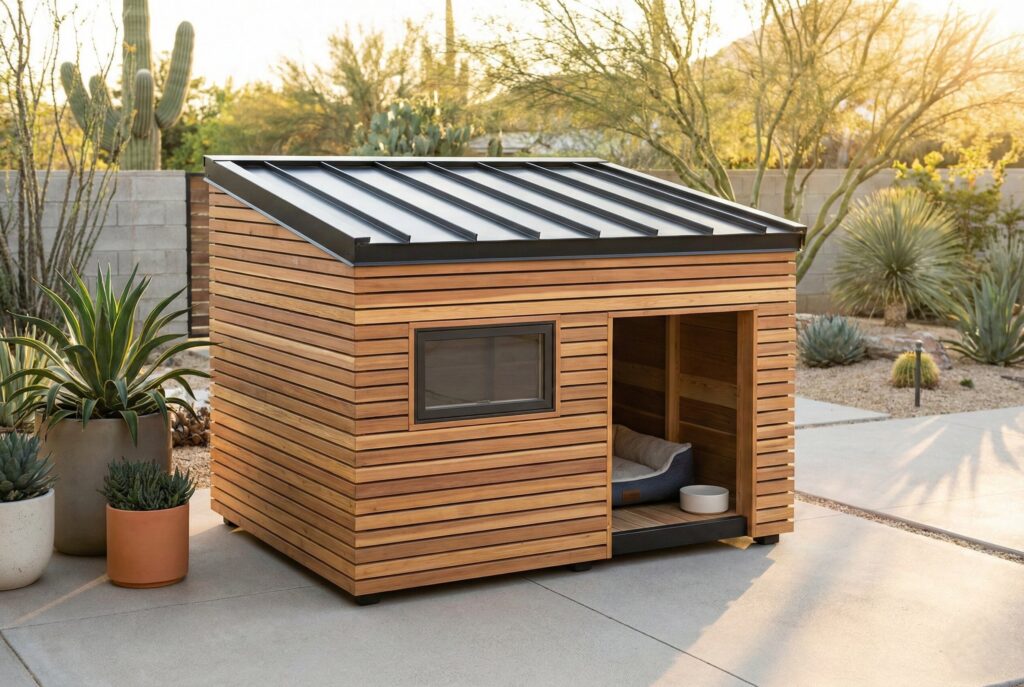
If your home features clean lines and flat roofs, your dog’s house should match. This design uses a shed-style roof (slanted slightly for drainage) and often incorporates mixed materials like wood slats and metal.
Why it works: It looks like a piece of architectural art rather than a simple pet shelter. The flat roof can be hinged to open up for easy cleaning.
Best for: Stylish backyards and modern homes.
- Materials: Cedar siding, corrugated metal roofing, and plexiglass for a small window.
- Difficulty: Intermediate.
3. The Pallet Wood Palace
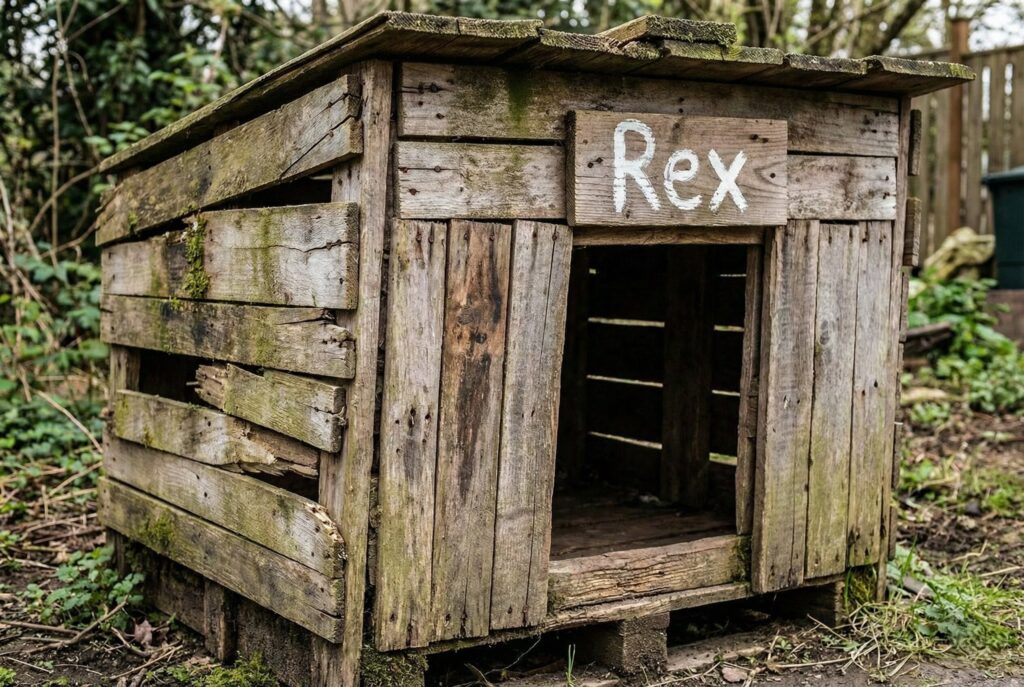
Building on a budget? Shipping pallets are often free and offer a rustic, reclaimed wood aesthetic. This project requires more sanding and prep work, but saves significantly on lumber costs.
Why it works: It is eco-friendly and cost-effective. The weathered wood gives it instant character.
Best for: DIYers on a strict budget who don’t mind extra labor.
- Materials: 4-6 wooden pallets, reciprocating saw, exterior screws, and waterproof sealant.
- Difficulty: Intermediate (requires dismantling pallets).
4. The Porch Paradise
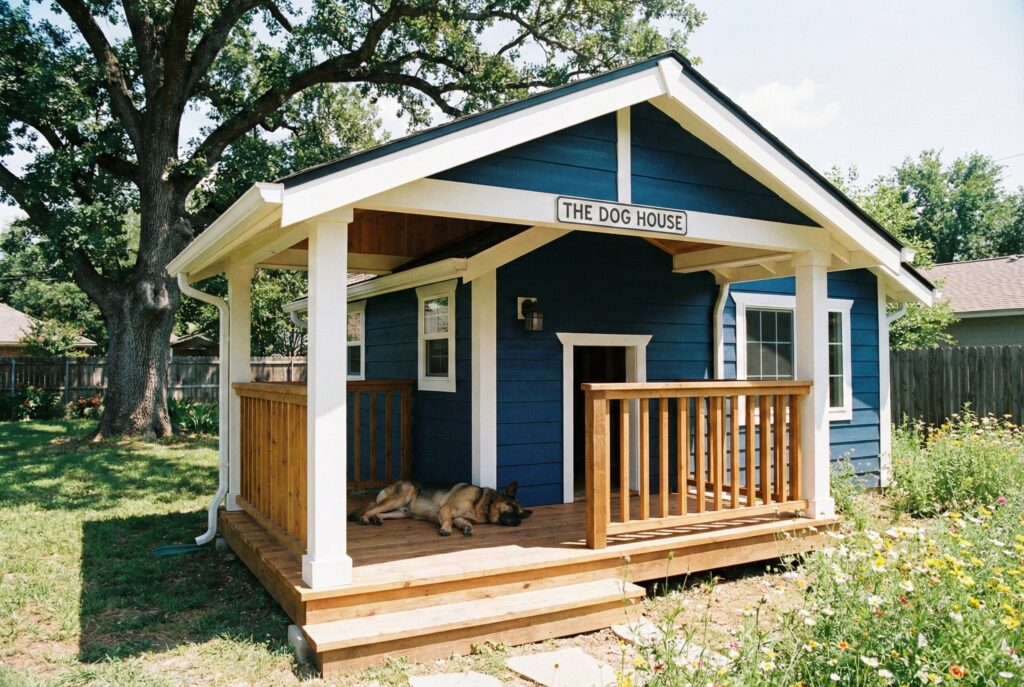
Why stop at just a room? This design adds a covered deck or porch to the front of the house. It gives your dog a place to lounge outside while staying shaded from the sun or protected from light rain.
Why it works: It extends the usable living space. The elevated deck keeps your dog off the cold or muddy ground.
Best for: Dogs who love to “people watch” in the yard.
- Materials: Pressure-treated decking boards, 4×4 posts for elevation, standard framing lumber.
- Difficulty: Advanced.
5. The Indoor End-Table Crate
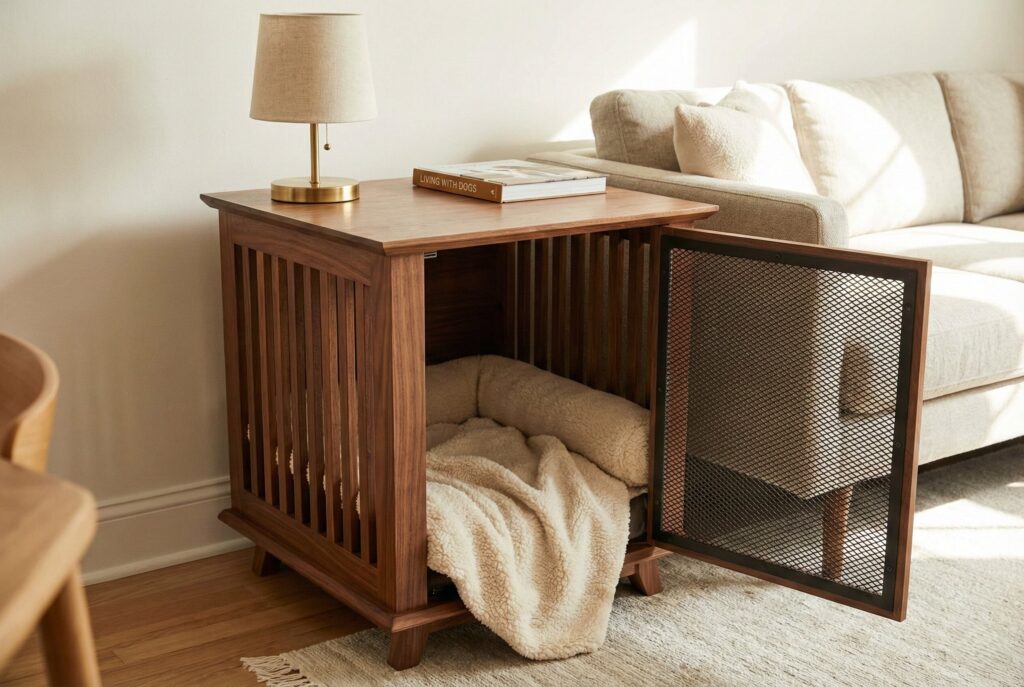
Not all dog houses belong outside. This dual-purpose project functions as a stylish end table for your living room while serving as a crate for your dog. It replaces ugly wire cages with furniture-grade wood.
Why it works: It saves space in apartments and blends seamlessly with your interior decor.
Best for: Small to medium indoor dogs.
- Materials: High-quality plywood or hardwood, decorative metal grating or wooden dowels for bars, stain/varnish.
- Difficulty: Intermediate (requires precise finishing).
6. The Green Roof Bungalow
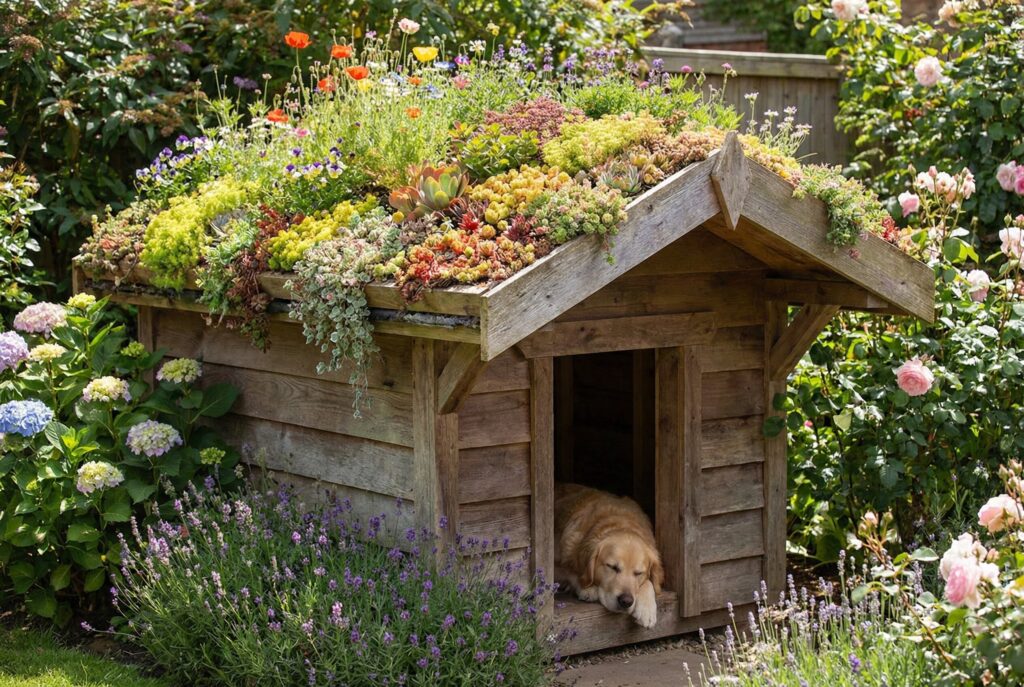
Add a touch of nature and improve insulation by planting a garden on the roof. A living roof keeps the interior cool in summer and warm in winter due to the soil’s thermal mass.
Why it works: It is environmentally friendly and helps the structure blend into a garden landscape.
Best for: Eco-conscious owners and hot climates.
- Materials: Reinforced roof framing (to hold heavy soil), waterproof membrane (EPDM rubber), soil, succulents or grass.
- Difficulty: Advanced.
7. The Log Cabin Retreat
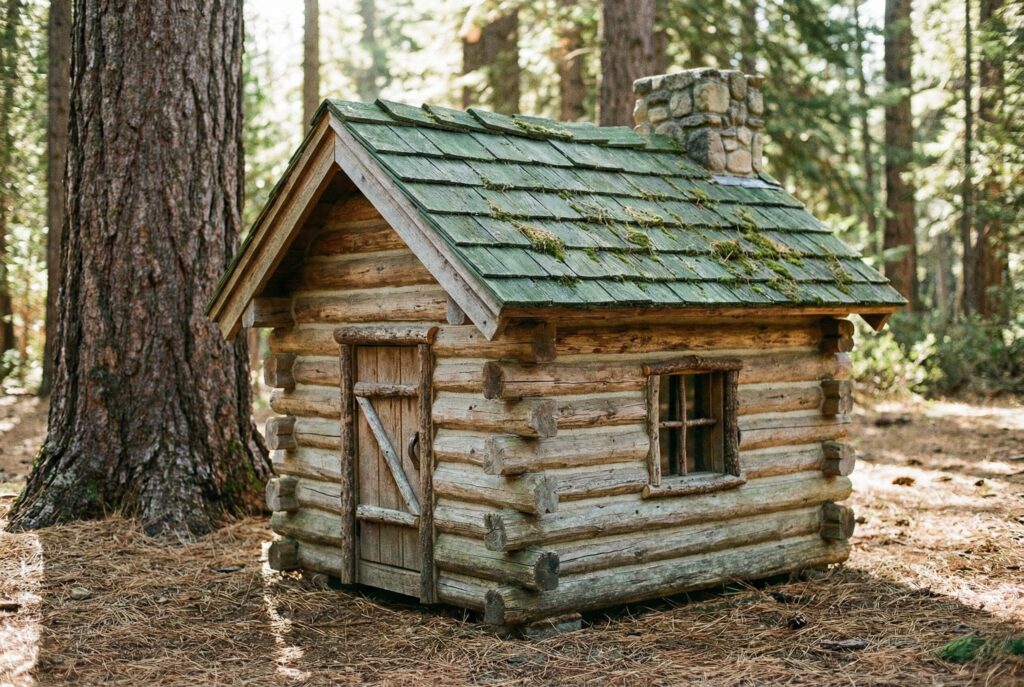
Give your dog the frontier experience. Using landscaping timbers or log siding, you can create a miniature version of a mountain cabin. This style is incredibly sturdy and offers excellent wind protection.
Why it works: The thick walls provide natural insulation and durability against chewing.
Best for: Large breeds and rustic, wooded properties.
- Materials: Landscape timbers or half-log siding, mortar or chinking compound, cedar shakes.
- Difficulty: Intermediate.
8. The Under-Stair Nook
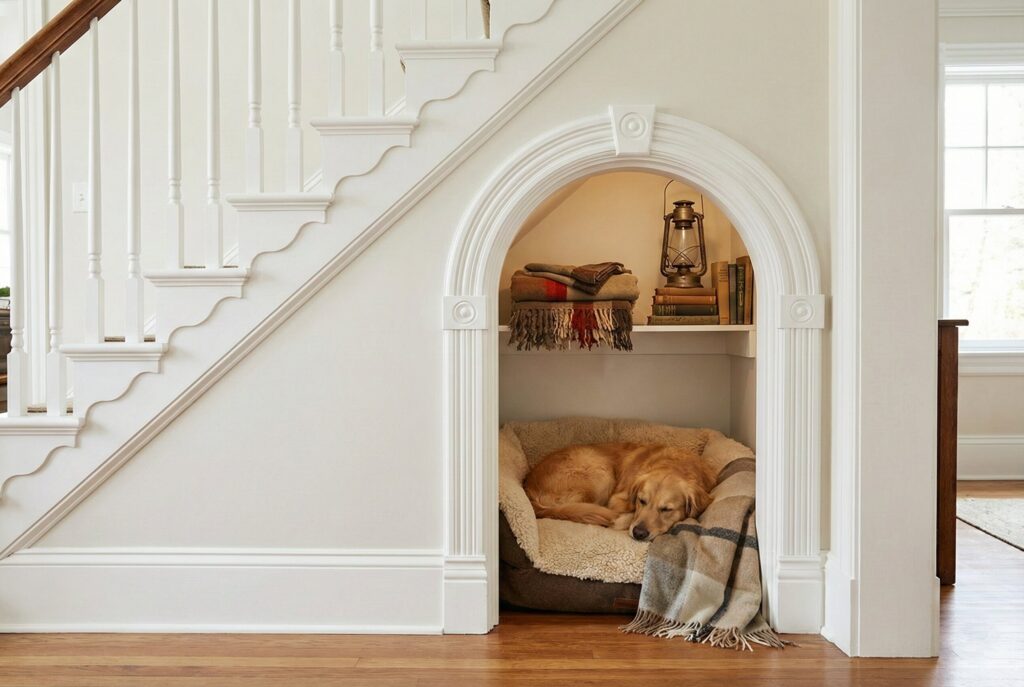
If you are tight on space, look under your staircase. This “Harry Potter” style room utilizes dead space to create a built-in dog house.
Why it works: It requires zero floor space and feels like a safe, enclosed cave, which creates a sense of security for anxious dogs.
Best for: Indoor dogs and homeowners looking to maximize square footage.
- Materials: Drywall, framing studs, trim, a baby gate, or a custom half-door.
- Difficulty: Intermediate (involves cutting into existing walls).
9. The Mobile Camper
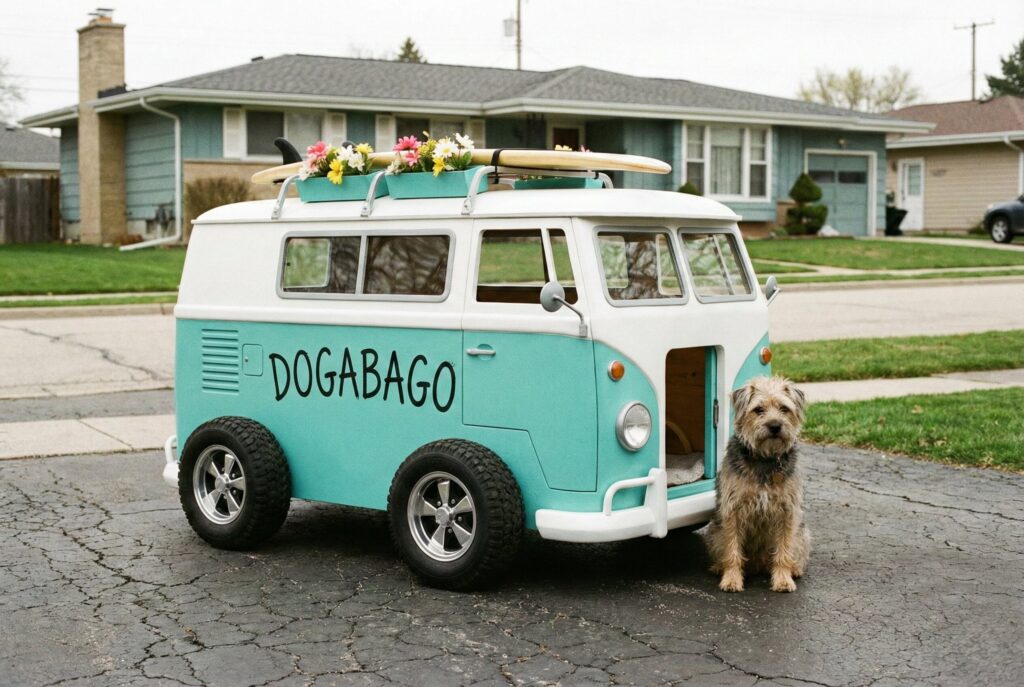
For the dog on the go, this design adds heavy-duty caster wheels to the base. This allows you to move the house around the patio to chase the shade or roll it into the garage during a storm.
Why it works: Versatility. You can easily clean the area underneath the house and relocate it without lifting.
Best for: Patios with changing sunlight patterns.
- Materials: 4 heavy-duty locking caster wheels, lightweight plywood (to keep it mobile), and siding.
- Difficulty: Beginner.
10. The Sun-Soaked Geodesic Dome
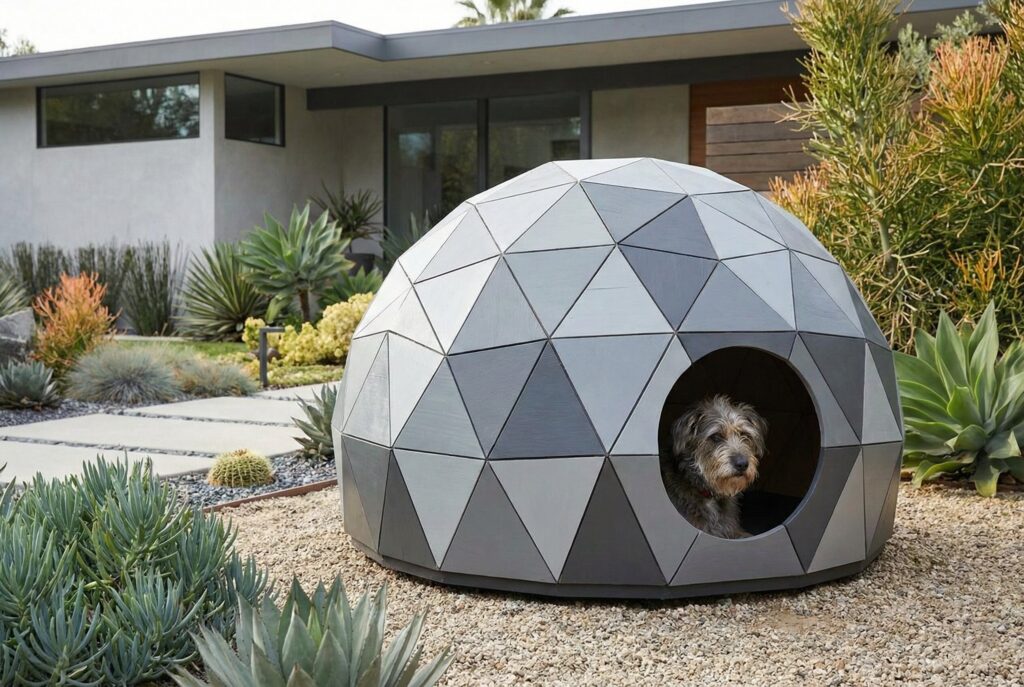
Move away from squares and triangles. A geometric dome made of triangular panels is incredibly strong and handles snow loads well. It looks futuristic and unique.
Why it works: The shape allows for optimal air circulation and is structurally superior to flat walls.
Best for: Areas with heavy snow and owners who love unique architecture.
- Materials: 2×2 lumber for struts, plywood triangles for the skin, exterior paint.
- Difficulty: Advanced (requires complex angles and cuts).
11. The Double-Door Duplex
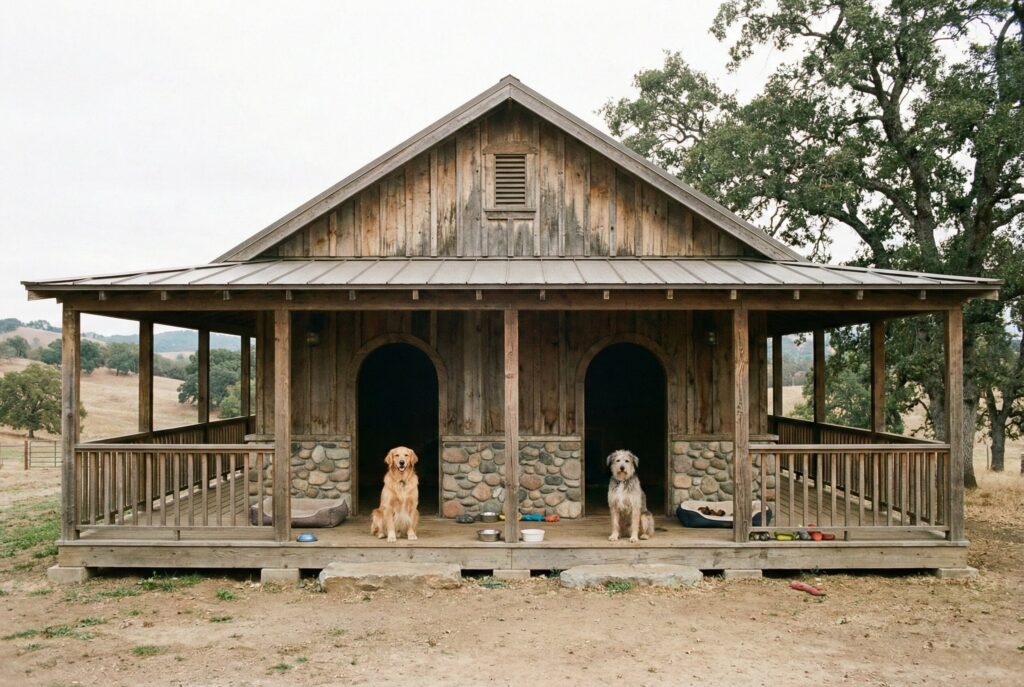
If you have two inseparable dogs, build a duplex. This is a wide structure with two separate doors. You can choose to put a dividing wall in the middle or leave it open so they can snuggle.
Why it works: It saves materials compared to building two separate structures and keeps the pack together.
Best for: Multi-dog households.
- Materials: Double the standard lumber, a removable center partition plywood board.
- Difficulty: Intermediate.
12. The Wine Barrel Hideaway

Repurposing a large wine or whiskey barrel is one of the easiest ways to make a shelter. The wood is high quality (often oak), and the curved shape is naturally water-resistant.
Why it works: No framing required. It is an instant, stylish shelter that requires minimal assembly.
Best for: Small to medium dogs and rustic decor.
- Materials: Used wine/whiskey barrel, jigsaw, stand/cradle (to prevent rolling).
- Difficulty: Beginner.
Essential Considerations for Your Build
Before you buy your first board, you must consider the practical side of construction to ensure the house is safe and comfortable.
1. Sizing is Critical
A common mistake is building too big. A dog house relies on the dog’s body heat to stay warm in winter. If the house is massive, that heat disperses, and the dog freezes.
- Height: The dog should be able to stand up without their head hitting the roof.
- Width/Length: The dog should be able to lie down flat and spin around comfortably.
- Doorway: Keep it relatively small to trap heat. It should be just big enough for them to enter.
2. Insulation and Ventilation
If your dog spends time outside in extreme temperatures, single-wall plywood isn’t enough.
- Insulation: Use rigid foam insulation boards sandwiched between the interior and exterior walls.
- Ventilation: Drill small holes near the peak of the roof to allow hot air and moisture to escape during summer.
3. Location and Elevation
Never put a dog house directly on the dirt. The ground wicks moisture into the wood, causing rot and making the floor cold.
- Elevation: Build the floor frame on pressure-treated 4×4 skids or use bricks to lift the house a few inches off the ground.
- Placement: Face the door away from the prevailing wind. In the summer, place it in the shade.
Frequently Asked Questions
What is the best wood for a dog house?
Cedar and redwood are the top choices because they are naturally resistant to rot and insects without needing chemical treatments. If you use pine, ensure it is sealed with a non-toxic exterior paint or stain. Avoid pressure-treated wood for interior surfaces your dog might chew, as the chemicals can be toxic.
Does a dog house need bedding?
Yes. A hard wooden floor is uncomfortable and cold. Use cedar shavings (which repel fleas), straw (excellent for warmth), or a washable outdoor dog bed. Avoid blankets in damp conditions as they can freeze or grow mold.
How do I keep the dog house warm in winter?
Aside from insulation, you can install a heated kennel mat designed for outdoor use. A heavy-duty plastic flap over the door also helps retain heat significantly by stopping drafts.
Can I use pallets safely?
Yes, but look for the “HT” stamp, which stands for Heat Treated. Avoid pallets marked “MB” (Methyl Bromide), as they have been treated with toxic chemicals. Always sand pallet wood thoroughly to remove splinters.
Final Thoughts
Building a DIY dog house allows you to provide a safe haven that fits your dog’s specific needs and your home’s style. Whether you choose the complex Geo Dome or the simple Barrel Hideaway, the effort you put in translates directly to your pet’s comfort.
Start by measuring your dog, sketching your plan, and gathering your materials. With a weekend of work, you will create a dreamy backyard retreat that will get tails wagging for years to come.