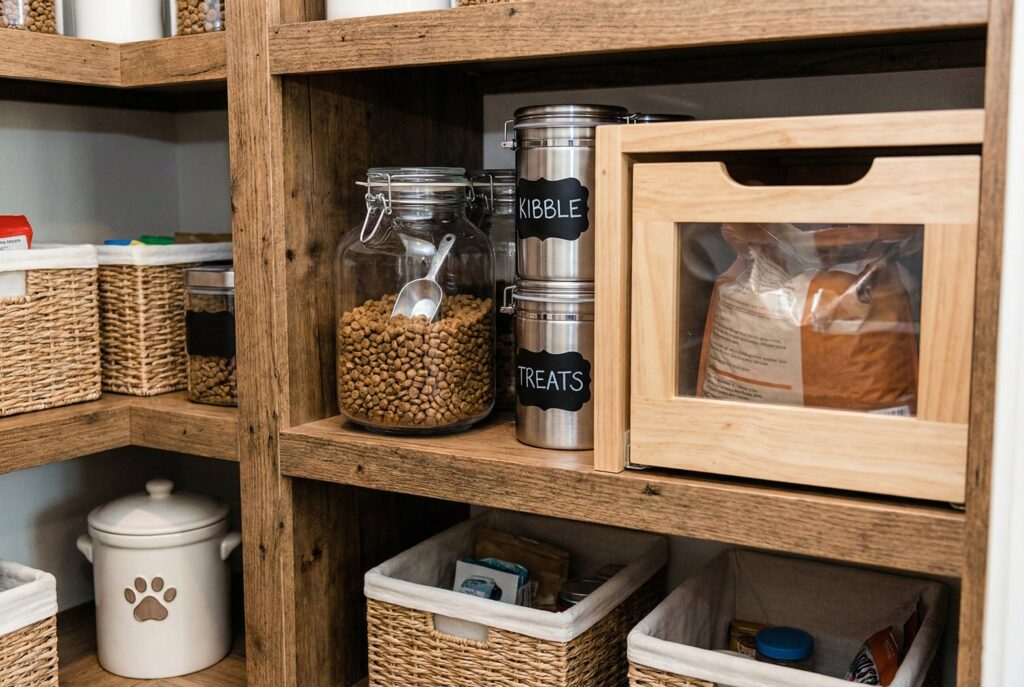
Every dog owner knows the struggle. You buy a brand-new, giant bag of dog food. You open it up, and suddenly you have an awkward, heavy sack taking up space in your kitchen or pantry. It spills easily. It is hard to seal back up. Worst of all, if left open, that expensive kibble goes stale fast and can attract unwanted pests like ants or pantry moths.
Proper dog food storage is not just about making your home look neat. It is essential for your dog’s health and your wallet. Keeping food fresh ensures your pet gets the nutrients they need without the risk of eating spoiled fats or mold.
This guide will cover everything you need to know about storing dry dog food. We will look at why storage matters, the best materials to use, essential rules for keeping food safe, and then dive into over ten specific storage ideas for every space and budget.
Why You Need to Upgrade Your Dog Food Storage
Leaving dry dog food in an open bag is a bad idea for several reasons. Kibble seems shelf-stable, but it is a perishable food product. When you expose it to the elements, it starts to degrade.
The Enemy: Air and Oxidation
Dog food contains fats and oils that are essential for your dog’s coat and energy. When these fats are exposed to oxygen in the air, they begin to oxidize. This is the process that makes food go rancid. Rancid food smells bad, tastes terrible to your dog, and can actually make them sick. An airtight seal is the single most important feature of any storage solution.
Moisture and Mold
Humidity is dangerous for dry kibble. If moisture gets into the food, it creates the perfect environment for mold and bacteria to grow. Some molds produce mycotoxins, which are highly poisonous to dogs. You must keep the food bone dry.
Pests and Rodents
An open bag of food is an invitation to pests. Ants, cockroaches, pantry moths, and mice can easily chew through paper bags. Once they are in, they contaminate the entire supply with bacteria and feces. A durable container is necessary to lock them out.
Temperature Fluctuations
Heat speeds up the degradation process. Storing food next to the oven, under a sink near hot water pipes, or in a hot garage will cause it to spoil much faster than the expiration date suggests.
Choosing the Right Container Material
Not all storage containers are created equal. The material you choose affects durability, safety, and cleaning ease.
BPA-Free Plastic
Plastic is the most common choice because it is lightweight and affordable. It is easy to move around, especially for large amounts of food.
The important rule: Only use plastics labeled “BPA-free” and food-grade. Some lower-quality plastics can leach harmful chemicals into the food over time. Look for containers with thick walls and high-quality silicone gaskets in the lids to ensure they are truly airtight.
Stainless Steel
Stainless steel is an excellent, durable option. It is non-porous, meaning it won’t absorb oils or odors from previous batches of food. It is incredibly easy to sanitize and is completely chew-proof against rodents. It often looks sleeker in a modern kitchen than plastic bins.
Glass
Glass jars are fantastic for smaller dogs or for storing treats. Glass is inert, so it will never transfer chemicals or tastes to the food. Being able to see exactly how much food is left is a big plus. However, glass is heavy and breakable. Large glass jars filled with 40 pounds of kibble are generally impractical and dangerous to move.
Decorative Wood or Wicker
Many people want to hide dog food in plain sight using decorative baskets or wooden furniture bins. While these look nice, they are rarely airtight on their own. If you use these, you must use the “bag-in-bin” method described below. Do not pour kibble directly into a wicker basket or wooden drawer, as the oils will seep into the material and go rancid, making it impossible to clean.
The Golden Rules of Dog Food Storage
Before we look at specific product ideas, you need to know the best practices for handling the food. Following these rules will keep your dog safe.
The “Bag-in-Bin” Method
This is a controversial topic, but many veterinarians and pet food manufacturers recommend keeping the kibble inside its original packaging and placing the entire bag into your airtight container.
Why? The original bags are specifically engineered with barriers to keep oil in and air out. Furthermore, if there is ever a recall on your dog food, you need the lot number and barcode printed on the bag. If you pour the food out and throw away the bag, you lose that vital information.
Wash Between Every Refill
If you do pour kibble directly into a container, you must wash the container every single time it gets empty. Do not just top it off with a new bag.
The fats and crumbs from the old food stick to the bottom and sides of the container. Over time, this residue goes rancid and grows bacteria. When you add fresh food on top, the old residue contaminates the new batch. Wash the bin with hot, soapy water and ensure it is completely bone dry before adding new food.
Cool, Dry, and Dark Locations
Where you store the container is just as important as the container itself. Ideally, dog food should be stored in a pantry, closet, or a climate-controlled room.
- Avoid heat: Do not store it in a garage or shed where temperatures spike in the summer.
- Avoid moisture: Do not store it in a damp basement or under a sink where leaks might occur.
- Avoid sunlight: UV rays can degrade vitamins in the food. If using clear containers, keep them in a dark cupboard.
10+ Dog Food Storage Ideas
Here are over ten practical and stylish ways to organize your dog’s food, ranging from simple pantry solutions to creative DIY projects.
1. The Classic Rolling Airtight Bin
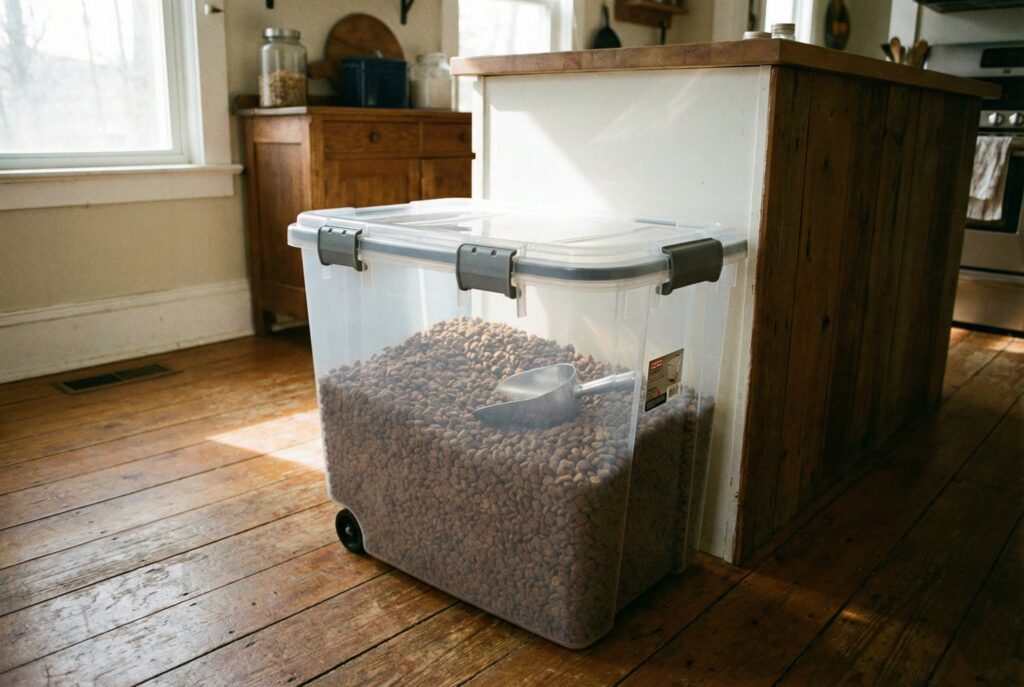
For medium to large dogs, you are likely buying 30 to 50-pound bags of food. Lifting these bags is difficult. A large, BPA-free plastic bin on sturdy caster wheels is the most practical solution. Look for one with a heavy-duty locking latch and a silicone seal to ensure it is airtight. The wheels allow you to easily roll it out of a pantry closet to scoop food and roll it back in.
2. Countertop Stainless Steel Canisters
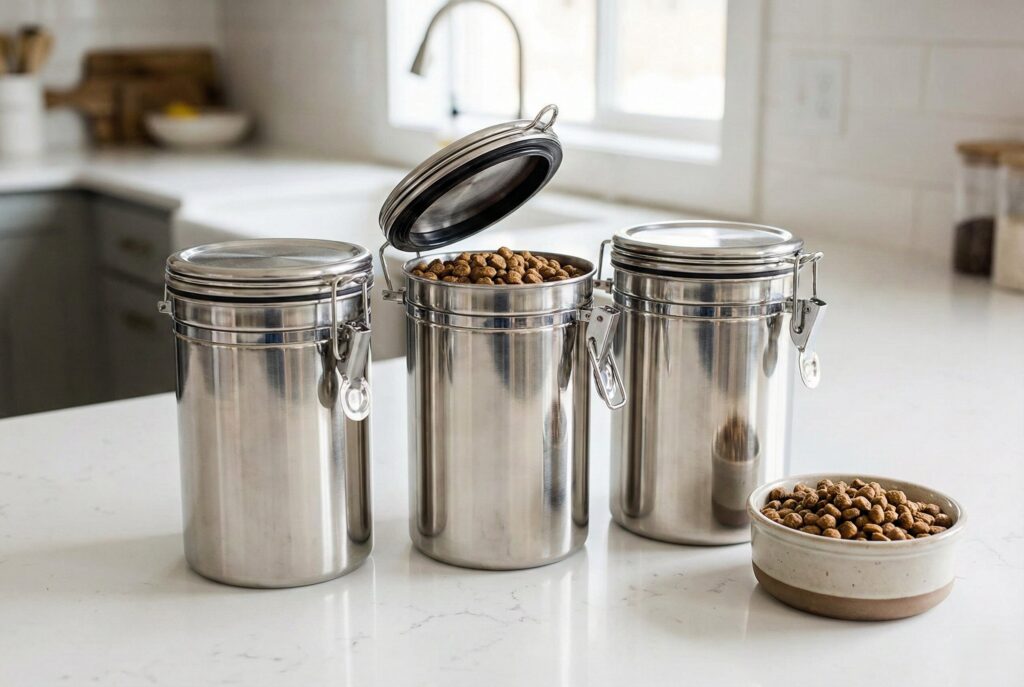
If you have a small dog, you don’t need a giant bin. A sleek stainless steel canister sitting on the kitchen countertop is convenient and looks good. These often come with clamp-style lids that provide an excellent seal. Because they are opaque, they protect food from sunlight if your kitchen is bright. They are very easy to wipe down and keep clean.
3. Large Glass Jars for Pantry Aesthetics
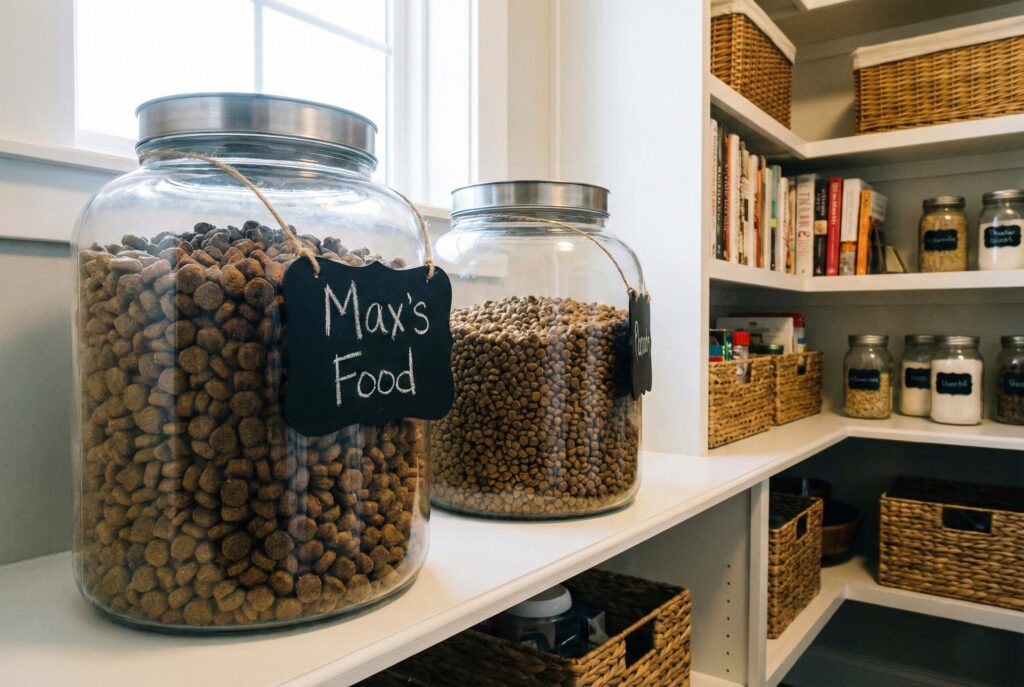
For the organized pantry enthusiast, large glass jars (like Anchor Hocking-style jars) offer a beautiful, uniform look. You can see exactly when you are running low. Since glass is heavy, these are best suited for shelves at eye level or lower, and for smaller amounts of food (perhaps a week’s worth at a time if you have a big dog). Ensure the lid has a rubber gasket for freshness.
4. The Pull-Out Kitchen Cabinet Drawer
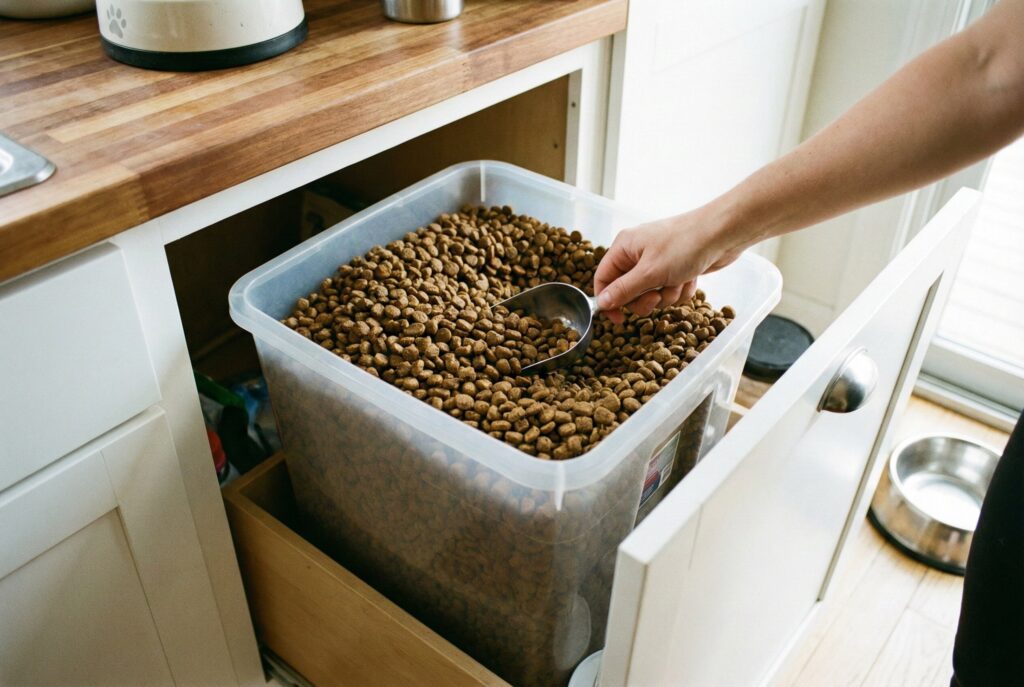
If you are renovating a kitchen or have a spare deep drawer, dedicate it to dog food. You can install a specialized insert bin that fits perfectly into the drawer, or simply place a large, rectangular airtight container inside. This keeps the food completely hidden but easily accessible right where you feed the dog.
5. Stackable Modular Bins for Small Spaces
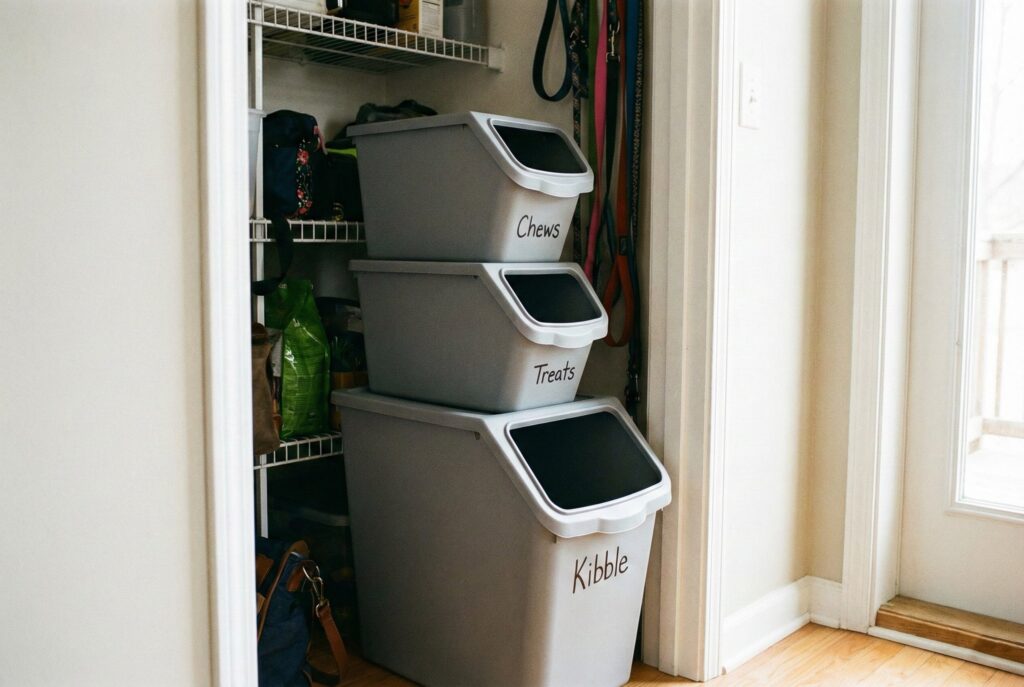
If you are short on floor space, look up. Stackable container systems are great for small apartments or tight pantries. You can have a large bin on the bottom for kibble and stack smaller, matching bins on top for treats, dental chews, or canned food. This utilizes vertical space efficiently.
6. Repurposed Vintage Popcorn Tins
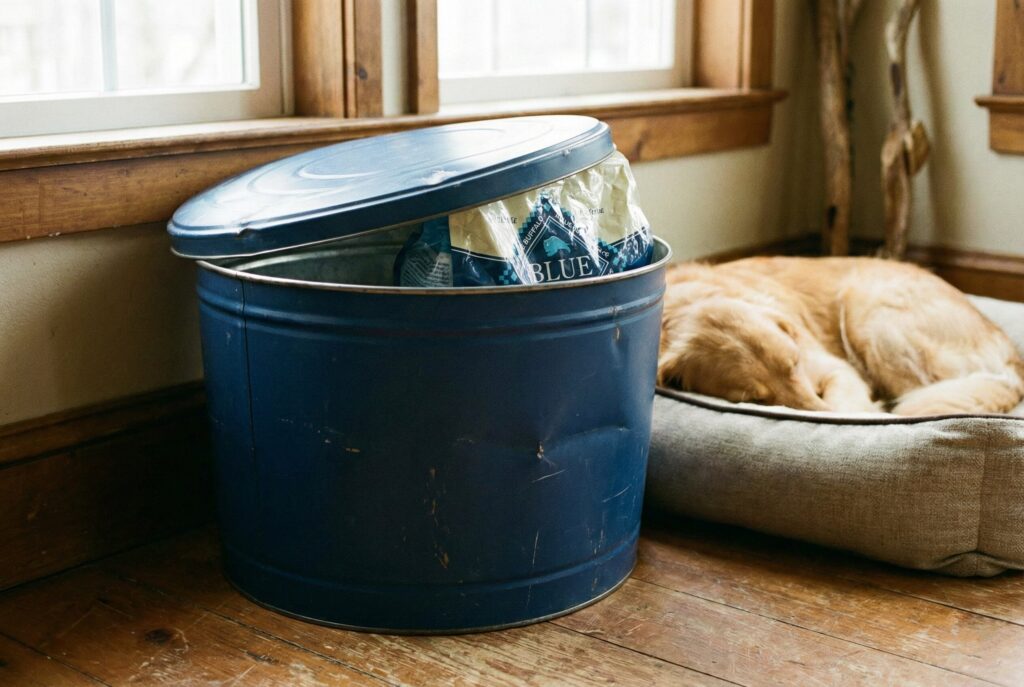
For a retro or DIY vibe, those large metal tins that popcorn comes in during the holidays can be repurposed for dog food storage. They are metal, so they are rodent-proof. However, the lids are rarely perfectly airtight. If you use this method, it is vital to use the “bag-in-bin” technique to ensure freshness. You can spray paint the outside to match your decor.
7. Decorative Wicker Basket with a Hidden Liner
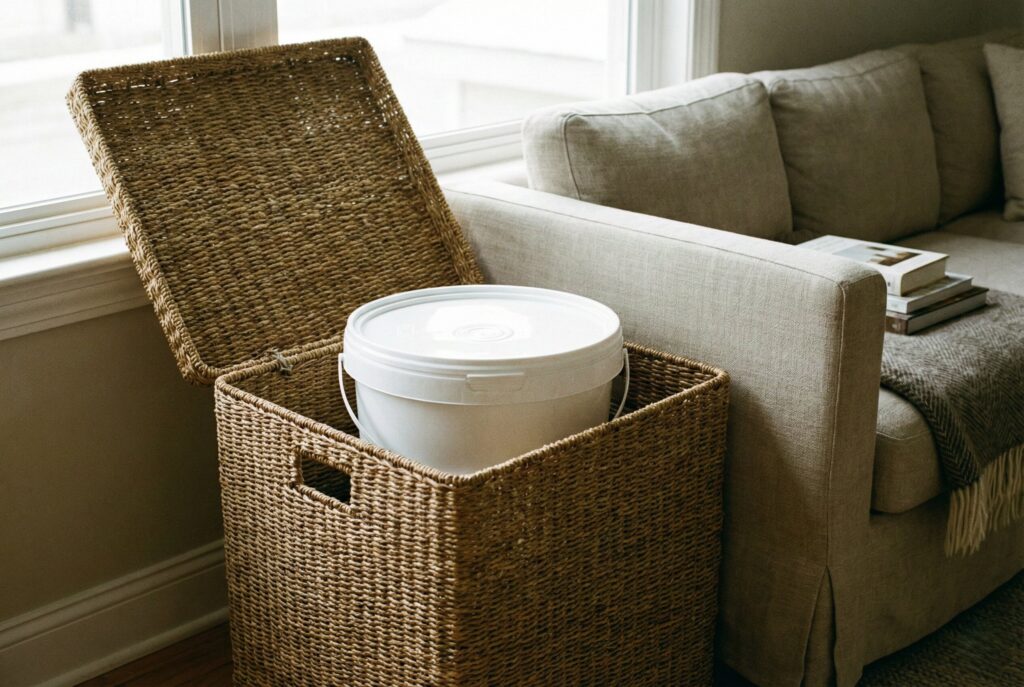
If you want your dog food storage to blend into a living room or dining area, a large, sturdy wicker basket with a lid can work. The trick is that you cannot put food directly in it. You must find an airtight plastic container that fits inside the basket. The basket acts as camouflage for the ugly plastic bin.
8. Wall-Mounted Dry Food Dispenser
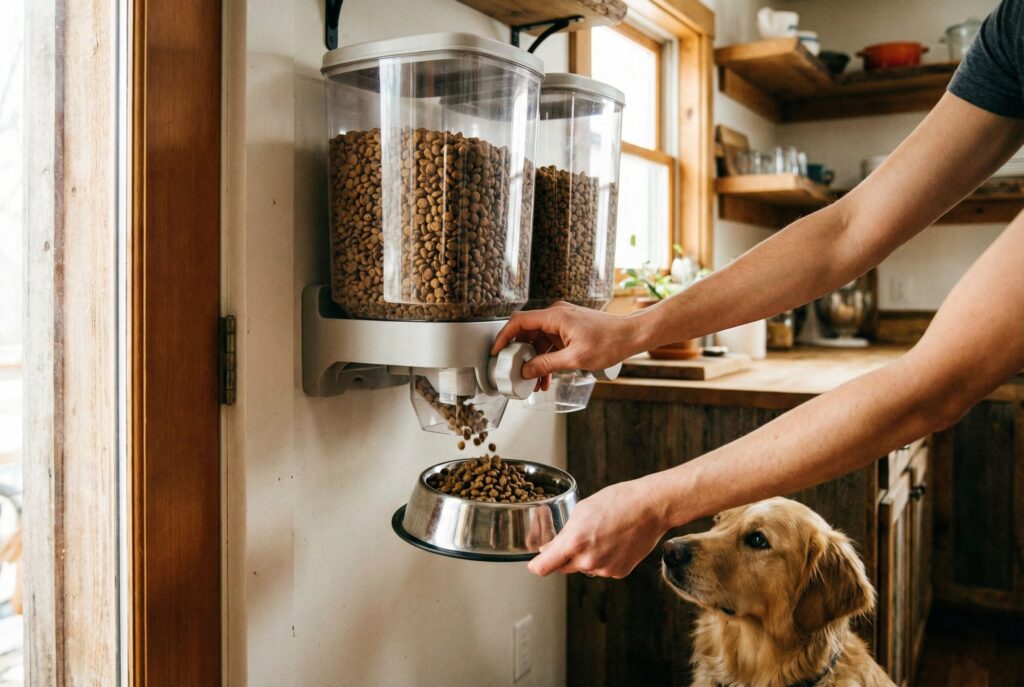
Similar to cereal dispensers found in hotel breakfast bars, you can buy larger versions for dog food. These mount to the wall, freeing up floor and shelf space. You simply place the bowl under the spout and turn a knob to dispense a portion. These are best for small to medium-sized kibble; large chunks may get stuck. Ensure the top lid seals tightly.
9. Wooden Tilt-Out Trash Bin Cabinet
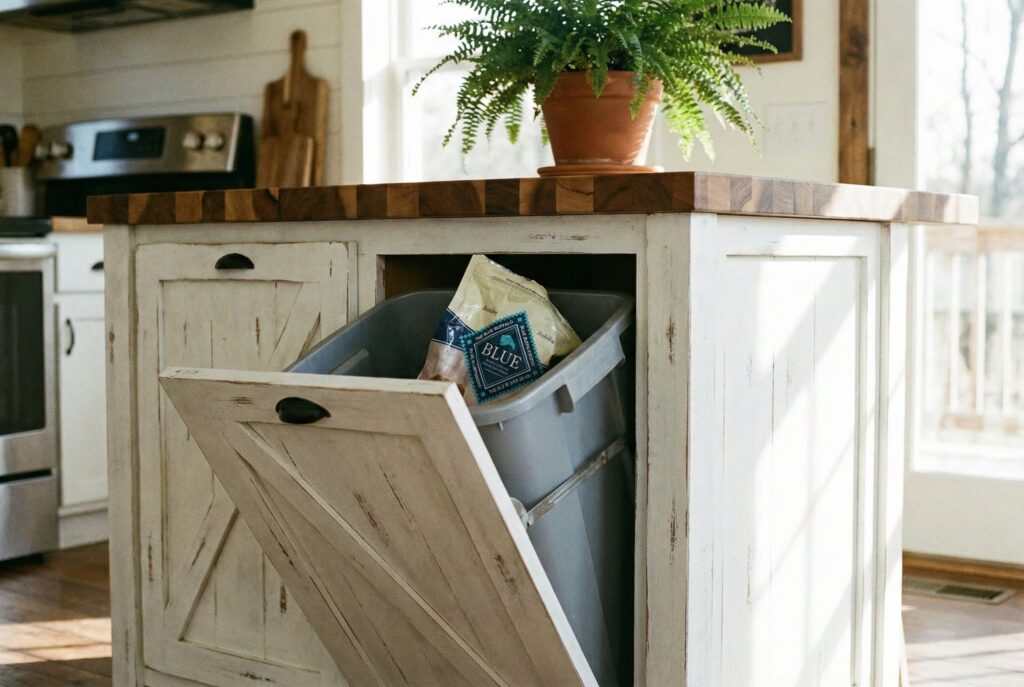
Furniture designed to hide kitchen trash cans works perfectly for large amounts of dog food. These are wooden cabinets with a front panel that tilts outward, holding a large plastic bin. It looks like a regular piece of furniture rather than storage. You can keep the food in its bag inside the bin, or use a bin with a tight lid inside the cabinet.
10. Utility Cart Station
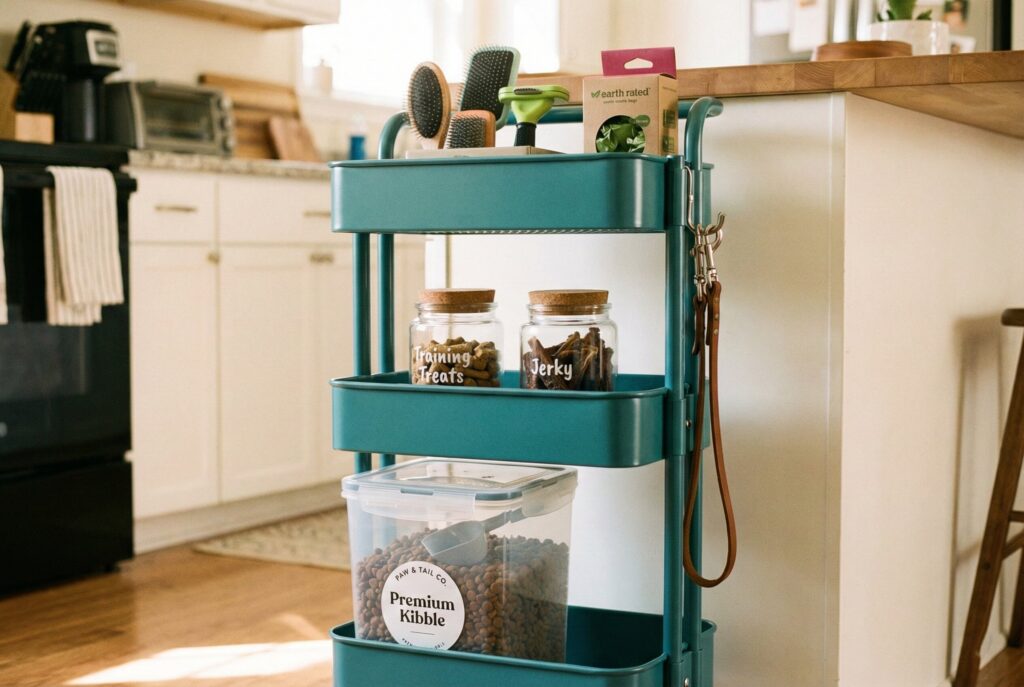
Create a mobile “dog station” using a multi-tiered utility cart (like an IKEA Råskog). Place a medium-sized airtight bin for food on the bottom shelf. Use the middle and top shelves for treat jars, leash storage, poop bags, and grooming tools. You can roll the whole station wherever you need it.
11. The Bench Seat Hideaway
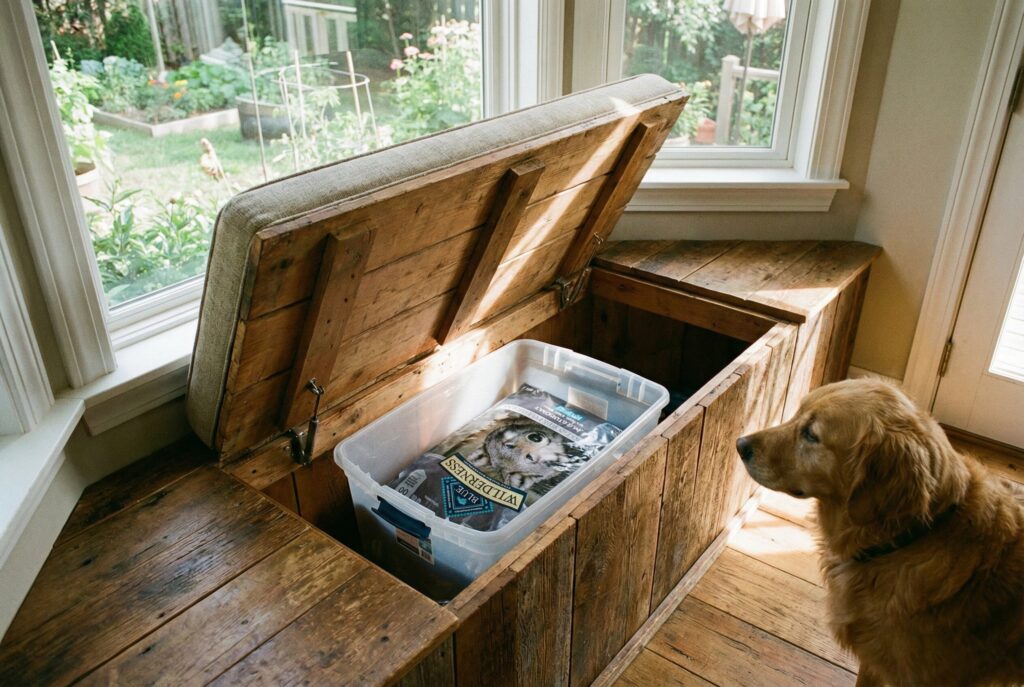
If you have a breakfast nook or an entryway with a storage bench, utilize the space beneath the seat. Many benches have hinged seats that open up to deep storage compartments. This is exceptional for hiding very large bags of food. Like wicker baskets, you must use an airtight liner bin inside the bench to protect the food and the furniture.
12. Mason Jars for Daily Portions or Treats
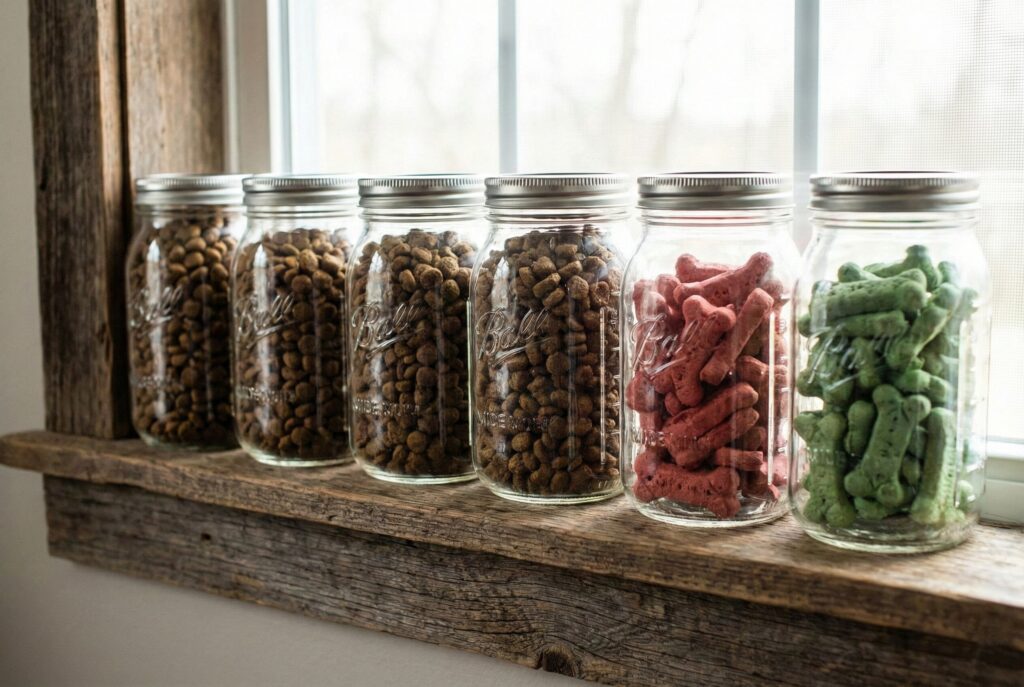
While not for bulk storage, standard mason jars are excellent for organization. If you have a pet sitter coming, you can pre-measure each meal into individual mason jars so they don’t overfeed your dog. They are also perfect for keeping varied treats fresh and visible on a shelf.
Summary
Investing a little time and money into proper dog food storage pays off significantly. You will reduce waste from stale food, keep pests out of your home, and most importantly, ensure your dog is eating safe, nutritious meals every day. Whether you choose a simple rolling plastic bin or a hidden furniture solution, always prioritize an airtight seal and regular cleaning.