
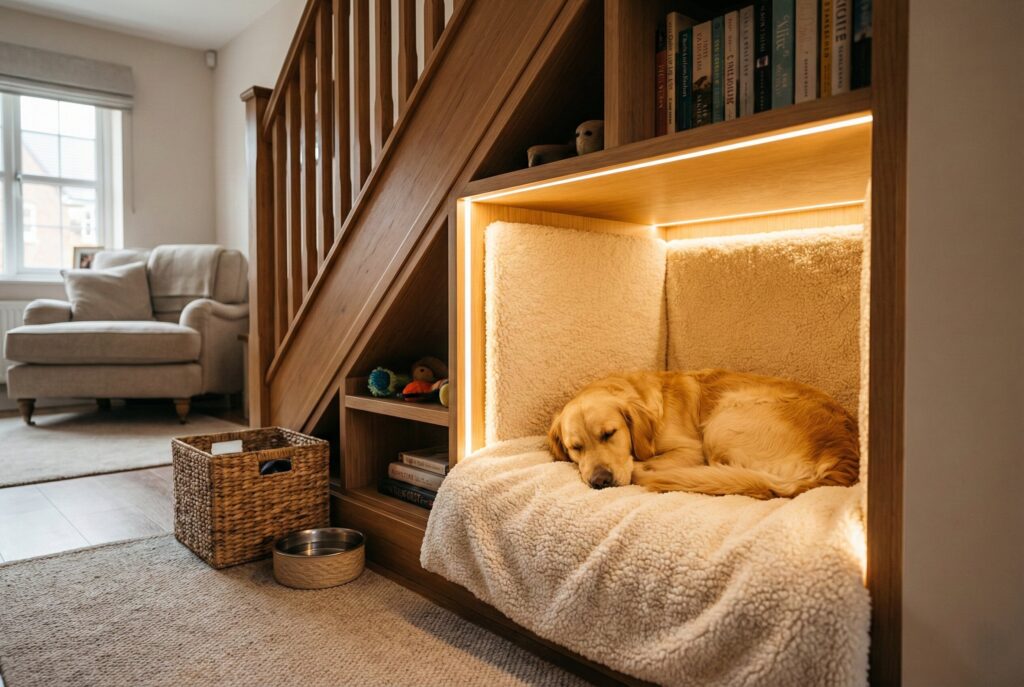
Every dog owner knows the struggle of finding the perfect spot for a dog bed. Large, fluffy beds take up valuable floor space in living rooms or bedrooms. They can easily become tripping hazards or disrupt the flow of your home decor. However, there is often a hidden gem in many two-story homes that goes completely unused: the space under the stairs.
This area, frequently relegated to storing old shoes, vacuum cleaners, or holiday decorations, is actually the ideal location for a dog nook. Transforming the under-stairs area into a dedicated dog zone is a brilliant home improvement project. It maximizes your square footage and clears clutter from other rooms.
More importantly, it benefits your canine companion. Dogs are den animals by instinct. They naturally seek out small, enclosed, and secure spaces where they feel safe to rest. An under-stairs dog bed provides exactly this type of sanctuary. It is a semi-private area where they can retreat from the hustle and bustle of the household while still being nearby.
This guide will walk you through everything you need to know about creating the perfect under-stairs dog nook, from assessing your space to choosing the right design style. We have compiled over ten distinct ideas to inspire your project, complete with prompts to help you visualize the final result.
Before You Start: Assessing Your Under-Stairs Space
Before you begin tearing down drywall or buying lumber, you must evaluate the existing structure. Not all under-stairs areas are created equal.
Measurements and Dimensions
The first step is accurate measurement. You need to determine the height at the tallest point, the height at the lowest usable point, the depth, and the width of the space.
Your dog’s size is the deciding factor here. A Great Dane needs significantly more height and depth than a Chihuahua. Your dog should be able to stand up, turn around comfortably, and stretch out fully when lying down. If the space is too cramped, they will not use it.
Checking for Utilities
The space under the stairs is a common route for household utilities. Behind the drywall, there may be electrical wiring, plumbing pipes, or HVAC ducts.
Before cutting into any walls, use a stud finder that detects wires and pipes. If you are unsure, it is highly recommended to consult with a professional contractor or electrician. Moving utilities can become expensive quickly, so it is often easier to design around them.
Ventilation and Climate Control
An enclosed space needs airflow. If you plan to install a solid door, you must ensure there is adequate ventilation so the space does not become stuffy or overheated.
Consider incorporating vents into the design or using a slatted door style. Check for drafts as well. If the floor under the stairs is concrete or uninsulated tile, it might get too cold in the winter. You may need to add a subfloor or a raised platform for the bed.
10+ Cozy Dog Bed Under Stairs Ideas
Here are distinct design concepts to transform your under-stairs closet into a canine paradise.
1. The Open-Concept Nook
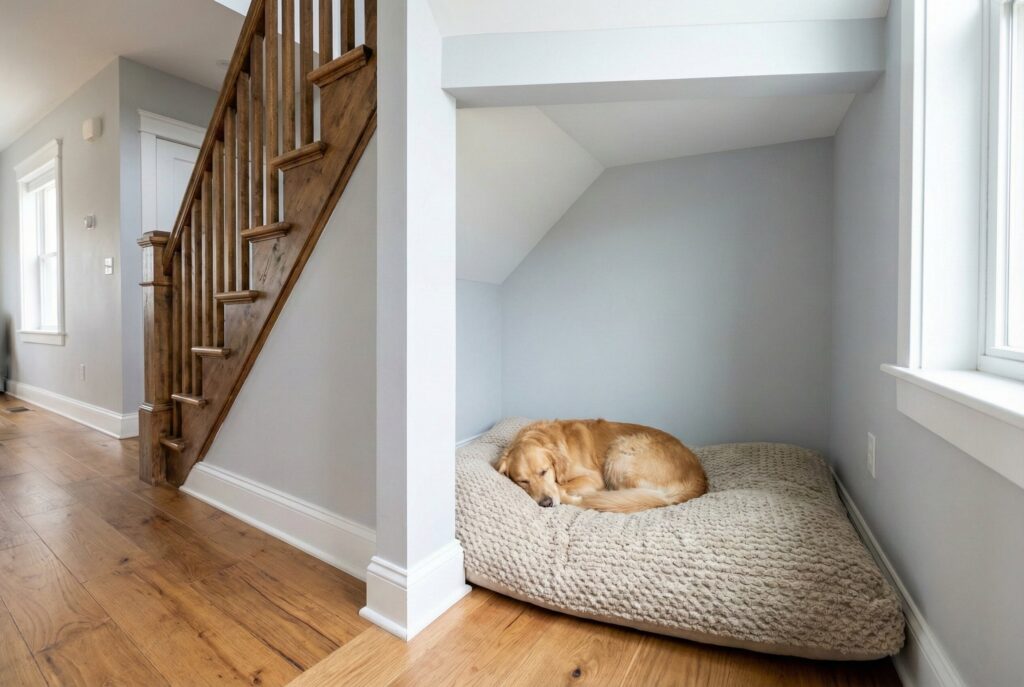
This is the simplest and most approachable design. It involves removing the existing door and frame to create an open alcove. The focus here is on easy access for the dog and seamless integration with the surrounding room. You can finish the interior walls with paint that matches your hallway or add durable beadboard paneling for protection against scuffs. A thick, high-quality dog mattress sits directly on the floor.
2. The Modern Minimalist Cave
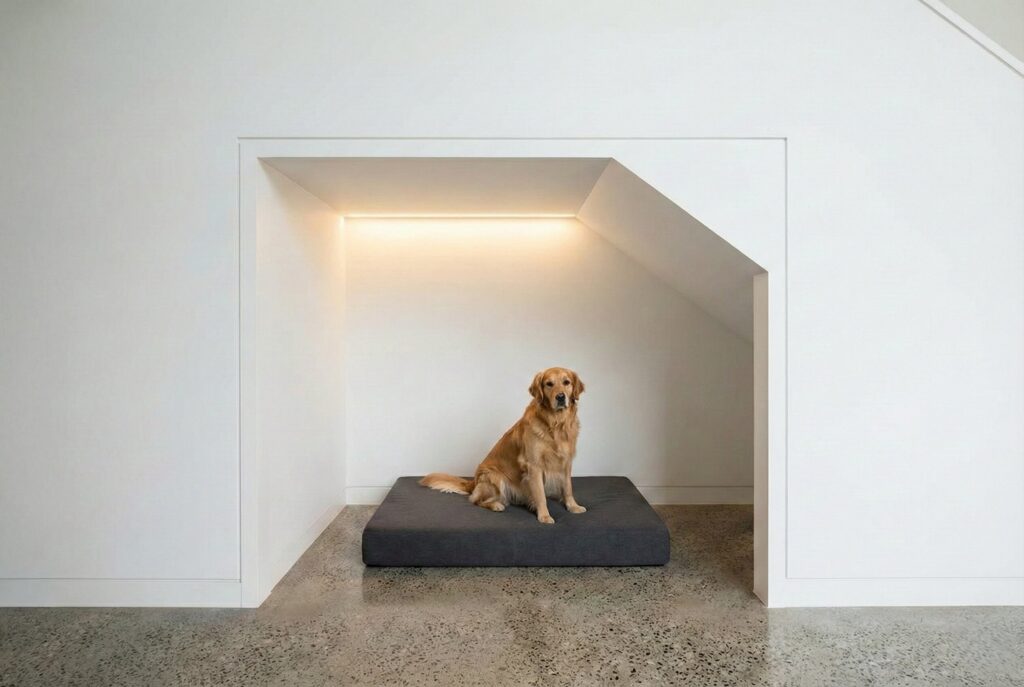
For contemporary homes, less is more. This design features clean lines and neutral colors. The opening is a simple, drywall-finished arch or rectangle without trim. Inside, the design is sparse. The bedding should be a sleek, rectangular mattress in a solid color like charcoal or navy. Avoid excessive blankets or pillows. The goal is a calm, clutter-free zone that looks intentional and high-end.
3. The Rustic Farmhouse Kennel
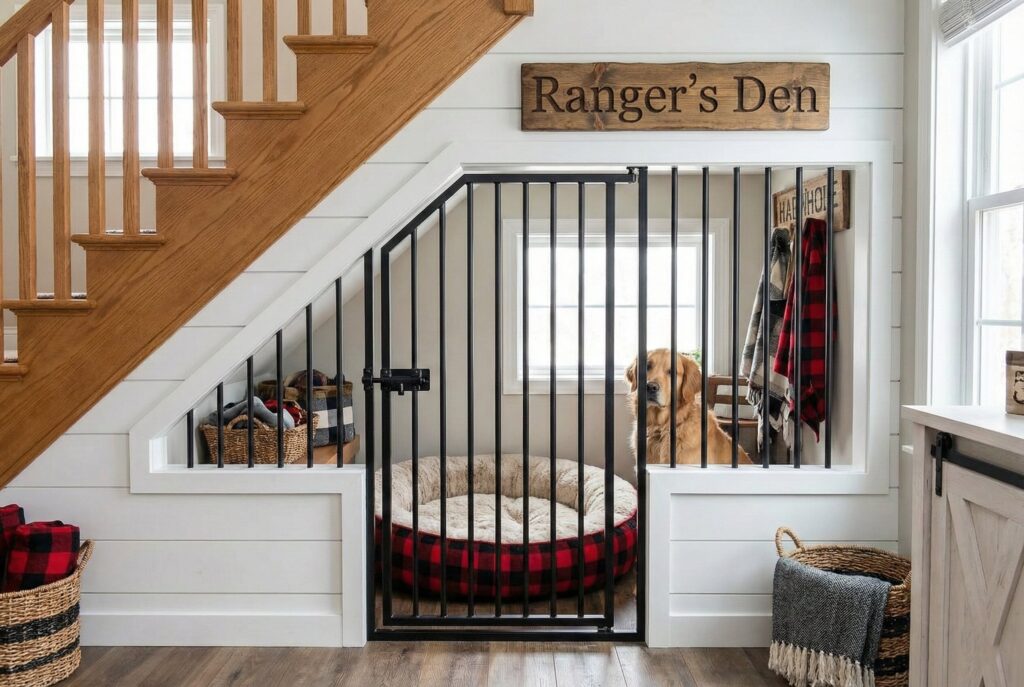
This style is incredibly popular and adds warmth to a home. It utilizes materials like reclaimed wood, shiplap, and black metal hardware. Instead of leaving the space completely open, you install a custom-built half-door or a full gate made of wood and metal bars. This resembles a high-end built-in crate. It is excellent for puppies or dogs that need to be securely contained when you are away, providing safety without the ugly aesthetic of a wire crate.
4. The Cozy Cottage Hideaway
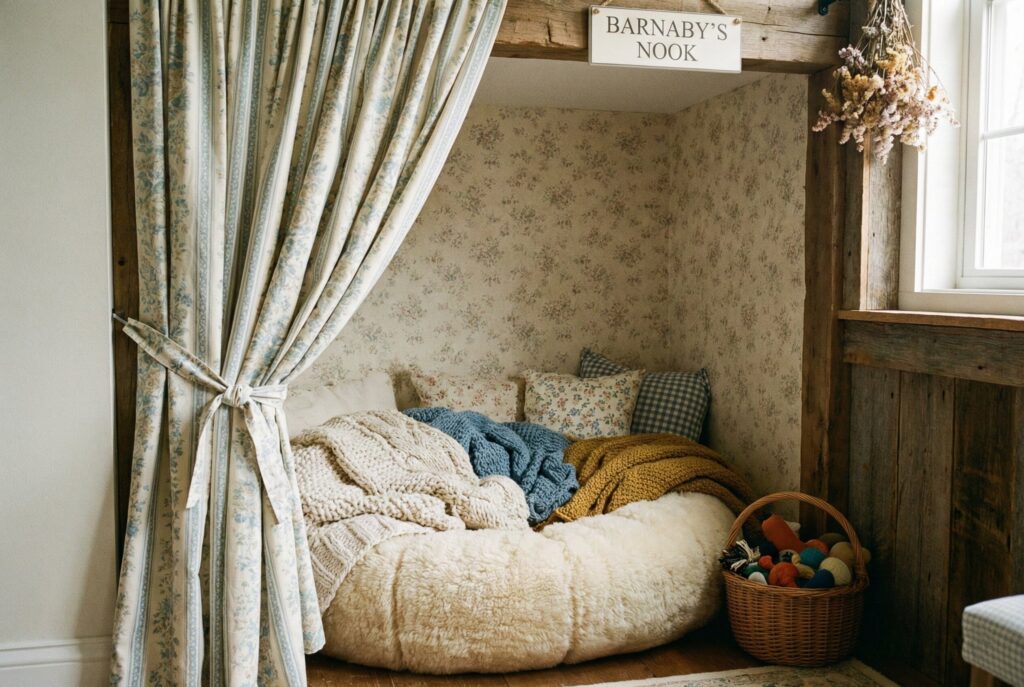
This approach focuses on softness, patterns, and comfort. It is perfect for smaller dogs. Instead of a rigid door, use a high-quality fabric curtain suspended from a tension rod inside the frame. This allows the dog easy entry while providing a sense of privacy. The interior can be wallpapered in a charming floral or gingham pattern. The bedding should be plush, with plenty of extra blankets and pillows for burrowing.
5. The Sliding Barn Door Den
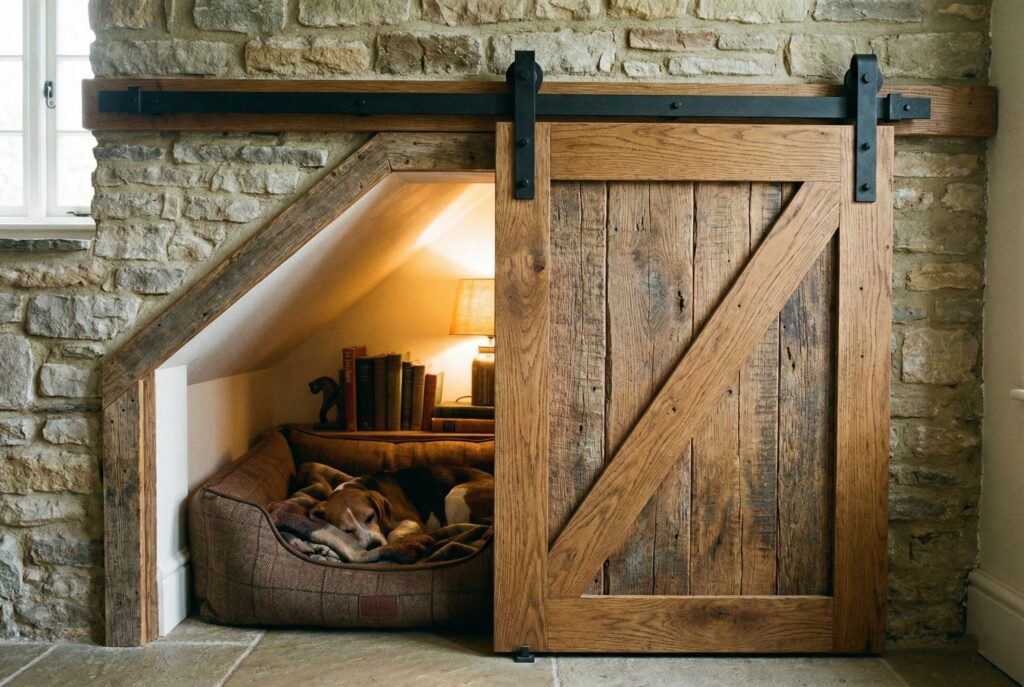
If you have the wall space next to the stairs, a sliding barn door is a fantastic, functional, and decorative element. It saves space compared to a swinging door and adds immediate character. When open, the dog has free range. When closed, the mess of blankets and toys is hidden from view. The door itself becomes a piece of wall art.
6. The Integrated Storage Solution
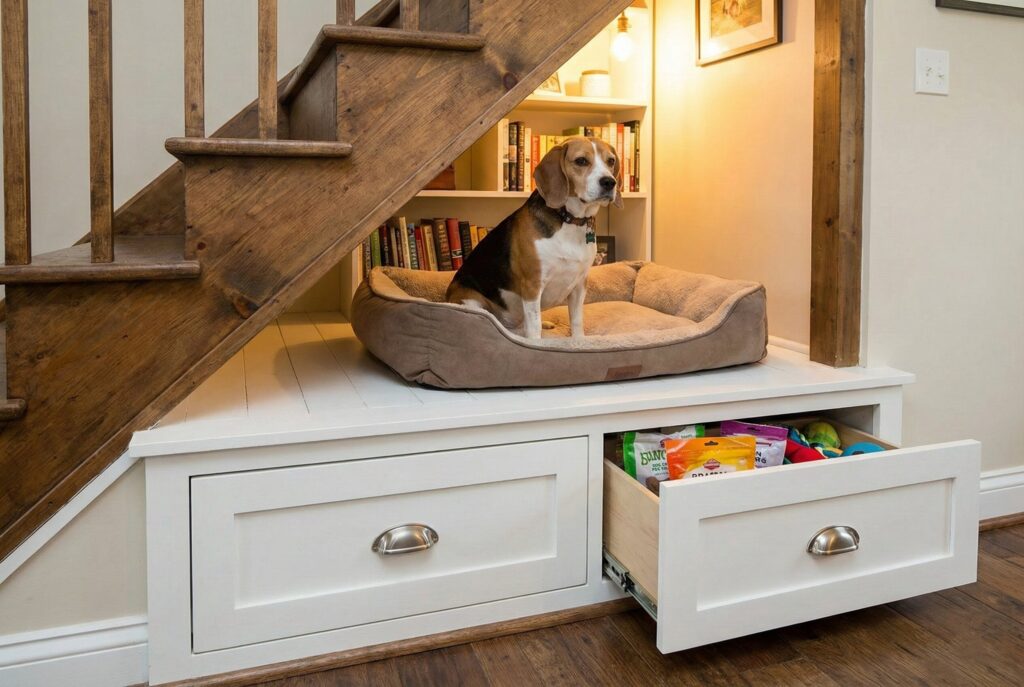
Space is always at a premium. This idea combines the dog bed with practical storage. Instead of placing the dog mattress on the floor, build a sturdy wooden platform roughly 12 to 15 inches high. The dog bed rests on top of this platform. Underneath the platform, install large pull-out drawers. These drawers are perfect for storing dog food bags, leash collections, grooming supplies, and extra toys, keeping everything organized in one central location.
7. The “Harry Potter” Cupboard Conversion
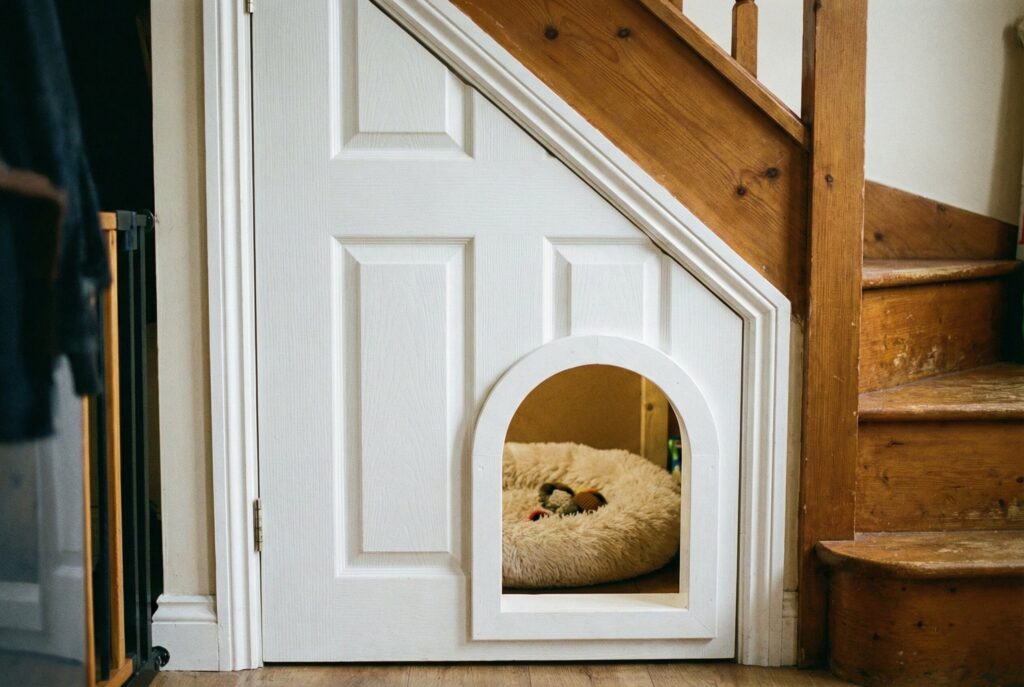
Many homes already have a small closet under the stairs with a standard swinging door. This idea utilizes the existing structure. You can cut a smaller entryway into the bottom half of the existing door, creating a “doggie door” within the main door. This allows the human to open the full door for cleaning or accessing stored items above, while the dog has their own private entrance.
8. The Luxury Canine Suite
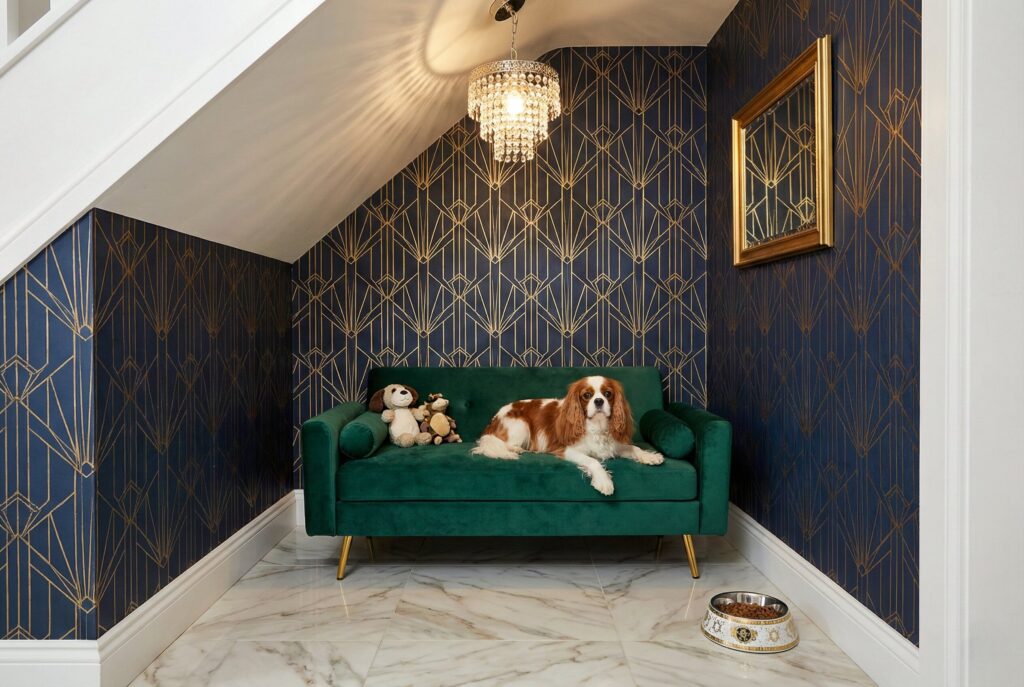
This is for the pampered pooch, where budget is less of a concern. Treat this space like a miniature room renovation. Install durable, high-end wallpaper, perhaps with a subtle canine motif. Add architectural molding around the entrance. For lighting, install a small, glamorous chandelier or a high-end sconce. The bed itself should be furniture-grade, perhaps a miniature sofa or a custom upholstered mattress.
9. The Winder Stair Corner
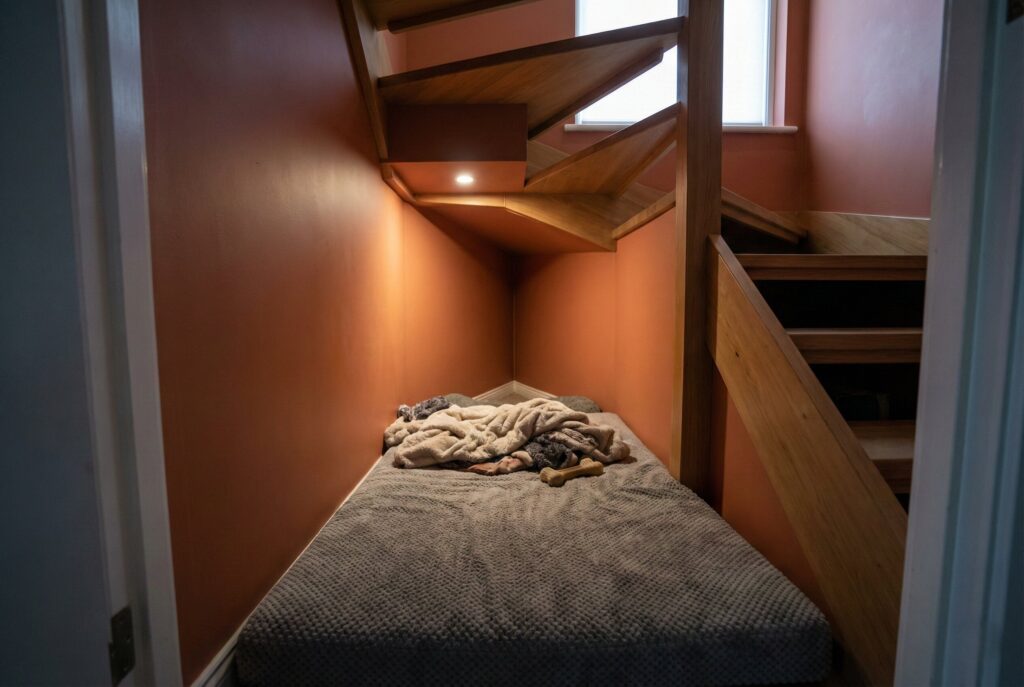
Winder stairs turn corners, creating awkward, triangular spaces underneath that are deeper than they are wide. These are challenging but perfect for deep burrowing. The design here focuses on utilizing that depth. Place a very long, rectangular mattress that extends all the way to the back point of the triangle. It creates a tunnel-like effect that many dogs find incredibly secure.
10. The Vibrant and Playful Nook
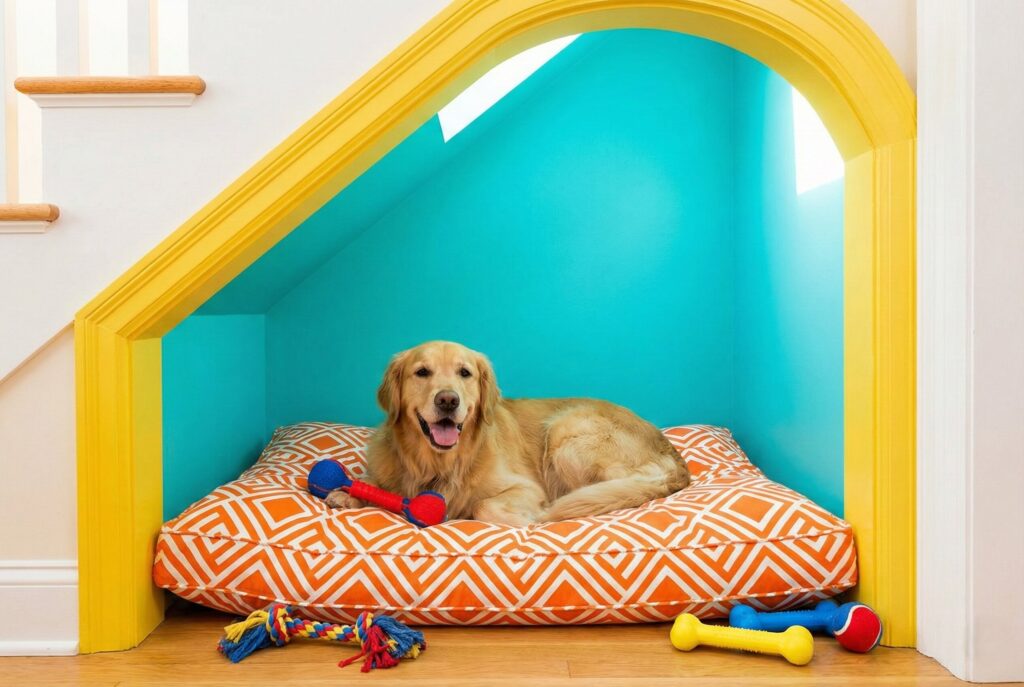
Dog decor doesn’t have to be beige. This idea embraces color and fun. Paint the interior walls a bright, cheerful color like turquoise, sunny yellow, or lime green. Use bedding with bold, graphic prints. You can even paint the surrounding trim a contrasting color. This is a great option for active dogs and modern, eclectic homes.
11. The Dual-Purpose Mudroom Bench
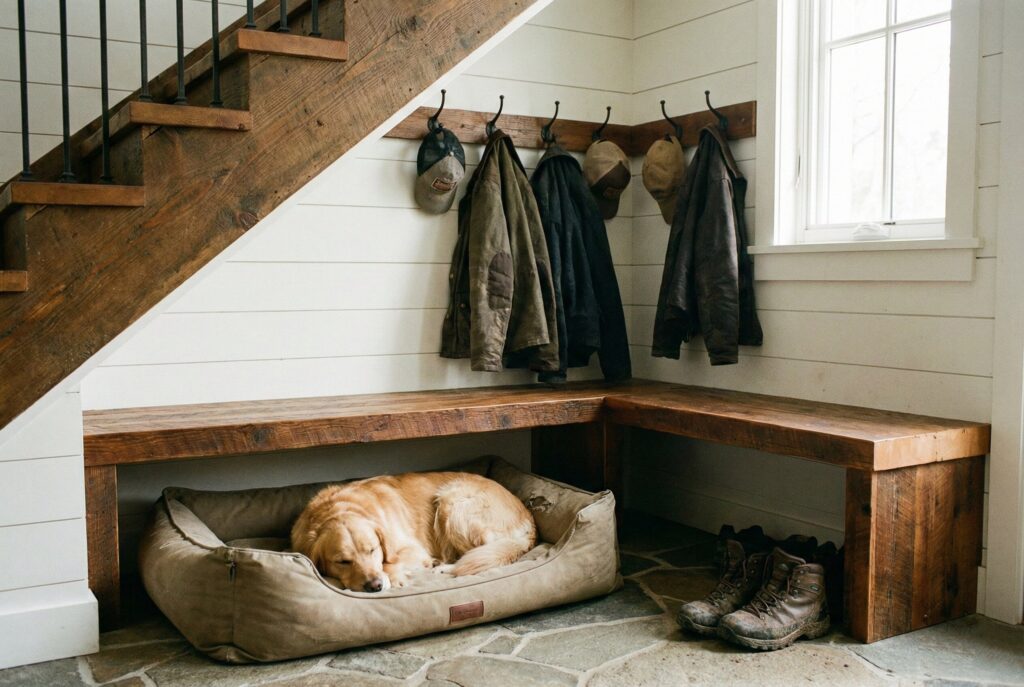
If your stairs are near an entryway, this is the ultimate functional design. Build a sturdy bench seat in the alcove area. The top of the bench serves as seating for humans to put on their shoes. The space under the bench is left open and fitted with a dog mattress. It accommodates both human and canine needs in a busy mudroom area.
Essential Elements for Comfort and Functionality
Once you have chosen your design direction, you need to focus on the practical elements that make the space livable for your dog.
The Mattress is Key
Do not skimp on the bed itself. Because the floor under the stairs is often hard concrete or wood, a thin pad will not provide enough support, especially for older dogs with joint issues. Invest in a thick, orthopedic memory foam mattress. The support is vital for their long-term health.
Practical Bedding
Dogs get dirty. Your under-stairs nook will get dirty. It is non-negotiable that the bed cover is easily removable and machine washable. Look for durable fabrics like canvas, heavy cotton twill, or microfiber. If you have a puppy or an incontinent senior dog, a waterproof liner underneath the fabric cover is essential to protect the memory foam core.
Lighting Solutions
While dogs like dark dens for sleeping, you need light for cleaning and seeing inside. It is also helpful for the dog if they enter the space when it is dark in the house.
Avoid harsh overhead lights. Soft, warm LED strip lighting hidden behind trim creates a cozy ambiance without generating heat. Battery-operated puck lights with motion sensors are an excellent, wire-free solution. They turn on when the dog enters and turn off automatically, saving battery life.
Flooring Considerations
The existing floor might not be ideal. Concrete is cold and hard. If you aren’t using a very thick mattress, consider adding a layer of flooring inside the nook. Interlocking foam tiles provide insulation and cushion. Vinyl plank flooring is easy to clean and looks nice. A simple bound piece of carpet remnant can add warmth, but it is harder to keep clean.
DIY vs. Hiring a Professional
Bringing these ideas to life depends on your budget and skill level.
The DIY Approach
Many of these ideas are very DIY-friendly. Creating an open nook (Idea #1), using curtains (Idea #4), or painting a vibrant space (Idea #10) requires only basic tools, paint, and some elbow grease. If you are comfortable with a saw and drill, building a simple platform with drawers (Idea #6) or installing a sliding barn door is achievable over a weekend.
When to Hire a Pro
If your plan involves moving electrical outlets, rerouting HVAC vents, or structural changes to load-bearing studs, you must hire licensed professionals.
Furthermore, if you want complex cabinetry, such as the built-in kennel with integrated bars (Idea #3) or high-end finish carpentry like the luxury suite (Idea #8), a skilled carpenter will ensure the finish is flawless and structurally sound. While more expensive, custom cabinetry guarantees a perfect fit in awkward under-stairs angles.
Conclusion
Transforming the dead space under your stairs into a cozy dog bed nook is one of the most rewarding home improvement projects for a pet owner. It reclaims wasted square footage and gives your best friend a safe, dedicated sanctuary they will love. Whether you choose a simple open corner or a luxurious built-in suite, the result is a happier dog and a tidier home.