
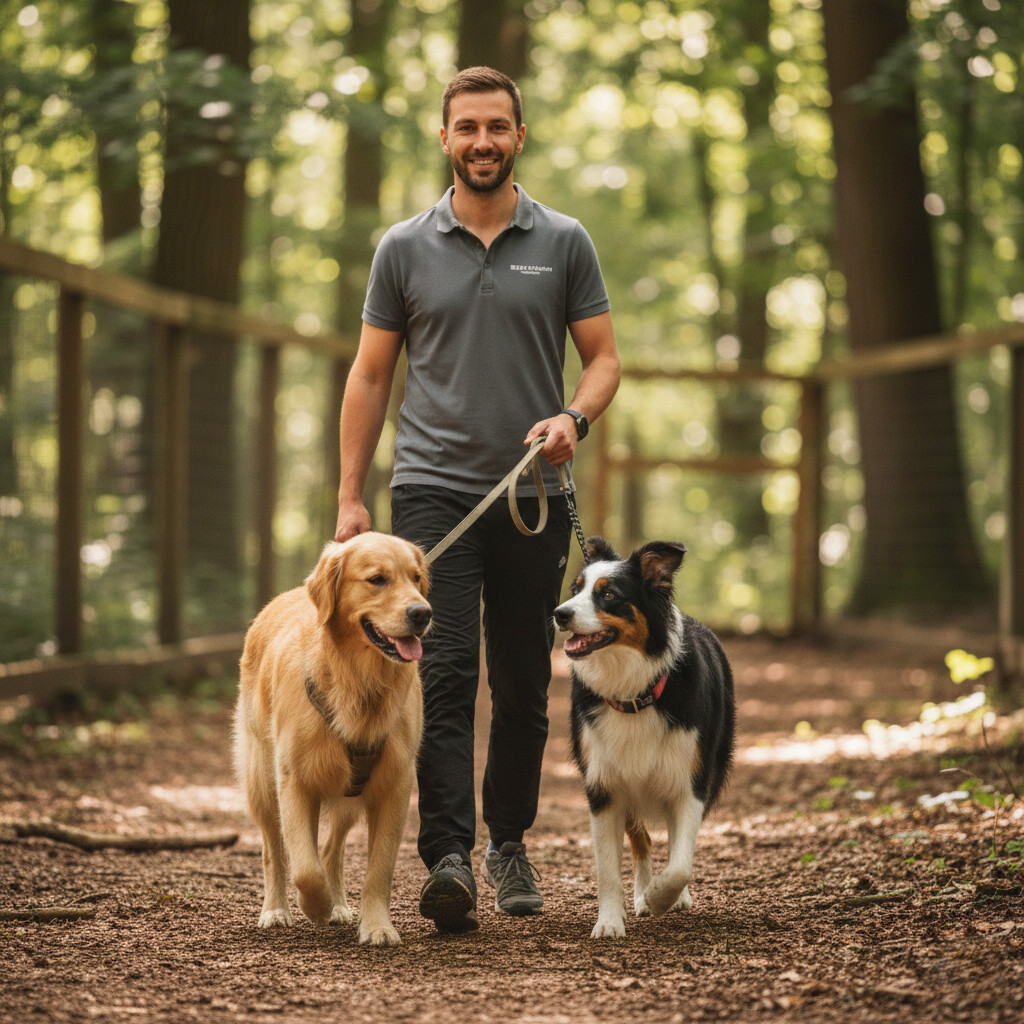
Yes, dog training significantly increases confidence by providing a clear communication structure, mental stimulation, and a sense of predictability. When a dog understands what is expected and receives positive reinforcement for their choices, their cortisol (stress) levels decrease, and they develop a sense of agency. This transforms an anxious or reactive dog into one that feels secure, optimistic, and capable of navigating new environments without fear.
Summary Table: How Training Impacts Dog Confidence
| Key Factor | Impact on Confidence | Why It Works |
| Predictability | High | Training creates routine and clear expectations, reducing anxiety about the “unknown.” |
| Positive Reinforcement | Very High | Rewarding desired behaviors triggers dopamine release, making the dog eager and optimistic to try new things. |
| Communication | High | Builds a shared language between owner and dog, eliminating frustration and confusion. |
| Mental Stimulation | Medium-High | Problem-solving challenges (like puzzles or new commands) build a sense of achievement. |
| Socialization | High | Controlled exposure to new stimuli desensitizes fears and builds resilience in novel settings. |
How Training Changes Dog Confidence
Many dog owners view training simply as a way to get a dog to “sit” or “stay.” However, the true value of training goes far deeper than basic obedience. It is a psychological tool that fundamentally alters how your dog perceives the world and their place in it. A trained dog is not just an obedient dog; it is a confident dog.
When we talk about confidence in dogs, we are referring to their ability to handle novel situations, meet new people, and navigate the world without resorting to fear-based behaviors like aggression, shutting down, or running away. Training bridges the gap between a confusing human world and a dog’s natural instincts.
Read Also: What Makes a Dog Food-Motivated vs Toy-Motivated
The Science: What Happens in the Brain?
To understand confidence, we must look at the biological changes that occur during training. An untrained dog often lives in a state of low-level chronic stress. They do not know when they will be fed, when they can go out, or what “good” behavior looks like. This uncertainty keeps cortisol levels (the stress hormone) elevated.
1. Predictability Reduces Cortisol
Dogs thrive on patterns. When you implement a structured training routine, you are essentially telling your dog, “If you do X, Y will happen.” This predictability allows the dog’s nervous system to relax. They no longer have to guess or worry about the outcome of their actions.
2. Dopamine and the “Seeking” System
When you use reward-based training methods, your dog’s brain releases dopamine, the “feel-good” neurotransmitter. This doesn’t just make them happy in the moment; it activates their “seeking” system. A dog with an active seeking system is curious, enthusiastic, and willing to explore. This is the biological definition of confidence.
3. Neuroplasticity
Training actually changes the physical structure of the dog’s brain. Learning new skills creates new neural pathways. The more a dog solves problems (like figuring out how to get a treat by sitting), the more robust these pathways become. This cognitive flexibility makes them better at handling stress in the future.
Why the Training Method Matters
Not all training builds confidence. In fact, some methods can destroy it. It is critical to distinguish between Positive Reinforcement (R+) and Aversive/Punishment-based methods.
Positive Reinforcement (The Confidence Builder)
This method focuses on rewarding the behaviors you want.
- Mechanism: The dog learns that their choices control the outcome. “I sit, I get a treat.”
- Result: This builds a sense of agency. The dog feels powerful and in control of their environment. They become “optimistic,” meaning they approach new things expecting a good outcome.
Aversive Training (The Confidence Killer)
This method relies on correcting the dog for doing things wrong (using shock collars, prong collars, or yelling).
- Mechanism: The dog learns to avoid behavior to escape pain or fear.
- Result: This creates “learned helplessness.” The dog becomes afraid to try anything new because they fear a correction. They may look “well-behaved,” but they are actually suppressed and anxious, not confident.
Read Also: How Mental Stimulation Reduces Bad Behavior
Signs Your Dog is Gaining Confidence
How do you know if your training is working? You need to become an expert in canine body language. Confidence is physically visible if you know what to look for.
The Confident Posture
- Ears: Relaxed or perked forward (interested), not pinned back against the skull.
- Tail: Held in a neutral or slightly elevated position. A wag should be loose and sweeping, not stiff or tucked between legs.
- Eyes: Soft and blinking. A “hard stare” indicates threat, while “whale eye” (showing the whites) indicates fear.
- Stance: Weight distributed evenly on all four paws. A fearful dog leans back; a reactive dog leans forward. A confident dog stands center.
- Mouth: Often slightly open with a relaxed jaw (a “doggy smile”). A tightly closed mouth can signal tension.
Behavioral Shifts
- Recovery Time: A confident dog might still get startled by a loud noise, but they recover and return to normal behavior within seconds, rather than staying anxious for hours.
- Curiosity: They investigate new objects rather than hiding from them.
- Focus: They can look at you and listen to commands even when there are distractions (other dogs, squirrels, traffic).
The Mechanism: How Training Builds Self-Assurance
Training builds confidence through three specific mechanisms: Clarity, Desensitization, and Success.
1. Clarity and Communication
Imagine living in a foreign country where you don’t speak the language, and people yell at you randomly. You would be anxious and insecure. This is the life of an untrained dog.
Training creates a shared language. When you teach a marker word (like “Yes!” or a clicker), you are giving your dog a translation tool. Suddenly, they understand exactly what you want. This clarity eliminates the frustration and anxiety of guessing.
2. Scaffolding and Success
Good training uses “scaffolding.” You start with something incredibly easy that the dog cannot fail at (like rewarding them just for looking at you).
- The Win Spiral: Every time the dog succeeds and gets a reward, they get a micro-boost of self-esteem.
- Increasing Difficulty: As they master the easy stuff, you slowly add challenges.
- The Result: The dog learns, “I can face difficult challenges and win.” This belief in their own capability is the core of confidence.
3. Controlled Exposure (Desensitization)
Training allows you to expose your dog to scary things in a controlled way. If a dog is afraid of strangers, an untrained dog might lung or hide.
Through training, you can ask the dog to “sit” at a safe distance from a stranger and reward them. The dog learns that they can be near a scary thing and nothing bad happens, in fact, good things happen. Over time, the fear is replaced by the anticipation of a reward.
Read Also: How to Train an Older Dog
Specific Exercises to Boost Confidence
If you have a shy or nervous dog, specific training games can accelerate their confidence.
Free Shaping
This is a technique where you don’t give commands. You put a box on the floor and wait. If the dog looks at it, click and treat. If they step toward it, click and treat.
- Why it works: The dog has to think for themselves. They aren’t being told what to do; they are inventing the behavior. This is incredibly empowering for shy dogs.
Target Training (Touch)
Teach your dog to touch their nose to your hand on command.
- Why it works: It gives the dog a job to do when they are nervous. If a stranger approaches, you can ask the dog to “touch” your hand, redirecting their focus from the scary stranger to a familiar, rewarding task.
Agility and Parkour
Teaching a dog to jump over a log, crawl under a bench, or balance on a rock.
- Why it works: Physical mastery leads to emotional mastery. When a dog conquers a physical obstacle, they feel a surge of bravado that translates to other areas of their life.
The Role of the Handler
Your confidence affects your dog. This is known as co-regulation. Dogs are expert readers of human non-verbal cues. If you are anxious about holding the leash, your dog will sense a threat.
Training helps you become confident, too. When you know you have the tools to handle a situation (like a solid “recall” or “leave it”), you relax. Your relaxed body language tells the dog, “I’ve got this, you don’t need to worry.” This creates a positive feedback loop where both owner and dog build each other up.
Read Also: Why Do Dogs Regress in Training?
Common Myths About Training and Confidence
Myth: “My dog is stubborn, not insecure.”
Often, what owners label as stubbornness is actually a lack of confidence. A dog that refuses to come when called may be afraid of punishment or unsure of what is being asked. Reframing “stubborn” as “confused” or “insecure” changes how you approach training.
Myth: “Comforting a scared dog reinforces fear.”
This is false. You cannot reinforce an emotion. If your dog is scared during training, comforting them will not make them more scared. However, training gives you a better alternative: redirecting them to a known task (like “sit” or “touch”) so they can earn a reward and shift their emotional state.
Real World Application: The Reactive Dog
Consider a dog that barks at other dogs on walks (leash reactivity). This is rarely aggression; it is usually fear. The dog is shouting, “Go away, you are too close!”
Without Training:
The owner tenses up, pulls the leash tight, and maybe yells “No!” The dog feels the tension and thinks, “My owner is also stressed; this other dog must be a huge threat.” The fear increases.
With Training:
The owner spots the other dog. They cue their dog to “Watch Me.” The dog looks at the owner and gets a high-value treat. The dog thinks, “Seeing another dog means I get chicken!” The scary event is predicted, the behavior is managed, and the outcome is positive. The dog’s confidence grows with every successful repetition.
Conclusion
Training is the single most effective way to improve your dog’s quality of life. It elevates them from a state of confusion and dependency to a state of clarity and confidence. By using positive reinforcement, maintaining consistency, and understanding the psychology of learning, you provide your dog with the mental armor they need to face the world. A confident dog is a happy dog, and a happy dog makes for a harmonious home.