
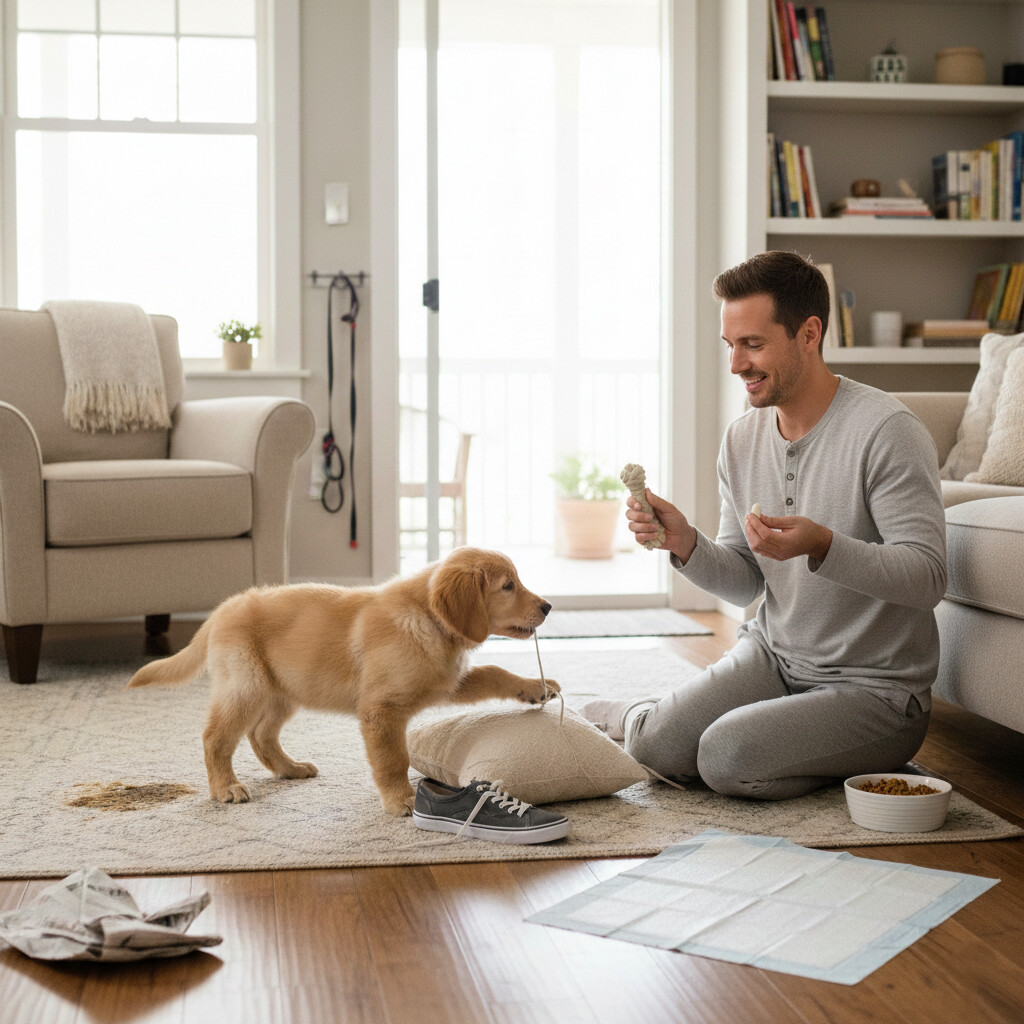
To fix common puppy behavior problems like biting, chewing, and accidents, you must rely on consistency, supervision, and positive reinforcement. Use a crate to manage potty training, redirect chewing to appropriate toys, and teach bite inhibition by stopping play when teeth touch skin. Avoid physical punishment; instead, reward good behavior immediately to build long-term obedience and trust.
Summary Table: Puppy Behavior Problems And Solutions
| Behavior Problem | Primary Cause | Best Solution |
| Potty Accidents | Bladder control, lack of schedule | Crate training and hourly breaks |
| Nipping/Biting | Teething, playfulness | Redirection to toys; “Time-out” |
| Destructive Chewing | Teething pain, boredom | Frozen toys; “Puppy-proofing” |
| Barking | Boredom, attention-seeking | Ignore demand barking; Exercise |
| Jumping Up | Excitement, greeting | Turn your back; Reward “four on the floor” |
| Leash Pulling | Natural faster pace | Stop walking when they pull |
| Separation Anxiety | Fear of being alone | Practice short departures; mental games |
Common Puppy Behavior Problems And Solutions: Surviving the “Puppy Blues”
Bringing a new puppy home is one of the most exciting moments in life. However, once the initial excitement fades, reality sets in. Puppies are essentially babies with sharp teeth and no understanding of human rules. If you are feeling overwhelmed, you are not alone. Most new owners experience the “puppy blues” when faced with sleepless nights and chewed-up shoes.
The good news is that almost all “bad” puppy behaviors are actually normal dog behaviors. Puppies don’t know that peeing on the rug is wrong or that your hands aren’t chew toys.
This guide covers the most common issues new owners face and provides actionable, science-backed solutions to fix them.
Read Also: How Much Sleep Do Puppies Need?
1. Potty Training Accidents
House soiling is the number one reason owners get frustrated. A puppy physically cannot hold their bladder for long periods. If an accident happens, it is usually because the puppy was given too much freedom too soon.
Why It Happens
- Physical limitations: Puppies under 12 weeks have very little bladder control.
- Too much space: If a puppy isn’t watched, they will wander off to pee.
- ** lingering smells:** If you don’t clean accidents correctly, the scent invites them back.
The Solution: The Crate and Schedule Method
- Use a Crate: A crate is not a cage; it is a bedroom. Dogs generally avoid soiling where they sleep. Keep the puppy in the crate when you cannot supervise them directly.
- Set a Timer: Take your puppy out every hour, immediately after waking up, after eating, and after playing.
- Pick a “Potty Spot”: Take them to the exact same spot outside every time. The scent will trigger them to go.
- Reward Heavily: The second they finish, give a high-value treat and praise them.
- Clean Properly: Use an enzymatic cleaner for indoor accidents. Regular household cleaners mask the smell to humans but not to dogs.
2. Biting and Nipping (Mouthing)
Puppy teeth are incredibly sharp, earning them the nickname “land sharks.” While it hurts, nipping is how puppies explore the world and play with their littermates.
Why It Happens
- Teething pain: Their gums hurt, and chewing relieves pressure.
- Play behavior: Puppies bite each other to initiate play.
- Over-tiredness: A cranky, tired puppy bites more than a rested one.
The Solution: Bite Inhibition and Redirection
- The “Ouch” Technique: When the puppy bites you, make a high-pitched “Ow!” sound or a sharp yelp. This mimics a littermate crying out in pain. Then, go limp and ignore them for 10 seconds.
- Redirect: Always have a toy within reach. If they go for your hand, shove a soft toy in their mouth instead.
- Enforce Naps: If your puppy is biting uncontrollably and won’t listen, they are likely overtired. Put them in their crate for a nap.
- Don’t Play Rough: Avoid using your hands as toys. This teaches them that fingers are for chewing.
3. Destructive Chewing
Coming home to find your baseboards chewed or a hole in the drywall is a common horror story. Chewing is natural, but destroying your house is not.
Why It Happens
- Boredom: A bored puppy will make their own fun.
- Teething: Just like human babies, they need to chew to soothe erupting teeth.
- Anxiety: Nervous energy can manifest as destruction.
The Solution: Management and texture
- Puppy Proofing: If you don’t want it chewed, put it away. Shoes, cords, and kid’s toys must be elevated.
- Texture Matching: If they are chewing the wooden table leg, give them a hard rubber toy or a bully stick. If they are chewing a slipper, give them a soft plush toy.
- Frozen Carrots or Towels: Freeze a damp washcloth or a large carrot. The cold soothes their inflamed gums.
- Rotate Toys: Don’t leave all toys out at once. Rotate them weekly so they remain “new” and exciting.
Read Also: When Do Puppies Stop Teething?
4. Excessive Barking
Barking is a dog’s voice, but constant noise can drive you (and your neighbors) crazy. You must identify why they are barking to stop it.
Why It Happens
- Demand barking: “Give me that food!” or “Throw the ball!”
- Alarm barking: “There is a mailman outside!”
- Boredom: “I have nothing to do.”
The Solution: Ignore or Interrupt
- Never Yell: Yelling at a barking dog just sounds like you are barking along with them.
- Ignore Demand Barking: If they bark at you for attention or food, turn your back completely. Do not look at them. Reward them only when they are quiet.
- The “Quiet” Command: Teach them to bark on command (“Speak”), and then teach the opposite (“Quiet”). Reward the silence.
- Remove the Stimulus: If they bark at people walking by the window, close the blinds or move the furniture so they can’t see out.
5. Jumping Up
It is cute when a 10-pound puppy jumps on you to say hello. It is dangerous when that puppy grows into a 70-pound dog who knocks over grandma.
Why It Happens
- Greeting: Dogs greet face-to-face. Jumping is their attempt to get closer to your face.
- Reinforcement: Often, we pet the puppy when they jump because they are small. This teaches them that Jumping = Love.
The Solution: Four on the Floor
- The Turn-Away: When the puppy jumps, cross your arms and turn your back immediately. Do not push them off (touch is a reward) and do not speak to them.
- Reward the Landing: Wait for all four paws to touch the ground. The moment they land, turn around and praise them calmly.
- Step on the Leash: If they jump on strangers during walks, stand on the leash with enough slack for them to stand or sit, but not enough to jump up.
- Teach “Sit” for Greetings: Make “Sit” the only way to get attention. If they stand up, the petting stops.
6. Leash Pulling
Walking a puppy often feels like you are being dragged by a sled dog or anchoring a stubborn mule.
Why It Happens
- Natural Pace: Dogs naturally walk faster than humans.
- Opposition Reflex: If you pull back on the leash, the dog’s instinct is to pull harder in the opposite direction.
- Excitement: They want to sniff that tree now.
The Solution: Be a Tree
- Stop Moving: As soon as the leash goes tight, stop dead in your tracks. Be a tree. Do not move forward until the leash is loose.
- The U-Turn: If they pull hard, turn around and walk the other way. This teaches them that pulling actually moves them further away from what they want.
- Treats at the Knee: Keep high-value treats in your hand at your knee level. Reward the puppy frequently for walking right next to your leg.
Read Also: How Do Puppies Learn Bite Inhibition?
7. Whining at Night
The first few nights with a puppy are usually sleepless. They miss the warmth of their mother and littermates.
Why It Happens
- Loneliness: They are essentially alone for the first time in their lives.
- Needs: They may actually need to go to the bathroom.
The Solution: Comfort and Routine
- Location: For the first week, keep the crate in your bedroom so they can hear and smell you.
- The Snuggle Puppy: Use a toy with a heartbeat simulator (like a Snuggle Puppy) to mimic a littermate.
- Boring Potty Breaks: If they whine at 3 AM, take them out on a leash. Do not talk, do not play, and keep the lights low. If they pee, put them straight back to bed. If they don’t, back to bed anyway. This teaches them that whining only opens the door for the bathroom, not for playtime.
8. Digging
Digging is destructive to your yard and frustrating for gardeners, but it is a primal instinct for dogs.
Why It Happens
- Temperature regulation: Dogs dig holes to lie in cool dirt when it’s hot.
- Hunting: They hear bugs or rodents underground.
- Hiding valuables: They want to save a bone for later.
The Solution: The Designated Dig Zone
- Create a Sandbox: You cannot train the digging instinct out of a dog, so give them a legal place to do it. Fill a sandbox or a specific corner of the yard with loose soil.
- Bury Treasure: Bury toys and treats in the designated spot to show them that this area is rewarding.
- Deterrence: If they dig in your flowerbed, bury their own poop in the hole. Dogs generally will not dig where their own waste is.
9. Separation Anxiety
This is a growing problem, especially since many people work from home. Puppies need to learn how to be alone.
Why It Happens
- Velcro Dogs: Some breeds are naturally more attached to owners.
- Lack of Practice: If you are with them 24/7, they panic when you leave.
The Solution: Start Small
- The “Invisible” Owner: While you are home, put the puppy in their crate or a playpen and go to another room for 5 minutes.
- Desensitize Triggers: Pick up your keys or put on your coat, then sit back down and watch TV. Stop these actions from signaling “I am leaving forever.”
- Interactive Toys: Give them a Kong stuffed with peanut butter or wet food only when you leave. This creates a positive association with your departure.
When to Call a Professional
While most puppy problems can be solved with the tips above, some issues require a certified dog trainer or veterinary behaviorist. Watch for these red flags:
- Resource Guarding: If your puppy growls or snaps when you try to take food or toys away.
- True Aggression: Staring, stiff body language, or biting that breaks the skin aggressively (not just playful nipping).
- Extreme Fear: If the puppy is terrified of people or sounds and shuts down completely.
Conclusion
Raising a puppy is a marathon, not a sprint. There will be days when you feel like you are making no progress, but consistency is the secret sauce. Keep your training sessions short, keep your rewards high-value, and never use physical punishment.
Remember, the puppy that is currently chewing your rug will one day be the loyal dog sleeping at your feet. Invest the time now, and you will have the best friend for life.