
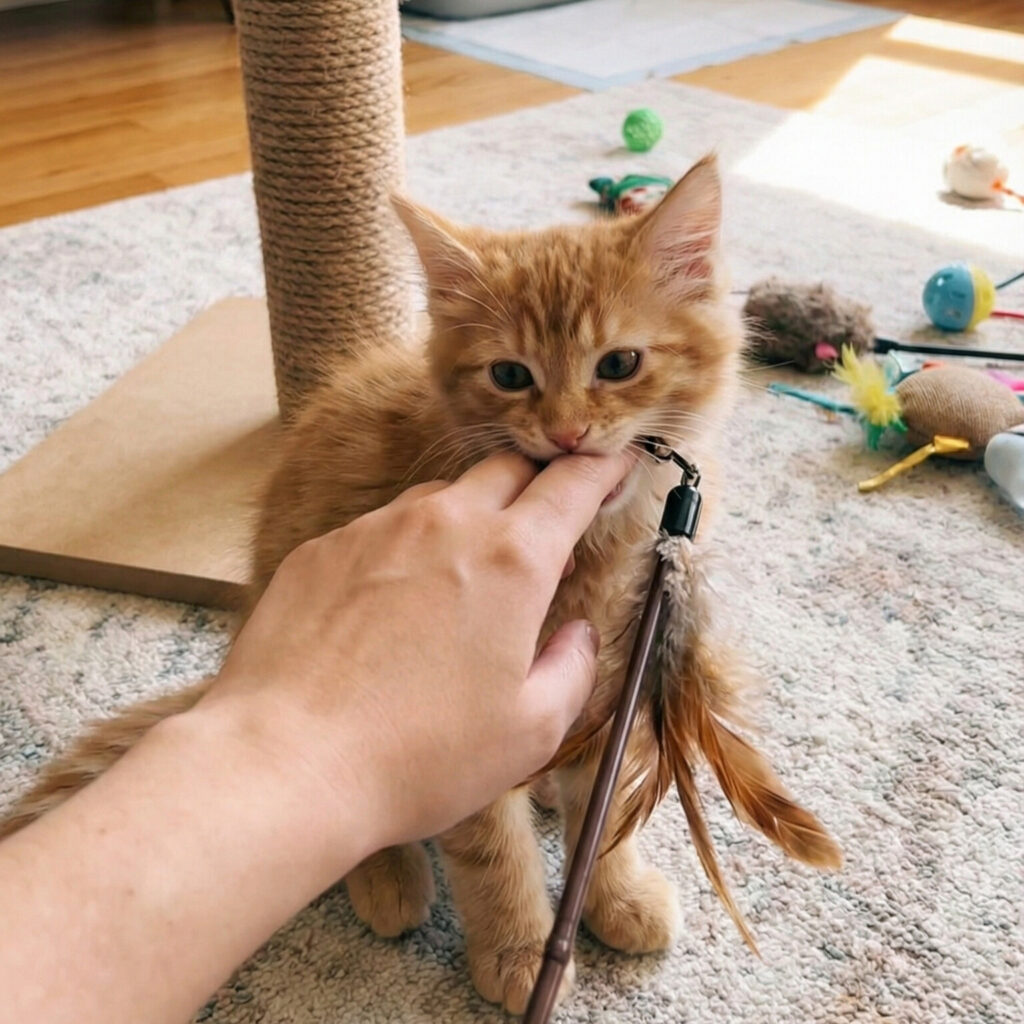
Common kitten behavior problems usually stem from natural instincts, high energy, or health issues. The most frequent challenges include avoiding the litter box, biting hands, scratching furniture, and waking owners up at night. The most effective solutions rely on positive reinforcement and environmental changes rather than punishment. Owners should first visit a veterinarian to rule out illness. Once health is cleared, redirecting energy to toys, providing scratching posts, cleaning litter boxes daily, and establishing a consistent play routine before bed will resolve most behavioral issues.
Summary Table: Common Kitten Problems and Fixes
| Behavior Problem | Likely Cause | Primary Solution |
| Litter Box Avoidance | Dirty box, wrong litter, or infection | Intense play session and a meal before bed |
| Biting Hands/Feet | Teething or play aggression | Redirect to toys; do not use hands for play |
| Scratching Furniture | Marking territory or stretching | Add sturdy scratching posts nearby |
| Nighttime Zoomies | Pent-up energy or hunger | Intense play session and meal before bed |
| Excessive Meowing | Loneliness, hunger, or attention | Ignore attention seeking; check needs |
| Chewing Cords | Teething or boredom | Cover cords and offer chew toys |
Common Kitten Behavior Problems and Solutions
Bringing home a new kitten is an exciting time. They are cute and playful but they also bring a unique set of challenges. New owners often feel overwhelmed when their sweet pet suddenly starts biting ankles or destroying the sofa. Understanding why kittens do what they do is the first step to fixing it.
Most “bad” behaviors are actually normal cat behaviors done in the wrong place or at the wrong time. Kittens are not acting out of spite. They are learning how to be cats.
This guide covers the most frequent issues and provides detailed, practical ways to solve them using positive reinforcement and environmental management.
Read Also: How Long Do Kittens Sleep Each Day?
1. Litter Box Issues and Inappropriate Elimination
Refusing to use the litter box is the number one reason cats are surrendered to shelters. It is frustrating to deal with messes on the carpet or bed. However, kittens almost always have a good reason for avoiding the box. It is rarely an accident.
Rule Out Medical Causes
Before you change anything in the house, you must take the kitten to a veterinarian. Conditions like a Urinary Tract Infection (UTI) or bladder stones make urination painful.
The kitten associates the litter box with pain and looks for a soft spot like a pile of laundry to go instead. If the vet clears your kitten of health issues, you can move on to behavioral solutions.
Keep the Box Clean
Cats are very clean animals. Their sense of smell is fourteen times stronger than a human’s. A box that looks clean to you might smell terrible to them.
- Scoop the box at least once every day.
- Change the litter completely and wash the box with mild soap once a week.
- Avoid strong chemical cleaners like bleach or ammonia. These smells repel cats.
Location Matters
Kittens need privacy and safety when they do their business. If the box is in a noisy laundry room or a high-traffic hallway, they might be too scared to use it.
- Place the box in a quiet corner where the kitten can see the room.
- Avoid placing the box next to their food and water bowls. Cats do not like to eat near where they eliminate.
- Ensure there is at least one box per cat plus one extra.
Choose the Right Litter
Kittens have sensitive paws. Some litter textures feel sharp or uncomfortable. Most cats prefer a fine-grain, clumping clay litter that feels like soft sand. Avoid scented litters. The floral smell is pleasant for humans but can be overwhelming for a kitten.
2. Biting and Aggressive Play
Kittens explore the world with their mouths. They also practice hunting skills on anything that moves. Unfortunately, this often includes human fingers and toes. While a tiny kitten nibble does not hurt much, an adult cat bite can be serious. You must teach them boundaries now.
The No Hands Rule
The biggest mistake owners make is using their hands to wrestle with a kitten. It teaches the kitten that skin is a toy.
- Never wiggle your fingers to entice the kitten to pounce.
- If the kitten bites your hand, go limp immediately. Pulling away triggers their prey drive to chase and bite harder.
- Once they let go, ignore them for a minute. This teaches them that biting stops the fun.
Redirect to Toys
Kittens have a biological need to bite and scratch. You cannot stop the urge but you can change the target.
- Keep soft toys nearby at all times.
- When a kitten looks like they are about to pounce on you, toss a toy in the opposite direction.
- Use wand toys or fishing pole toys. These keep your hands far away from their teeth while allowing them to hunt.
Single Kitten Syndrome
Kittens learn bite inhibition from playing with their littermates. When they bite a sibling too hard, the sibling cries and stops playing. If you have a single kitten, they might not learn this lesson. Adopting two kittens together often prevents biting issues because they wear each other out.
3. Destructive Scratching on Furniture
Scratching is a natural instinct. It removes the dead outer layer of their claws, stretches their muscles, and leaves visual and scent marks for other cats. You cannot stop a cat from scratching, but you can teach them where to do it.
Provide Better Alternatives
If a kitten scratches the sofa, it is because they do not have a better option. You need to provide a scratching post that is more appealing than the furniture.
- Stability: The post must not wobble. If it tips over, the kitten will never use it again.
- Height: It needs to be tall enough for the kitten to stretch all the way up.
- Material: Most cats prefer sisal rope or cardboard. Carpet posts are confusing because they feel like the rug you do not want them to scratch.
Placement is Key
Do not hide the scratching post in a back corner. Cats scratch to mark their territory. Place the post right next to the piece of furniture they are currently damaging. Once they start using the post regularly, you can slowly inch it to a better location.
Make Furniture Unappealing
While training the kitten to use the post, you need to protect your belongings.
- Apply double-sided sticky tape to the corners of the sofa. Cats hate the sticky feeling on their paws.
- Cover the area with aluminum foil or a smooth plastic sheet.
- Use citrus-scented sprays on the furniture. Cats generally dislike the smell of lemon or orange.
Read Also: How Often Should Cats Be Vaccinated?
4. Nighttime Activity and Zoomies
Cats are crepuscular. This means they are most active at dawn and dusk. This natural rhythm often clashes with human sleep schedules. Kittens may run around the house, attack feet under the covers, or meow loudly at 3 AM.
The Hunt, Eat, Sleep Cycle
You can adjust your kitten’s internal clock by manipulating their routine. In the wild, cats hunt, catch their prey, eat a large meal, and then sleep. You can mimic this at home.
- Step 1: One hour before your bedtime, engage the kitten in hard play. Use a laser pointer or wand toy to get them running and jumping until they are panting.
- Step 2: Feed them their largest meal of the day immediately after the play session.
- Step 3: A full belly and tired muscles will naturally lead to sleep.
Ignore the Behavior
If your kitten wakes you up for attention, you must play dead. Even negative attention, like yelling or pushing them off the bed, is still attention. If you get up to feed them, you teach them that waking you up results in food.
Buy earplugs and stay in bed. It may take a week or two, but the behavior will stop if it never gets a reward.
5. Excessive Meowing
Kittens meow to communicate with their mothers. As they grow, they use meowing to communicate with humans. Excessive vocalization can signal hunger, loneliness, pain, or boredom.
Check the Basics
First, ensure all their needs are met. Is the water bowl empty? Is the litter box dirty? Are they stuck in a room? If all basic needs are met and the vet says they are healthy, the meowing is likely behavioral.
Don’t Reward the Noise
Many cats learn to meow because it works. If a cat meows in the kitchen and you give them a treat to quiet them down, you have just trained them to scream for food. Wait for a moment of silence before offering food or attention. This rewards the quiet behavior instead of the noise.
Loneliness and Boredom
Kittens have high social needs. If you are at work all day, your kitten might be meowing from isolation.
- Leave puzzle feeders out during the day to keep their brains busy.
- Set up a window perch so they can watch “Cat TV” (birds and squirrels).
- Consider adopting a second kitten as a playmate.
6. Climbing Curtains and Counters
Kittens love vertical space. Climbing helps them feel safe and allows them to survey their territory. When they climb curtains or jump on kitchen counters, they are fulfilling this need destructively.
Create Vertical Territory
You must give them a “Yes” place for every “No” place.
- Install cat shelves on the walls.
- Buy a tall cat tree with multiple levels.
- Clear off a space on a bookshelf that is just for them.
When the kitten jumps on the counter, gently place them on the cat tree or designated shelf instead. Give them a treat when they stay up there.
Deterrents for Counters
Kitchen counters can be dangerous due to hot stoves and knives. To discourage jumping up, keep the counters completely clear of food scraps. Even a few crumbs can be a reward.
You can also place baking sheets on the edge of the counter. When the kitten jumps up, the sheets will rattle and startle them. This uses the environment to correct the behavior rather than yelling.
7. Chewing on Cords and Plants
Chewing is common in teething kittens. It can also be a sign of Pica, which is the urge to eat non-food items, or simply boredom. This is dangerous because of the risk of electrocution or poisoning.
Kitten-Proofing
You need to manage the environment until the kitten outgrows this phase.
- Cable Management: Use plastic cord covers or PVC pipe to encase loose wires.
- Bitter Sprays: Apply a bitter apple spray to cords. The bad taste discourages chewing.
- Remove Toxic Plants: Lilies, poinsettias, and philodendrons are toxic to cats. Remove them from the house or place them in a hanging planter out of reach.
Offer Safe Alternatives
If the kitten is teething, their gums hurt. Offer them items that are safe to gnaw on.
- Silvervine sticks.
- Rubber chew toys designed for cats.
- Cat grass (wheatgrass) is a safe plant alternative that satisfies the urge to chew on greens.
8. Fear and Hiding
Some kittens are naturally shy. Others may have had a lack of socialization before you adopted them. A fearful kitten will hide under the bed and refuse to interact. Forcing them out will only make the fear worse.
The Safe Room Strategy
When you bring a new kitten home, do not give them the run of the entire house. A large space is terrifying to a small animal.
- Start them in a single room, like a bedroom or bathroom.
- Put their food, water, litter, and bed in this room.
- Spend time sitting on the floor reading or looking at your phone. Let them come to you.
Use Food for Bonding
Food is the quickest way to build trust.
- Do not leave a full bowl of food out all day.
- Offer wet food on a spoon while you sit near them.
- Slowly move the spoon closer to your lap over several days.
- Eventually, the kitten will associate your scent with positive things.
Pheromones
Synthetic pheromones can help calm an anxious kitten. Products like Feliway diffusers mimic the scent a mother cat releases to calm her babies. Plugging this into the wall in the kitten’s safe room can lower their stress levels significantly.
Conclusion
Raising a kitten requires patience, consistency, and a sense of humor. Most behavior problems are temporary and can be solved by understanding the kitten’s natural instincts. Remember that punishment does not work with cats. It only creates fear and damages your bond.
Always focus on rewarding the behavior you want to see. If you provide clean litter boxes, appropriate scratching posts, and plenty of playtime, your kitten will grow into a happy and well-behaved companion. If you are struggling, never hesitate to contact a professional animal behaviorist or your veterinarian for help.