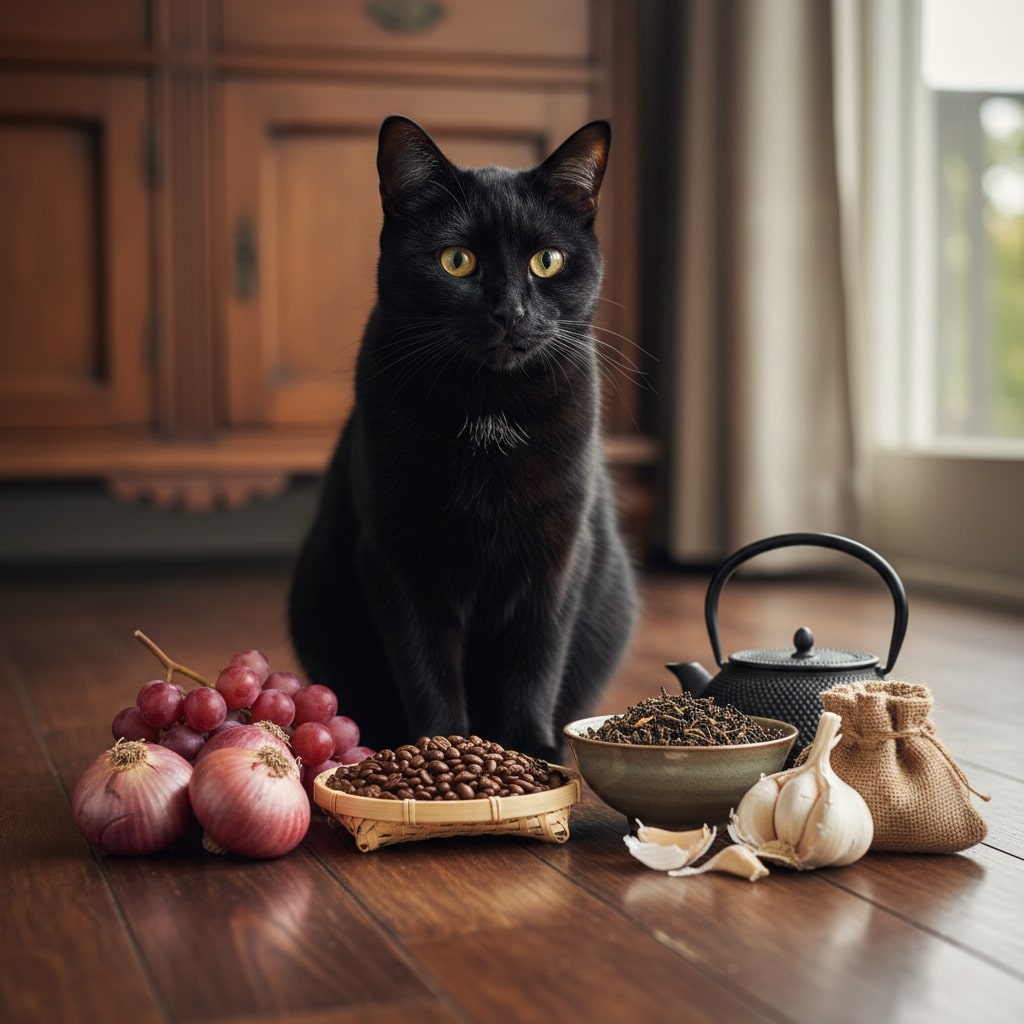
There are multiple common human foods which are unhealthy and toxic to cats, including but not limited to onions, garlic, grapes, tea, and coffee.
Summary Table: Common Human Foods Toxic to Cats
| Food Item | Why It Is Dangerous | Common Symptoms |
| Onions, Garlic, Chives | Damages red blood cells (causes anemia). | Pale gums, lethargy, orange/red urine, drooling. |
| Chocolate | Contains theobromine and caffeine, which affect the heart and nervous system. | Vomiting, diarrhea, tremors, seizures, rapid heart rate. |
| Grapes & Raisins | Can cause sudden kidney failure (exact reason is unknown). | Repeated vomiting, lethargy, lack of appetite. |
| Alcohol | Causes severe liver and brain damage; even a teaspoon can be fatal. | Coma, trouble breathing, vomiting, disorientation. |
| Caffeine (Coffee, Tea, Soda) | Overstimulates the heart and muscles. | Restlessness, rapid breathing, heart palpitations, tremors. |
| Raw Dough (Yeast) | Expands in stomach (causing bloat) and creates alcohol. | Swollen stomach, retching, disorientation. |
| Xylitol (Artificial Sweetener) | Causes sudden blood sugar drop and liver failure. | Vomiting, loss of coordination, seizures. |
| Milk & Dairy | Most cats are lactose intolerant (can’t digest it). | Diarrhea, gas, stomach upset. |
Why Can’t Cats Eat What We Eat?
Cats have a very different metabolism than humans. Their bodies cannot break down certain chemicals that are harmless to us. Because cats are small, even a tiny amount of “safe” human food can be a fatal dose for them.
Below is a detailed breakdown of the most dangerous foods you likely have in your kitchen right now.
Read Also: Can Cats Have Pistachio?
Common Human Foods Toxic to Cats
1. The Allium Family (Onions, Garlic, Chives, Leeks)
This entire family of vegetables is poisonous to cats. It does not matter if they are raw, cooked, powdered, or dehydrated.
- Why it is bad: These foods attack your cat’s red blood cells. The cells burst, leading to a condition called hemolytic anemia.
- Watch out for: Onion powder in baby food, garlic powder in chips, or leftover sauce from stir-frys.
- The Danger Zone: Garlic is about 5 times more toxic than onions.
2. Chocolate and Caffeine
Most people know chocolate is bad for dogs, but it is just as bad (if not worse) for cats.
- Why it is bad: Chocolate contains theobromine and caffeine. Cats cannot process these stimulants. They cause the heart to race dangerously fast and can lead to seizures.
- Types of Chocolate:
- Dark Chocolate & Baking Chocolate: Most dangerous (highest toxin levels).
- Milk Chocolate: Still dangerous in small amounts.
- White Chocolate: Less toxic but high in fat/sugar (can cause pancreatitis).
3. Grapes, Raisins, and Currants
This is a strange toxicity because experts still do not know exactly why it happens, but the results are devastating.
- Why it is bad: Eating even a small amount (like a handful of raisins) can cause sudden, acute kidney failure in cats.
- Symptoms: Symptoms often start with vomiting within 12–24 hours.
- Note: Avoid cookies, trail mix, and breads that might hide raisins or currants.
4. Alcohol and Raw Yeast Dough
Alcohol affects cats exactly like it affects humans, but much faster and with permanent damage.
- Why it is bad: It attacks the liver and brain. Just one teaspoon of hard liquor can put a cat into a coma.
- The “Hidden” Alcohol (Raw Dough): If a cat eats raw bread dough, the yeast ferments in their warm stomach. This does two things:
- It creates alcohol (causing poisoning).
- The dough rises and expands, which can twist the stomach or block the intestines.
5. Xylitol (Artificial Sweetener)
Xylitol is found in sugar-free gum, candy, peanut butter, and some toothpastes.
- Why it is bad: It triggers a massive release of insulin in the cat’s body. This causes their blood sugar to crash (hypoglycemia) almost instantly. It can also lead to liver failure within a few days.
- Signs: If your cat eats gum and then looks “drunk” or uncoordinated, this is a major emergency.
6. Milk and Dairy Products
The image of a cat lapping up a saucer of milk is a myth.
- Why it is bad: Once a kitten is weaned, they stop producing the enzyme needed to digest lactose.
- Result: Feeding an adult cat milk usually results in painful stomach cramps and diarrhea. It is not fatal, but it is very uncomfortable for them.
What To Do If Your Cat Eats Something Toxic
Time is critical. Do not wait for symptoms to appear.
- Remove the food: Take it away immediately so they cannot eat more.
- Do NOT induce vomiting: Never try to make your cat vomit unless a vet tells you to. Some substances can burn the throat coming back up.
- Call for help:
- Your local Vet: Keep their number on your fridge.
- ASPCA Animal Poison Control (USA): (888) 426-4435 (Note: A consultation fee usually applies).
- Pet Poison Helpline (USA): (855) 764-7661.
- Gather info: Tell the vet exactly what they ate, how much, and how long ago. If you have the packaging, bring it with you.