
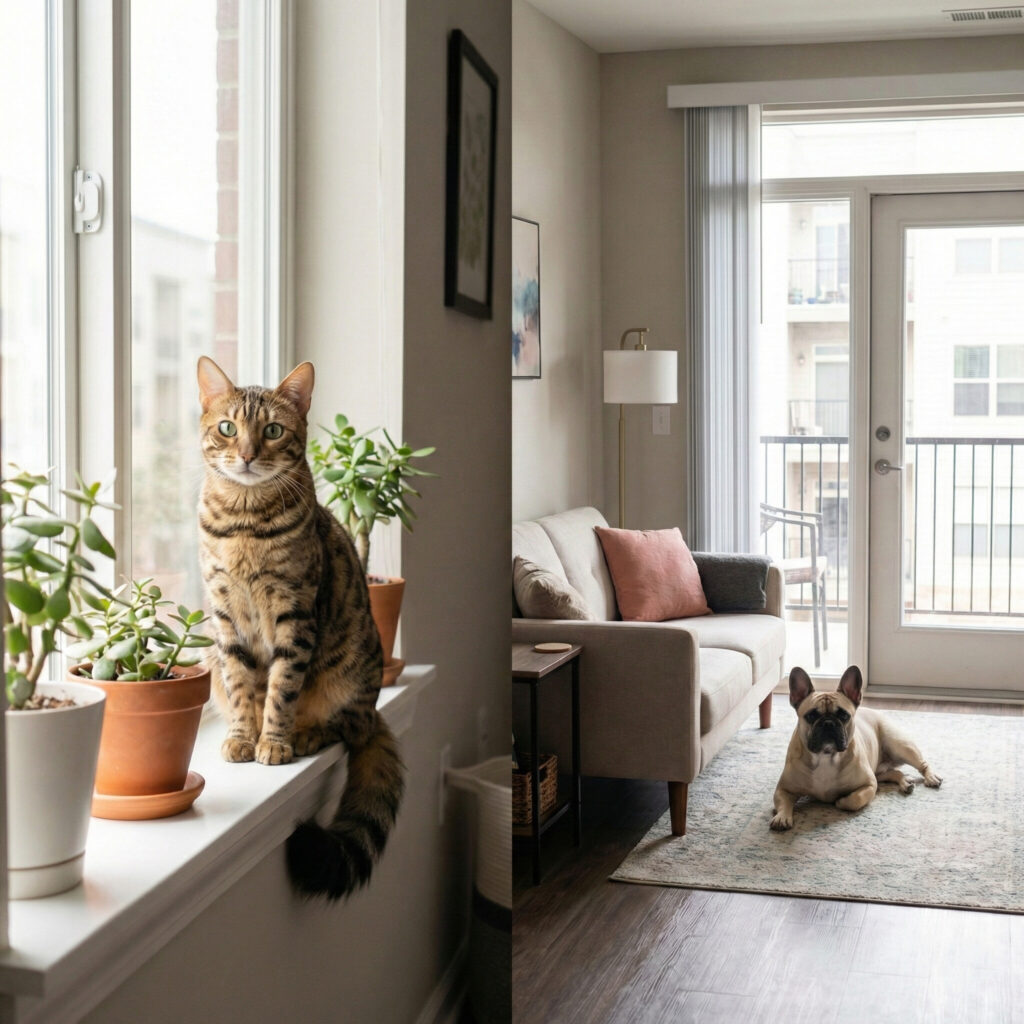
For most apartment dwellers, cats are the better choice. They are quieter, require less space, and are content indoors, making them ideal for high-density living. However, small, low-energy dog breeds can thrive in apartments if you have an active lifestyle and time for daily walks. Ultimately, your schedule and building’s pet policy should dictate your decision.
Summary Table: Cats vs. Dogs for Apartments
| Feature | Cats | Dogs |
| Space Needed | Minimal (vertical space helps) | Varies (needs floor space/outdoor access) |
| Noise Level | Low (quiet meows/purrs) | High (barking can disturb neighbors) |
| Exercise | Self-exercising / Indoor play | Needs daily outdoor walks |
| Potty Needs | Litter box (indoors) | Outdoor walks required |
| Cost (Annual) | $500 – $1,000 | $1,500 – $4,000+ |
| Independence | High (can be left alone longer) | Low (prone to separation anxiety) |
| Apartment Friendly | Excellent | Good (depends on breed) |
Cats vs Dogs: Which Is Better for Apartments
Choosing a pet when you live in an apartment is a big decision. Unlike a house with a fenced yard, an apartment has limited space, close neighbors, and strict rules. The “Cat vs. Dog” debate changes completely when you factor in elevators, balconies, and a lack of grass.
While both make amazing companions, they fit into apartment life very differently. This guide breaks down the pros and cons of each to help you decide which pet fits your small-space lifestyle.
Read Also: Dog vs Cat Curiosity Compared
1. Space Requirements
The biggest constraint in an apartment is square footage.
Cats: The Vertical Explorers
Cats are masters of 3D living. They don’t just use the floor; they use the furniture, shelves, and windowsills. A 500-square-foot studio feels huge to a cat if you add a cat tree or clear off some shelves. They are naturally agile and don’t need open areas to run sprints.
Dogs: The Horizontal Dwellers
Dogs live on the floor. In a small apartment, a large dog can make the room feel crowded. Even small dogs need a “runway” to play fetch or burn off energy. While small breeds like Pugs or Chihuahuas fit well physically, they can still feel cooped up if the apartment is cluttered.
Winner: Cats. They can turn a small room into a jungle gym.
2. Noise Levels and Neighbors
In an apartment, your neighbors are just through the wall. Noise is the number one reason for neighbor complaints and friction with landlords.
Dogs: The Risk of Barking
Dogs communicate by barking. Even “quiet” breeds may bark when they hear someone in the hallway, the elevator dinging, or a delivery person. If you leave for work and your dog has separation anxiety, they might howl for hours. This can lead to eviction notices or fines.
Cats: The Quiet Roommates
Cats are generally silent. A meow is rarely loud enough to penetrate a shared wall. The loudest noise a cat makes is usually the “zoomies” late at night, which sounds like light thumping. This is much less likely to bother a neighbor than a barking dog.
Winner: Cats. They are far less likely to cause noise complaints.
Read Also: Adaptability: Cats vs Dogs in New Environments
3. Potty Training and Convenience
How you handle your pet’s bathroom needs is the biggest daily difference in apartment living.
Dogs: The Outdoor Commute
owning a dog in an apartment means you become an elevator regular. You must take your dog out 3 to 4 times a day, regardless of the weather.
- Rain or Snow: You have to go out.
- Sick Days: You still have to go out.
- High-Rise Living: If you live on the 20th floor, a “quick potty break” can take 20 minutes round-trip.
Cats: The Indoor Litter Box
Cats are incredibly convenient. You set up a litter box, keep it clean, and that’s it. You never have to leave your apartment for them to use the bathroom. For high-rise dwellers or those with mobility issues, this is a massive advantage.
Winner: Cats. The litter box is unbeatable for convenience.
4. Exercise and Energy Levels
Dogs: High Maintenance
A tired dog is a good dog. If you don’t walk your dog enough, they will destroy your apartment out of boredom. High-energy breeds (like Shepherds or Terriers) are often bad matches for apartments because they need hours of activity. You need to be committed to long daily walks and trips to the dog park.
Cats: Low Maintenance
Cats sleep for 12 to 16 hours a day. Their exercise consists of short bursts of play (chasing a laser or feather wand) that can easily happen in a living room. You don’t need a park; you just need a hallway.
Winner: Cats. They don’t require you to leave the house for exercise.
Read Also: Dogs vs Cats: Who Understands Human Emotions Better
5. Cost of Ownership
Rent is already expensive. Which pet is easier on the wallet?
Apartment Pet Fees
Most apartments charge extra for pets.
- Pet Deposit: Often $200–$500 (refundable).
- Pet Fee: Non-refundable $200–$400.
- Pet Rent: Monthly $25–$50.
Dogs generally cost more. They eat more food, require more expensive vet care, and you might need to pay for a dog walker ($20/walk) if you work long hours. Grooming for certain breeds is also a monthly cost.
Cats are cheaper. They eat less, don’t need walkers, and grooming is usually DIY.
Winner: Cats. They save you money on food, supplies, and services.
6. Best Dog Breeds for Apartments
If you are set on a dog, you must choose the right “entity” (breed) for your space. Avoid working breeds (Huskies, Border Collies), which are prone to anxiety in small spaces.
Top Apartment Dogs:
- French Bulldog: Low energy, rarely barks, loves to lounge.
- Cavalier King Charles Spaniel: Gentle, quiet, and very affectionate.
- Pug: Lazy, friendly, and requires minimal exercise.
- Greyhound: Surprisingly great for apartments; they are “45mph couch potatoes” who sleep all day.
- Bichon Frise: Hypoallergenic and cheerful, though they can be yappy if not trained.
Read Also: Cats vs Dogs: Who Learns Faster?
7. Apartment Policies and Restrictions
Before you adopt, read your lease. Apartments often have strict “Pet Policies.”
- Weight Limits: Many buildings ban dogs over 25 or 50 lbs. This rules out Labs, Golden Retrievers, and Shepherds.
- Breed Restrictions: “Aggressive” breeds (often Pit Bulls, Rottweilers, Dobermans) are frequently banned by insurance companies covering the building.
- Cat Rules: Most apartments allow 2 cats. It is rare to find a building that allows dogs but bans cats.
Winner: Cats. They almost never face breed or weight restrictions.
Summary: Who Should You Choose?
Choose a Cat If:
- You work long hours and can’t come home at lunch.
- You value a quiet home and uninterrupted sleep.
- You live on a high floor or hate bad weather.
- You are on a tighter budget.
Choose a Dog If:
- You have an active lifestyle and want a jogging partner.
- You have time for multiple walks a day.
- You are committed to training and socialization.
- You want a pet that forces you to get outside and socialize.
In the battle of Cats vs Dogs for Apartments, the cat is the logical winner for ease and comfort. However, the emotional bond with a dog is unique. If you are willing to put in the work, a dog can be a wonderful apartment companion. Just make sure you pick a breed that fits your square footage.