
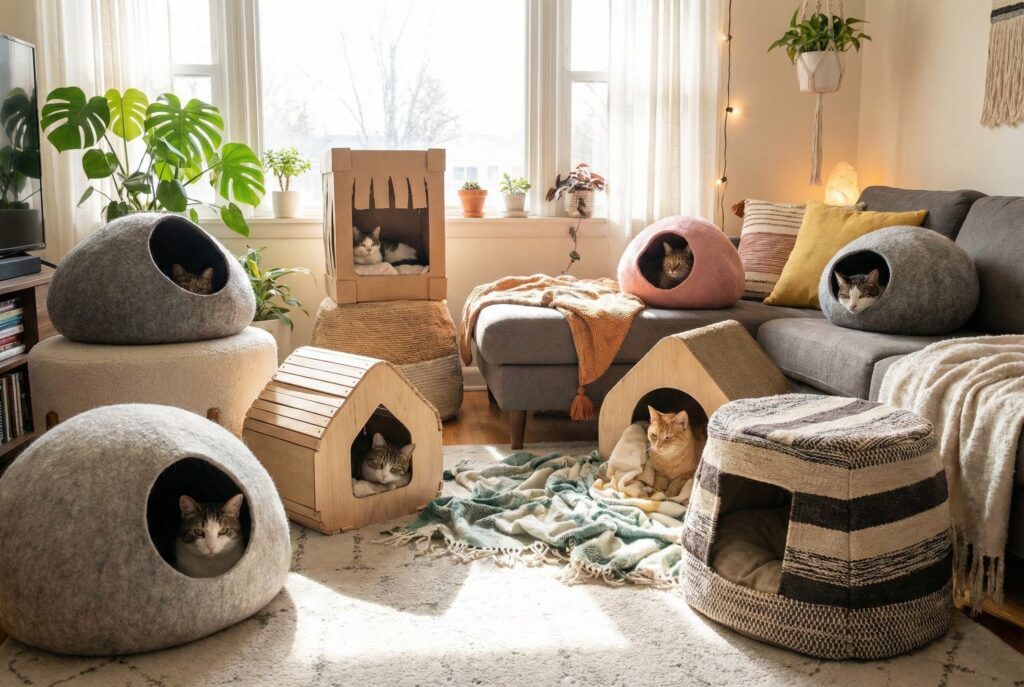
Every cat owner knows the scenario. You buy an expensive, plush pet bed, place it in a sunny spot, and call your cat over. Your cat sniffs it once, walks away, and immediately curls up inside the cardboard shipping box the bed came in.
It is a funny habit, but it tells us something important about what cats actually want. They do not just want a soft square on the floor. They want security. They want a hideout. They want a shack of their own.
Providing your cat with a dedicated enclosed space is more than just a cute addition to your home decor. It is essential for their mental well-being. A “cat shack”, whether it is a simple cardboard creation or a stylish piece of furniture, offers a necessary retreat where they feel safe, warm, and in control of their territory.
This guide will explore over ten different ideas for creating the perfect cozy cat shack. We have divided these into creative Do-It-Yourself (DIY) projects and convenient store-bought solutions. Whether you are handy with tools or prefer to click “add to cart,” you will find the perfect hideaway for your kitty here.
Section 1: DIY Cat Shack Ideas
Building your own cat shack allows for complete customization. You can adjust the size exactly to your cat’s needs and match the style to your home decor. These ideas range from very easy upcycling projects to moderate woodworking tasks.
1. The Classic Cardboard Fortress
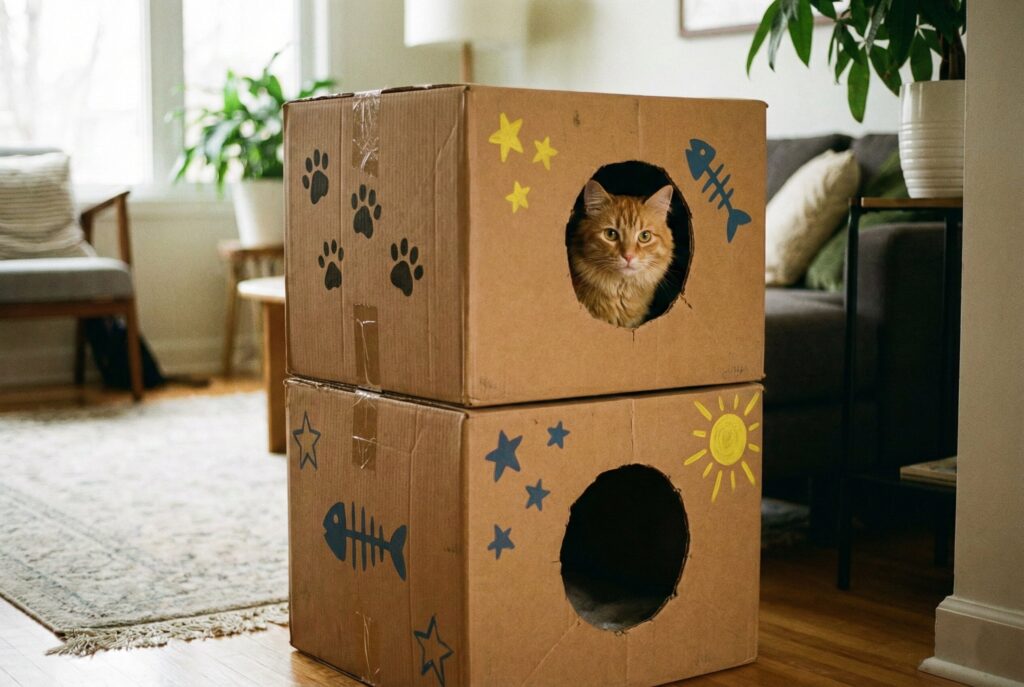
This is the easiest and cheapest entry point into DIY cat shacks. It is also usually a guaranteed hit with cats. Cardboard is an excellent insulator, making it naturally cozy.
To make it better than just a plain box, reinforce the seams with strong tape. Cut a smooth, round entry hole that is just big enough for your cat.
You can customize it by gluing fabric to the outside or stacking multiple boxes to create a two-story “condo” with internal holes for passage between levels. Just add a soft towel inside, and it is ready.
2. The Upcycled T-Shirt Tent
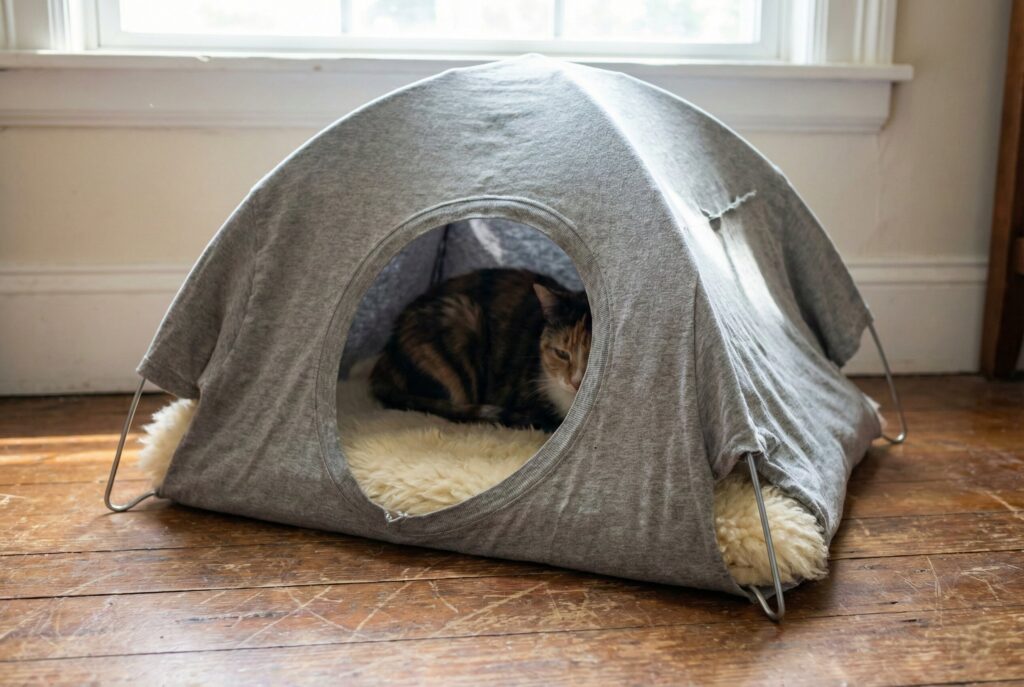
This is a great no-sew project that recycles old clothing. It creates a small, tent-like structure perfect for smaller cats or kittens.
You need a medium-sized cardboard box, an old large t-shirt, and two wire hangers. Cut the flaps off the box. Straighten the wire hangers and arch them over the box diagonally, poking the ends into the corners to create a dome frame. Tape the wires securely at the center top where they cross.
Stretch the t-shirt over the entire frame so the neck hole becomes the entrance at the front. Pull the sleeves and bottom of the shirt tight under the box and secure them with safety pins or knots.
3. The Repurposed Nightstand Cave
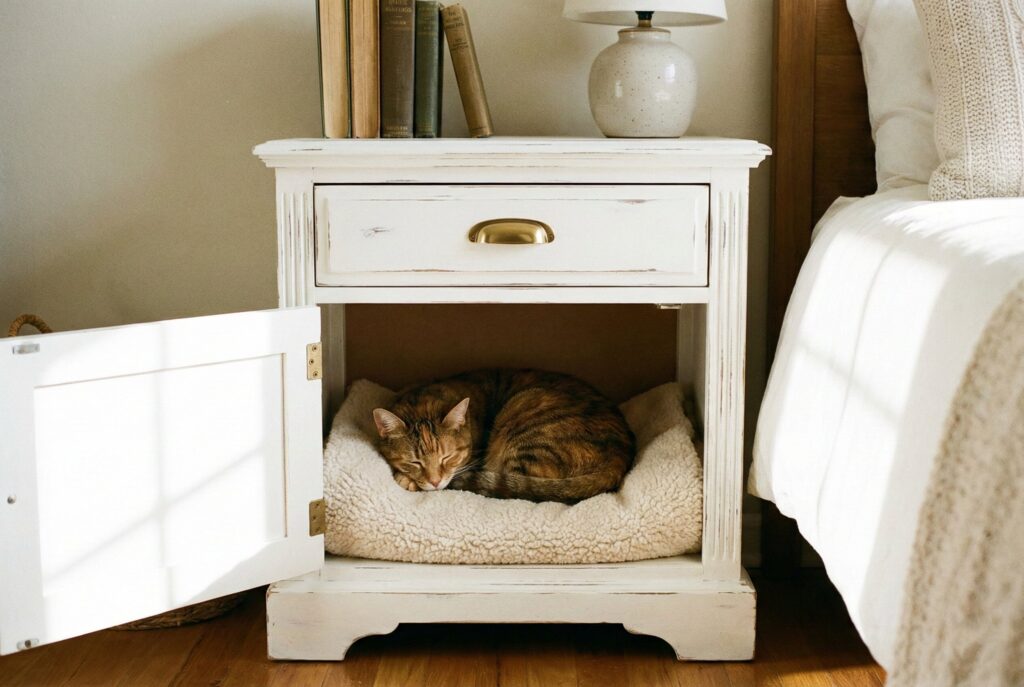
If you have an old wooden nightstand or end table you were planning to donate, turn it into premium cat furniture. This looks much nicer in a living room than cardboard.
This works best with nightstands that have a lower cabinet area. Simply remove the door of the cabinet. Sand down any rough edges around the opening.
Paint or stain the exterior to match your decor. Inside the cabinet space, place thick foam cut to size and cover it with a soft, washable fabric. The solid walls provide excellent sound dampening and security.
4. The Under-Chair Hammock Shack
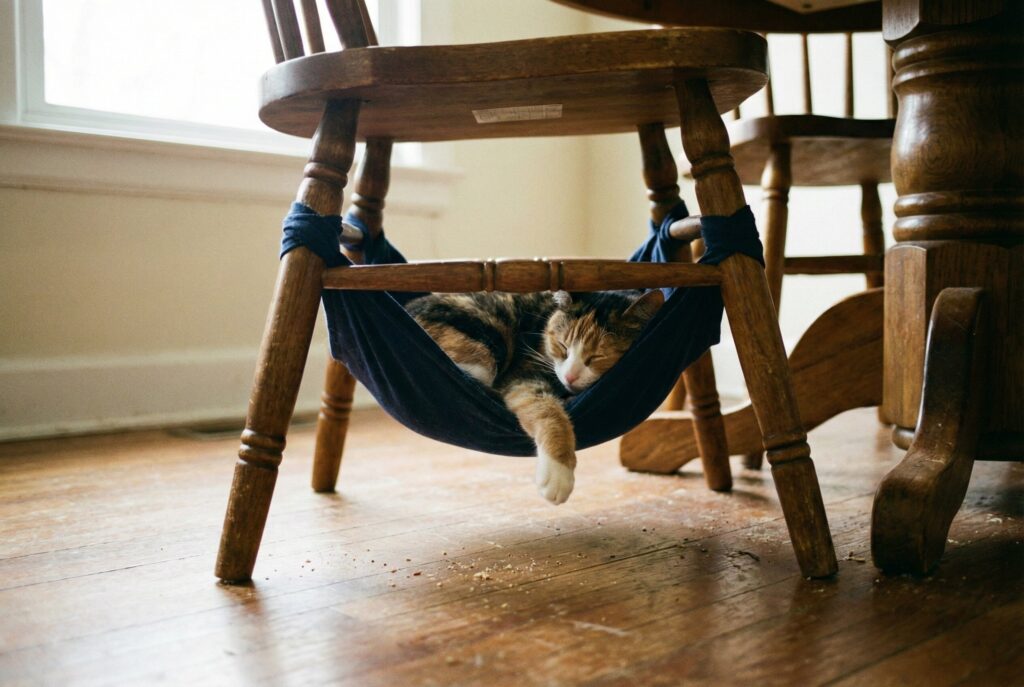
Cats often love sleeping under chairs because it feels protected from above. You can enhance this by adding a hammock element.
This works best with a sturdy, four-legged dining chair or armchair. You need a strong piece of fabric (like canvas or heavy fleece) and sturdy straps or Velcro.
Attach the fabric to the four legs of the chair beneath the seat, creating a sling that hangs a few inches off the floor. This gives the cat a suspended, supportive bed that is hidden away under furniture you already own.
5. The Stacked Wooden Crate Condo
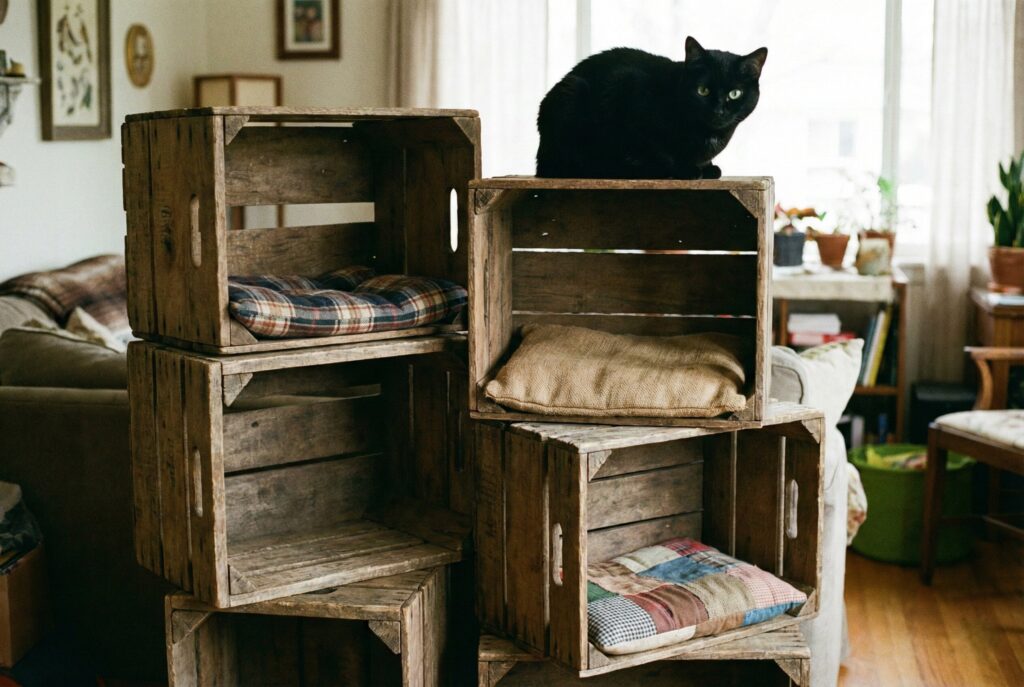
For a rustic or farmhouse look, wooden crates are excellent building blocks. They are sturdy, stackable, and easy to modify.
Buy two or three new wooden crates from a craft store (ensure they are smooth with no splinters). Arrange them in a stack; you can face some openings forward and some sideways to create different “rooms.” Secure them together using wood screws or strong wood glue.
You can cut holes between the crates if you want an internal passage. Line each crate with bedding. The rough wood texture is often appealing to cats for scent marking.
6. The Plastic Tote Outdoor Shelter
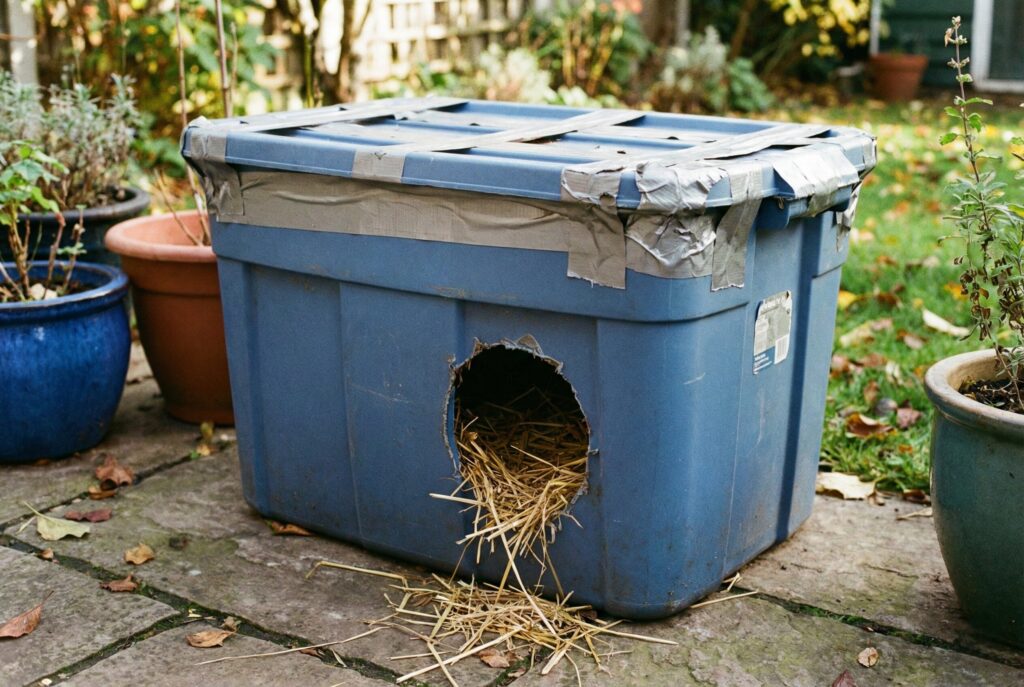
If you are caring for barn cats, community ferals, or just want an outdoor option for your indoor cat on the patio, this is a practical, weatherproof solution.
You need an 18-gallon (or larger) plastic storage tote with a lid. Cut a 6-inch diameter hole in one of the shorter sides of the tote. For insulation, line the floor and walls of the tote with sheets of rigid styrofoam foam board. You can then fill the bottom with straw.
Note: Use straw, not hay or blankets. Blankets hold moisture and freeze outside; straw repels moisture and allows the cat to burrow for warmth. Put the lid back on securely.
Section 2: Store-Bought Cat Shack Options
Sometimes you do not have the time for DIY, or you want something with a specific aesthetic polish that is hard to achieve by hand. The market for cat furniture has exploded in recent years, offering stylish and functional shacks that look great in modern homes.
7. The Geometric Felt Cave
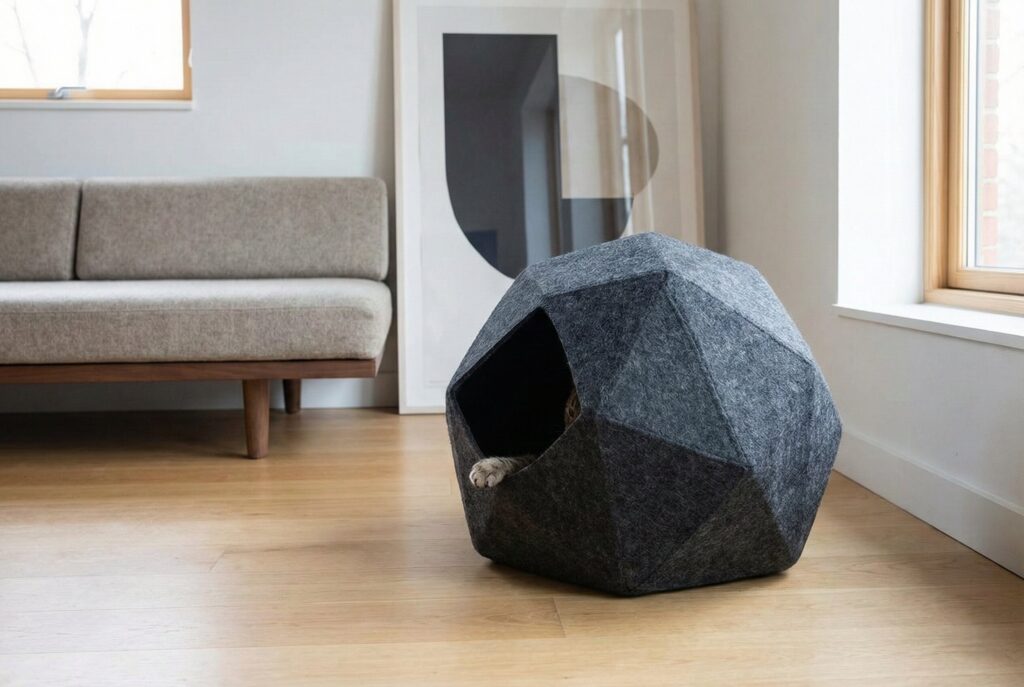
These are very popular in modern minimalist homes. They are usually made from thick, molded felt or wool.
The material is firm enough to hold its shape but soft to the touch. The felt is excellent at trapping body heat, creating a very warm environment. They often come in spherical or angular, geometric shapes.
The main advantage is the aesthetic; they look like sculptural art rather than pet furniture. They are lightweight and easy to move around the house.
8. The Wicker or Rattan Basket Pod
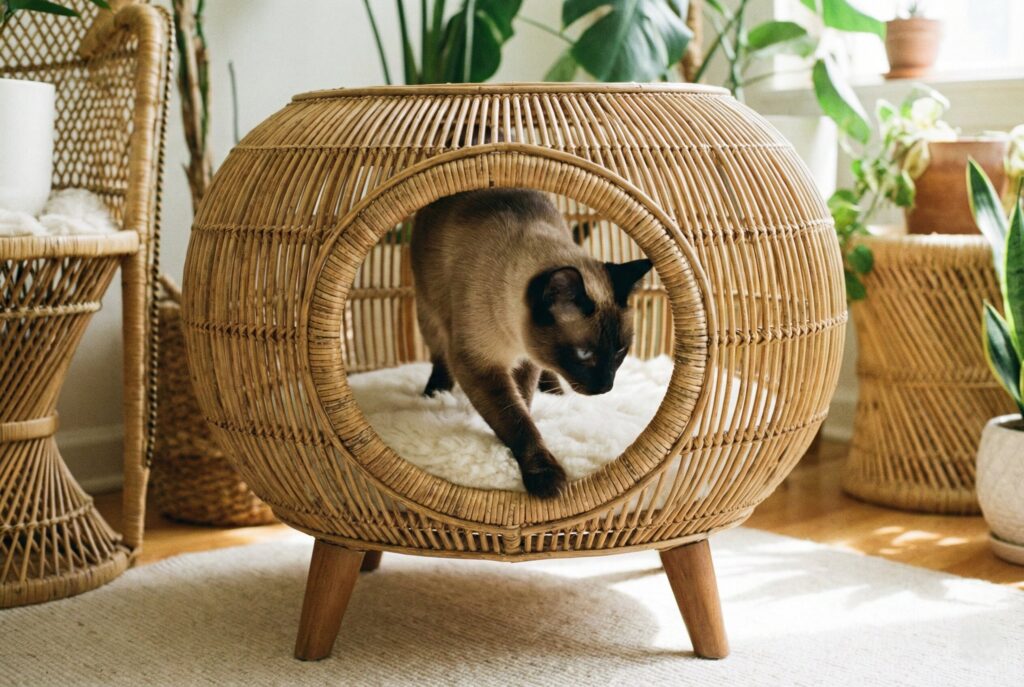
For homes with a bohemian or natural decor style, wicker shacks are ideal. They offer the enclosed feeling cats love but are breathable because of the woven structure.
These shacks often look like enclosed baskets turned on their sides, sometimes raised on small legs. The natural fibers give cats a good surface to rub against.
Because wicker can be hard, these almost always require adding a very plush, thick pillow inside for comfort. They are durable and airy, making them good for warmer climates.
9. The Heated Indoor Shack
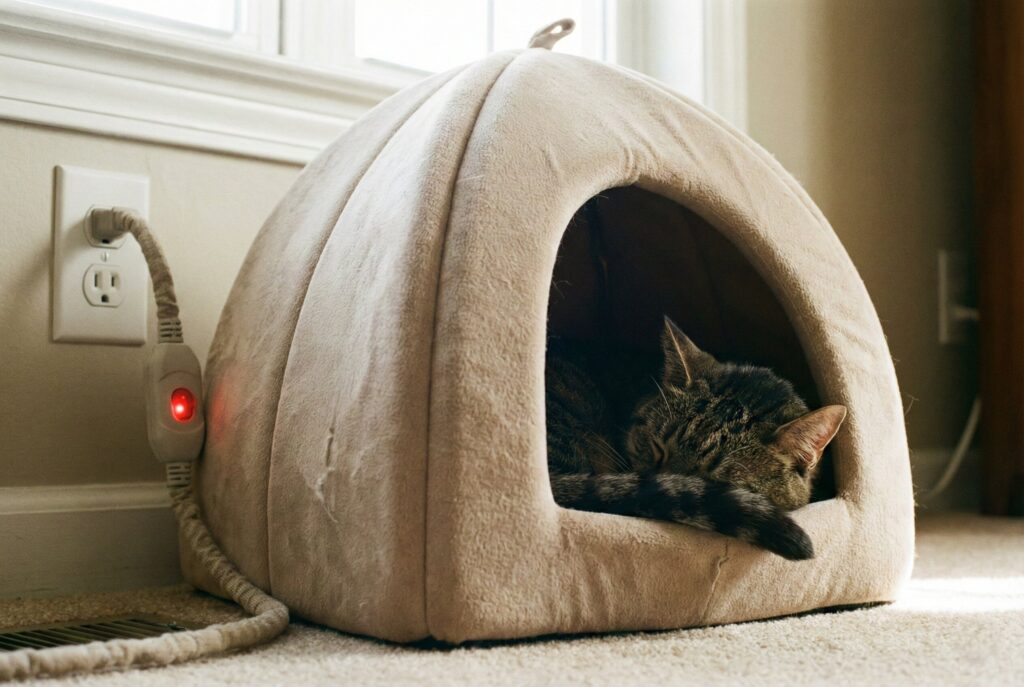
If you have a senior cat, a hairless breed (like a Sphynx), or you live in a very cold climate, a heated shack is a game-changer.
These store-bought houses come with integrated heating elements in the floor base. They are low-wattage and designed specifically for pet safety, usually only heating up when they sense the pressure of the cat’s body.
They maintain a gentle warmth that soothes arthritic joints. They typically look like soft-sided fabric houses or small igloos.
10. The Elevated “Egg” or Sphere Chair
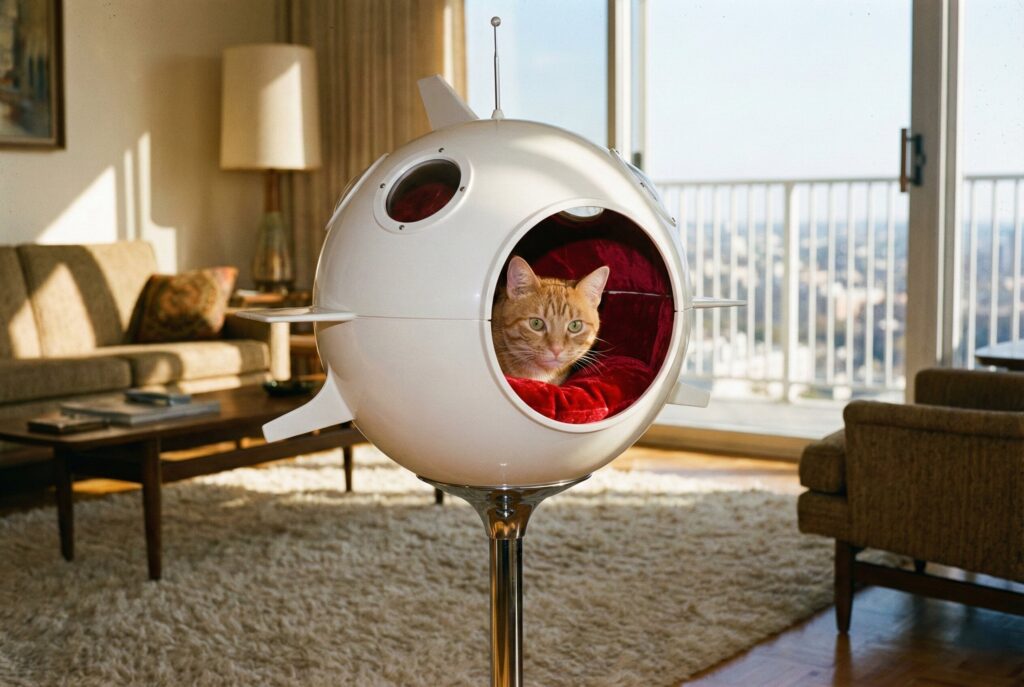
Cats feel safer when they are high up. Elevated shacks combine the security of an enclosure with the advantage of height.
These usually feature a pod, often made of molded plastic, wood, or wicker, mounted on a tall pedestal or tripod legs. It gives the cat a penthouse view of the room.
The curved “egg” shape is naturally comforting to cats as it supports their backs when they curl up. These are often sturdy pieces of furniture meant to be permanent fixtures in a room.
11. The Convertible Cabinet Litter Box/Lounge
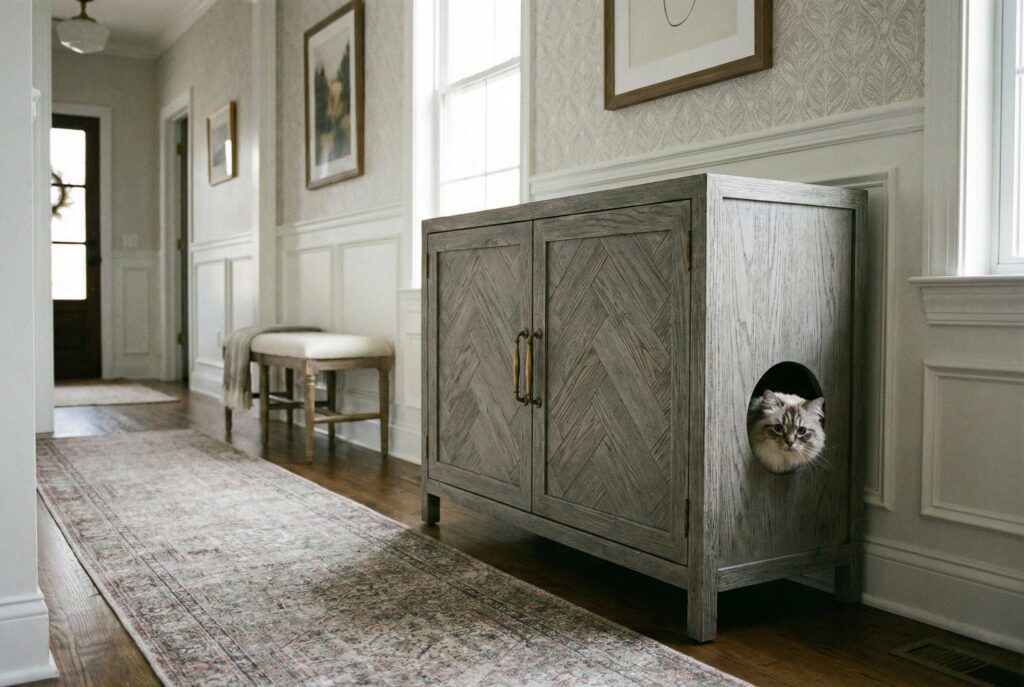
This is a dual-purpose piece of furniture designed to hide the less glamorous parts of cat ownership.
From the outside, these look like standard accent cabinets or sideboards with nice hardware. Inside, they are divided. One side can hold a litter box, hidden from view. The other side can be outfitted with bedding to serve as a private lounge area.
They usually feature a side entrance hole for the cat. This is a great space-saver for apartments, though some cats may not want to sleep next to their bathroom area.
12. The Window Perch Shack
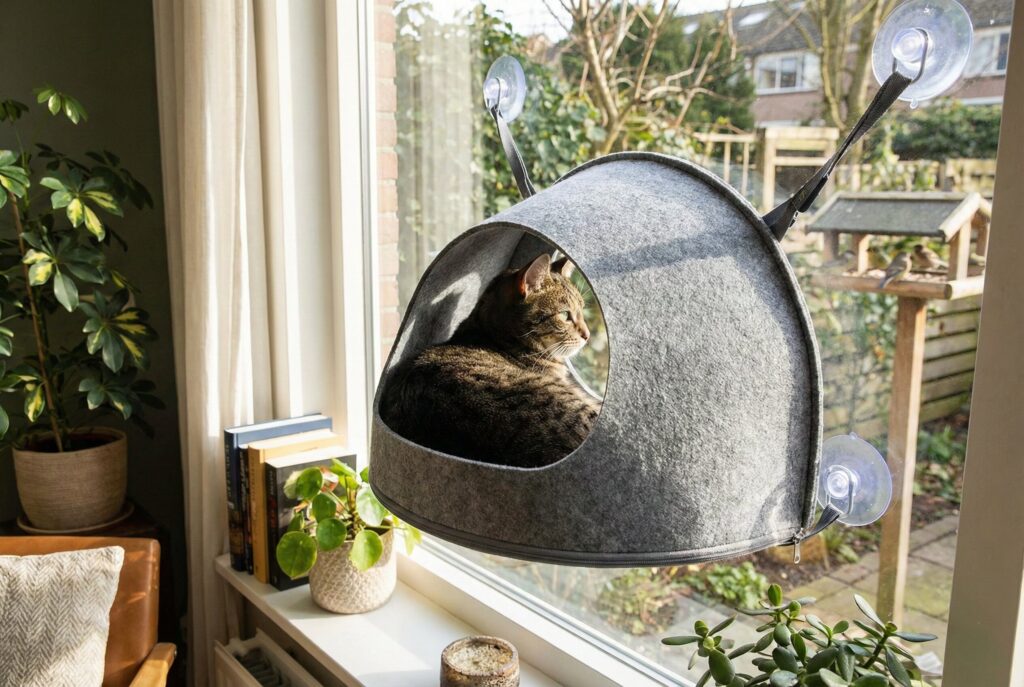
This combines the best of both worlds: a view of the outdoors and a secure hiding spot.
While many window perches are just open platforms, some models come with a hooded cover or a full enclosure. They attach securely to the window glass using powerful suction cups or braces.
This allows your cat to bask in the sun and watch birds while feeling completely protected within their small “room” attached to the glass.
Why Your Cat Needs a Private Shack
Before diving into the ideas, it helps to understand why enclosed spaces are so appealing to felines. This is not just about them being picky. It is rooted in their ancestry.
In the wild, cats are both predators and prey. An enclosed space serves two vital functions. First, it hides them from larger predators, allowing them to rest without being constantly on guard. Second, it provides a concealed vantage point from which they can stalk their own prey.
Even though your indoor house cat does not have to worry about eagles or coyotes, those instincts remain strong. A cozy shack provides:
- Security and Stress Relief: When things get loud or chaotic in the house (vacuums, visitors, thunderstorms), a shack is a safe bunker.
- Temperature Regulation: Cats have a higher resting body temperature than humans and seek out warmth. An enclosed space traps their body heat much better than an open bed.
- Territory Ownership: Having a space that is exclusively “theirs” helps a cat feel confident in their environment.
Key Features of a Great Cat Shack
When choosing or building a shack, keep these essential features in mind to ensure your cat actually uses it.
Size Matters
The shack should be snugly fitted. It needs to be large enough for your cat to stand up and turn around comfortably, but small enough to feel secure. If it is too cavernous, it won’t hold heat or feel safe.
Entrance and Exit
Most cats prefer a single entrance they can guard. It makes them feel secure knowing nothing can sneak up behind them. However, some anxious cats prefer an “escape route,” so a shack with a back door might be better for them.
Location
Where you put the shack is almost as important as the shack itself. Good locations include:
- Elevated spots: Cats love being high up to survey their domain.
- Quiet corners: Away from heavy foot traffic.
- Near heat sources: Near a radiator (safely) or in a sunbeam.
Material and Texture
The interior must be soft and inviting. If you are building a wooden structure, ensure the inside is lined with fleece, sherpa fabric, or an existing soft blanket. The exterior material should suit your home environment, whether that is sturdy wood for outdoors or soft felt for indoors.
Conclusion
Whether you choose to build a rustic fortress out of crates or invest in a sleek, modern felt cave, providing your cat with a shack is an investment in their happiness.
Remember that cats can be cautious about new things. If you bring home a new shack and your cat ignores it, give it time. Try placing a treat, some catnip, or an old t-shirt that smells like you inside to encourage them to investigate.
Ultimately, the best cat shack is the one your cat actually uses. Observe their habits, do they like high spots or low spots? Do they prefer total darkness or a view out? By catering to their natural instincts for security and warmth, you will be giving them the ultimate gift: a safe place to call their own.