
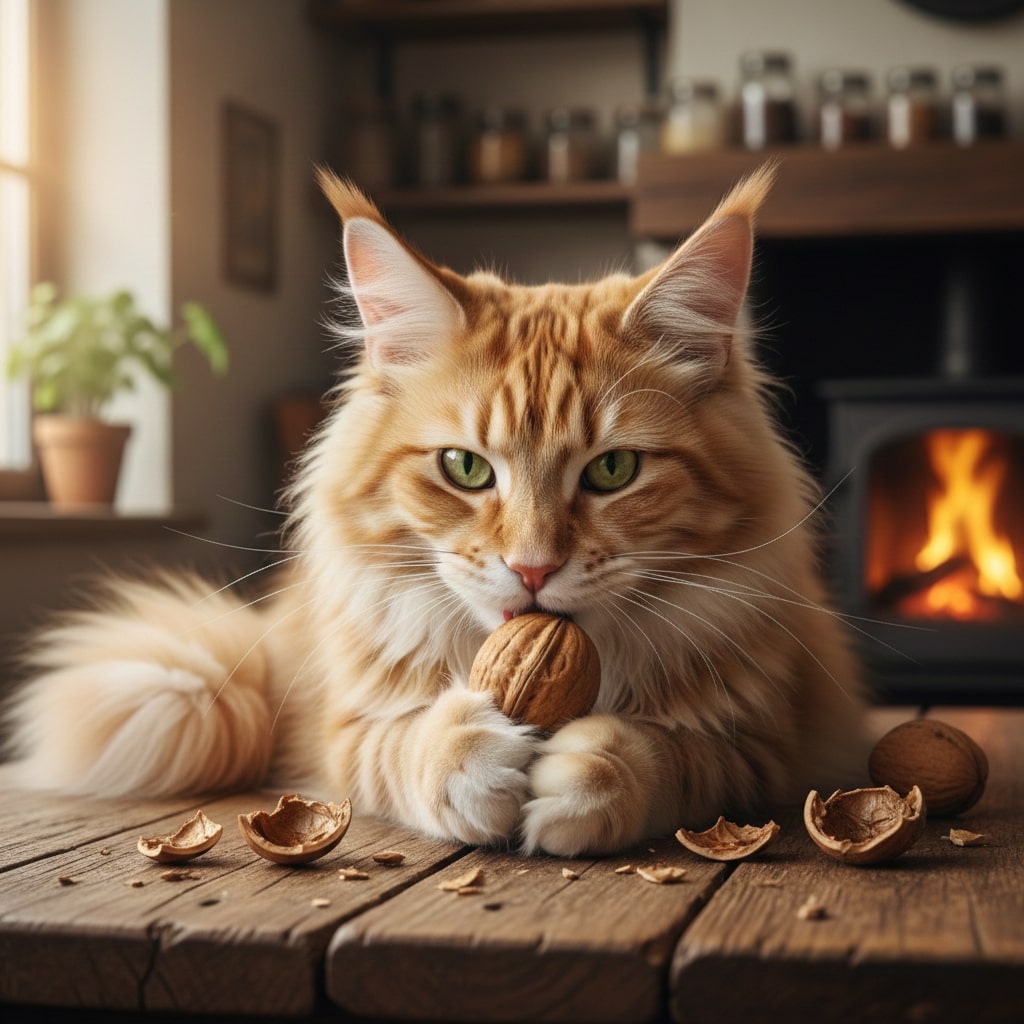
No, cats should not eat walnuts. While a small piece of a standard English walnut is rarely fatal, walnuts are high in fat, which can cause vomiting and diarrhea. More seriously, walnuts can contain mold that produces tremors or seizures, and they pose a significant choking hazard. Black walnuts are specifically toxic to cats and must be avoided completely.
Summary Table: Are Walnuts Safe for Cats?
| Factor | Details |
| Toxic? | English Walnuts: No (but risky). Black Walnuts: Yes. |
| Main Risks | High fat content, choking, mold contamination. |
| Common Symptoms | Vomiting, diarrhea, lethargy, loss of appetite. |
| Emergency? | If Black Walnuts or moldy nuts are eaten, yes. |
| Safe Alternatives | Cooked chicken, freeze-dried liver, commercial cat treats. |
Can Cats Have Walnuts? Detailed Breakdown
The short answer is no. While walnuts are a healthy snack for humans full of omega-3 fatty acids, they offer no nutritional benefit to cats and come with several health risks.
Even though standard English walnuts aren’t chemically poisonous in the way chocolate or onions are, they are still considered dangerous for felines.
Read Also: Can Cats Eat Almonds?
The Problem with High Fat Content
Walnuts are incredibly greasy and fatty. A cat’s digestive system cannot process large amounts of fat efficiently. Eating even a single large walnut can lead to gastrointestinal upset, resulting in:
- Vomiting
- Diarrhea
- Stomach pain
In more severe cases, eating high-fat foods can trigger pancreatitis (inflammation of the pancreas). This is a serious, painful condition that requires veterinary treatment and can become life-threatening if ignored.
The Choking Hazard
Walnuts are hard, dense, and difficult to chew. Cats often swallow food in large chunks. A piece of walnut can easily get lodged in a cat’s windpipe (trachea) or cause an obstruction in their intestines. This is especially risky for kittens or smaller cat breeds.
Mold and Mycotoxins
This is a hidden danger often overlooked by pet owners. Walnuts, especially if they are old or not stored perfectly, are prone to growing mold.
- Tremorgenic Mycotoxins: Fungi on walnuts can produce toxins that cause muscle tremors, seizures, and neurological damage in cats.
- Aflatoxin: This is another toxin produced by mold on nuts that can cause liver damage.
Symptoms of mold poisoning can appear rapidly and constitute a medical emergency.
Read Also: Can Cats Eat Peanuts?
Black Walnuts vs. English Walnuts
It is crucial to know the difference between the two main types of walnuts:
- English Walnuts: These are the common light-brown nuts found in grocery stores. They are not strictly toxic but are unhealthy and risky.
- Black Walnuts: These are a different variety often used in baking. Black walnuts are toxic to cats. They contain a compound called juglone which can cause severe vomiting and vascular issues. You should never let a cat near black walnuts.
Symptoms to Watch For
If your cat manages to steal a walnut off the counter, watch them closely for the next 24 hours. Look for these signs of illness:
- Digestive Issues: Vomiting undigested food or bile, diarrhea, or straining to poop.
- Behavioral Changes: Lethargy (tiredness), hiding, or lack of appetite.
- Abdominal Pain: Reacting negatively when you touch their belly or hunching over.
- Neurological Signs: Tremors, stumbling, or seizures (this suggests mold poisoning).
What to Do If Your Cat Eats a Walnut
- Assess the type: Was it a Black Walnut or a moldy nut? If yes, call your vet immediately.
- Monitor: If it was a small piece of a fresh English walnut, watch your cat for stomach upset.
- Check for Choking: Ensure the cat is breathing normally and not gagging.
- Contact a Professional: If vomiting persists for more than a few hours or you see blood, contact your veterinarian or the ASPCA Animal Poison Control Center.
Read Also: Can Cats Eat Blueberries?
Better Treat Alternatives
If you want to give your cat a snack, skip the nuts and stick to protein-based options that support their dietary needs:
- Cooked Chicken or Turkey: Plain, unseasoned meat is the best treat.
- Freeze-Dried Liver: A favorite for most cats and very healthy.
- Commercial Cat Treats: These are formulated to be safe and digestible.
- Cat Grass: Good for fiber and digestion.