
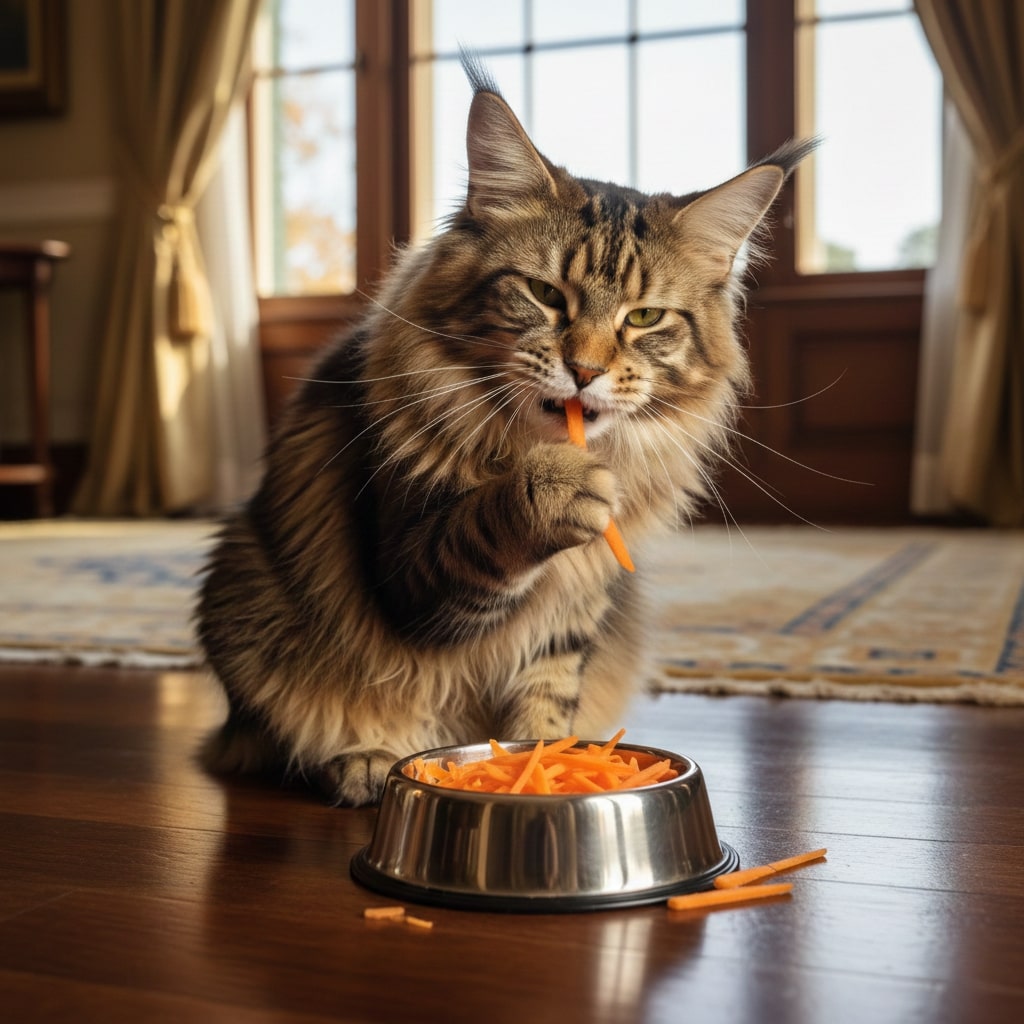
Yes, cats can eat carrots. Carrots are non-toxic and safe for cats when given in moderation. However, cats are obligate carnivores, so they do not require vegetables in their diet. If you feed your cat carrots, ensure they are cooked (steamed or boiled) to make them digestible and cut into small pieces to prevent choking. Avoid raw carrots as they are hard for cats to chew and digest.
Summary Table: Cats and Carrots
| Feature | Details |
| Is it Safe? | Yes, highly safe. |
| Toxic? | No. |
| Best Preparation | Cooked (Steamed, boiled, or baked). No spices. |
| Raw Carrots? | Not recommended (hard to digest, choking hazard). |
| Portion Size | Small bite-sized pieces (approx. 1 tsp). |
| Frequency | Occasional treat (once or twice a week). |
| Key Benefits | Low calorie, good source of fiber and vitamins. |
| Key Risks | Choking (if raw/large), digestive upset (if too much). |
Can Cats Eat Carrots? A Complete Guide
Many cat owners look for healthy human foods to share with their feline friends. While cats are meat-eaters by nature, certain vegetables are safe to offer as an occasional snack.
The simple answer is yes, cats can eat carrots. However, there are specific rules you should follow regarding how to prepare and serve them to ensure your cat stays safe and healthy.
Read Also: Why Cats Don’t “Taste” Spicy Food?
Why Are Carrots Safe for Cats?
Carrots are not toxic to cats. Unlike onions or garlic, which damage a cat’s red blood cells, carrots do not contain any harmful substances.
Because cats are obligate carnivores, their bodies are designed to get nutrients primarily from meat. They do not need vegetables to survive. However, carrots can be a low-calorie alternative to high-fat commercial treats.
Nutritional Benefits of Carrots
While your cat won’t get the same benefits from carrots that humans do (cats digest plants differently), there are still some upsides:
- Low in Calories: If your cat is overweight, carrots are a guilt-free snack.
- Fiber: The fiber in carrots can help with digestion and prevent constipation.
- Vitamin A: Carrots are rich in beta-carotene. While cats are not very efficient at converting beta-carotene into Vitamin A (they prefer getting it from meat), it is still a safe nutrient source.
- Dental Health: Some owners believe the texture of carrots helps clean teeth, though this is mostly true for larger chunks which can be dangerous (see below).
Raw vs. Cooked: Which is Better?
This is the most important rule for feeding carrots to cats.
You should always serve carrots cooked.
- Raw Carrots:
- Choking Hazard: Raw carrots are hard and crunchy. Cats do not chew their food sideways like humans or cows; they tear and swallow. A hard chunk of carrot can easily get stuck in their throat.
- Digestion Issues: A cat’s digestive system is short and not built to break down tough raw plant cellulose. Eating raw carrots may cause an upset stomach or vomiting.
- Cooked Carrots:
- Steaming, baking, or boiling softens the vegetable, making it easy to chew and digest.
How to Prepare Carrots for Your Cat
Follow these steps to prepare a safe snack:
- Wash and Peel: Remove any dirt or pesticides.
- Cut Small: Dice the carrot into very small, bite-sized pieces (about the size of a kibble).
- Cook Thoroughly: Steam or boil the carrots until they are soft enough to squish with a fork.
- No Seasoning: Do not add salt, pepper, butter, garlic, or onions. These can be unhealthy or toxic to cats.
- Cool Down: Make sure the carrots are room temperature before serving so you don’t burn your cat’s mouth.
Can Cats Eat Carrot Tops (Greens)?
Yes, the green leafy tops of the carrot are safe for cats to eat. They contain many of the same nutrients. However, many cats dislike the taste. If you offer them, wash them thoroughly and chop them up to prevent choking.
Can Kittens Eat Carrots?
Technically, yes, but proceed with caution. Kittens have much smaller throats and are more prone to choking. Because they are in a critical growth phase, they need a diet strictly focused on high-quality kitten food (meat protein). It is usually best to skip table scraps until they are older.
Important Precautions
Even though carrots are safe, keep these tips in mind:
- Moderation is Key: Treats (including veggies) should never make up more than 10% of your cat’s daily diet.
- Watch for Sugar: Carrots have natural sugars. If your cat is diabetic, consult your vet before feeding them carrots.
- Monitor Output: If you notice loose stool or vomiting after eating carrots, stop feeding them immediately.
Conclusion
Carrots are a safe, crunchy, and affordable treat for most cats. As long as you cook them to soften the texture and cut them into small pieces, your cat can enjoy them without worry. Just remember that your cat needs meat first and foremost, so keep the carrots as a rare snack.