
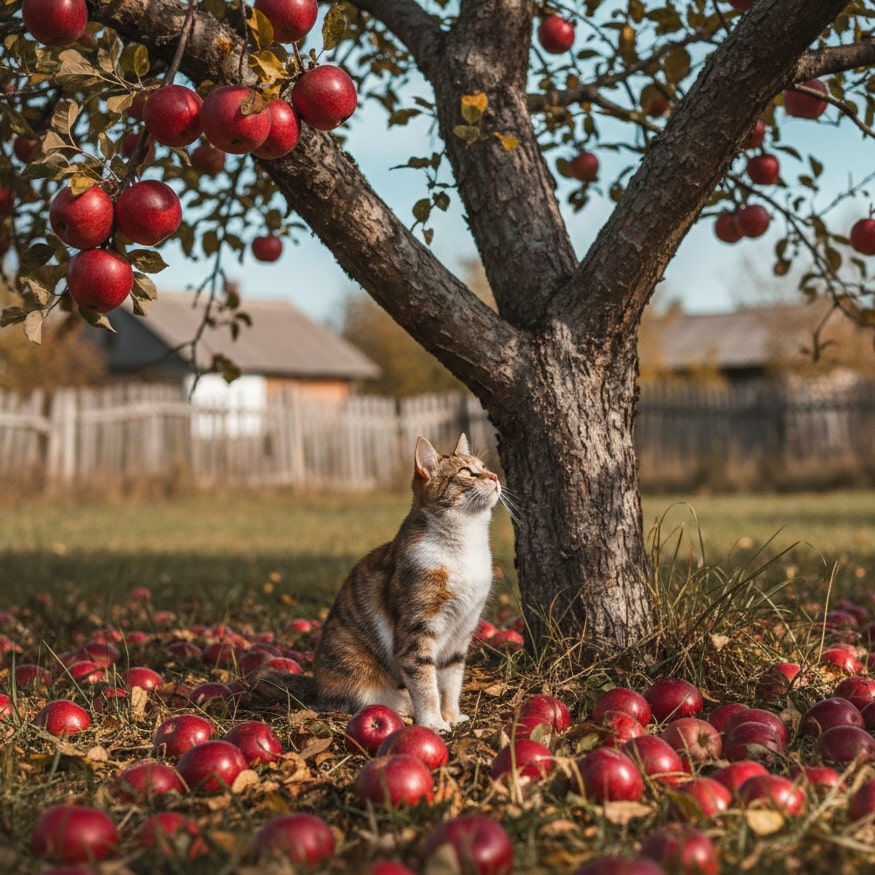
Yes, cats can eat apples, but only in moderation and with proper preparation. The flesh of the apple is safe and provides some fiber and vitamins. However, you must always remove the seeds, stem, and core, as they contain small amounts of cyanide which is toxic to cats. Apples should only be given as an occasional treat, not a meal replacement.
Summary Table: Are Apples Safe for Cats?
| Feature | Details |
| Safety Verdict | Safe (if prepared correctly) |
| Toxic Parts | Seeds, stem, leaves (contain cyanide) |
| Serving Size | 1–2 small cubes (bite-sized) |
| Frequency | Once every few weeks |
| Main Benefit | Fiber, Vitamin C |
| Main Risks | Choking, high sugar, upset stomach |
| Kitten Safe? | generally no (digestive systems are too sensitive) |
Can Cats Have Apples?
As cat owners, we often want to share our snacks with our feline friends. While cats are obligate carnivores (meaning they need meat to survive), many are curious about human foods like fruit.
The short answer is yes, apples are generally safe for cats. However, there are strict rules you need to follow to keep your pet safe from toxins and choking hazards.
The Safety Rules: Flesh vs. Seeds
Not all parts of an apple are safe. It is vital to know the difference between the nutritious parts and the toxic parts.
- The Flesh (Safe): The white, crunchy part of the apple is safe for cats. It contains fiber and vitamins.
- The Skin (Safe but Tough): Apple skin is technically safe, but it can be hard for some cats to chew and digest. It is often better to peel it.
- The Seeds and Core (Toxic): You must never let a cat eat apple seeds. Seeds contain amygdalin, a compound that releases cyanide when chewed and digested. While one seed might not kill a cat, it can cause significant health issues. The core is also a major choking hazard.
Read Also: Can Cats Eat Bananas?
Nutritional Value: Do Cats Need Apples?
While apples are a “superfood” for humans, they don’t offer the same value to cats.
What apples provide:
- Fiber: Good for digestion in small amounts.
- Vitamin C: Supports the immune system.
- Vitamin A: Good for skin and coat health.
The Reality Check:
Cats naturally produce their own Vitamin C, so they don’t need it from fruit. Because they are meat-eaters, their digestive systems are not designed to process large amounts of plant matter. While the nutrients in apples aren’t harmful, your cat gets everything they need from high-quality cat food. Think of apples as “empty calories” for a cat, a fun texture, but not a nutritional necessity.
The Risks of Feeding Apples to Cats
Even though the flesh is safe, there are risks involved if you aren’t careful.
1. High Sugar Content
Apples are high in natural sugar (fructose). Cats do not have the taste receptors for sweetness, so they don’t crave sugar, but their bodies still have to process it.
- Too much sugar can lead to obesity.
- It can contribute to diabetes in older or overweight cats.
- It can cause fermentation in the gut, leading to gas.
2. Digestive Upset
Introducing any new food can upset a cat’s stomach. If a cat eats too much apple, they may experience:
- Vomiting
- Diarrhea
- Loss of appetite
3. Choking Hazard
Cats act quickly when they eat. Large chunks of firm apple can easily get stuck in their throat. Always cut the fruit into tiny pieces.
Read Also: Can Cats Eat Sweet Potatoes?
Can Kittens Eat Apples?
It is best not to feed apples to kittens.
Kittens have very sensitive stomachs that are still developing. They need a strict diet of kitten food to grow properly. Filling their tiny stomachs with fruit can cause diarrhea, leading to dehydration, which is dangerous for young cats.
How to Safely Prepare Apples for Your Cat
If you want to offer your cat a taste, follow this strict preparation method:
- Wash the Apple: Remove any pesticides or wax from the skin.
- Peel It: Removing the skin makes it easier to digest.
- Remove the Core and Seeds: Cut the center out entirely to avoid cyanide toxicity.
- Cut into Tiny Cubes: Cut the flesh into pieces the size of a pea or a small kibble.
- Serve Plain: Do not add sugar, cinnamon, honey, or yogurt.
- Monitor: Watch your cat closely after they eat it to ensure they don’t have an allergic reaction or stomach upset.
Better Alternatives to Apples
If you are looking for a healthy treat, protein is always the best choice for a cat. However, if you want to stick to fruits and veggies, here are some other safe options (in moderation):
- Blueberries: Lower in sugar and high in antioxidants.
- Cooked Pumpkin: Excellent for digestion and fiber.
- Cucumber: Hydrating and crunchy.
- Dried Meat Treats: The healthiest option for a carnivore.
Summary
Cats can eat apples if they are peeled, de-seeded, and cut into tiny pieces. However, because apples are high in sugar and cats are carnivores, they should be treated as a rare snack, not a regular part of their diet.