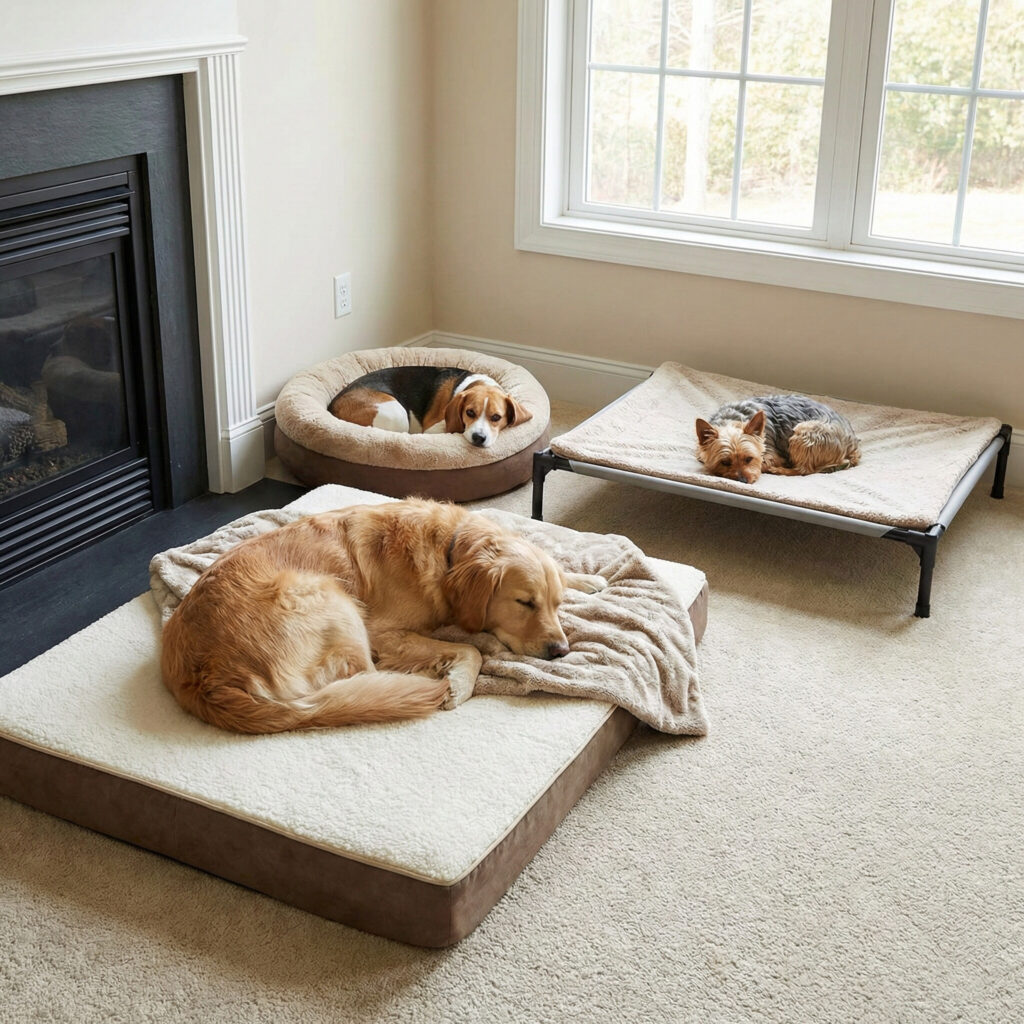
The best sleeping arrangement for a dog depends on their age, health, and personality. For puppies, a crate in the bedroom offers safety and aids potty training. Adult dogs often prefer a specific dog bed (like orthopedic foam for seniors or bolster beds for anxious dogs) placed in a quiet, temperature-controlled corner of the living room or owner’s bedroom. Consistency and comfort are key to a well-rested pet.
Summary Table
| Arrangement | Best For | Key Benefit | Main Drawback |
| Crate | Puppies, anxious dogs | Safety, potty training aid | Can feel isolating if used wrongly |
| Orthopedic Bed | Seniors, large breeds | Joint support, pain relief | More expensive than standard beds |
| Donut/Bolster Bed | Small breeds, curlers | Warmth, security | Harder for some dogs to stretch out |
| Co-Sleeping (In your bed) | Bonded pets, owners | Emotional bonding, warmth | Sleep disruption, hygiene concerns |
| Elevated Cot | Overheating dogs | Airflow, cooling | Less cushioning |
Best Sleeping Arrangements for Dogs
Sleep is vital for your dog’s health. Just like humans, dogs need a comfortable, safe, and quiet place to recharge. Choosing the right sleeping arrangement isn’t just about buying a fluffy pillow. It involves understanding your dog’s biology, their “denning” instinct, and their physical needs.
Whether you have a new puppy or an aging senior with arthritis, the right spot can improve their behavior and extend their lifespan.
Read Also: How to Dog-Proof Your Home
Factors That Determine the Best Spot
Before you pick a spot or buy a bed, you need to analyze your specific dog. There is no “one size fits all” solution.
Age and Life Stage
- Puppies: They need confinement for safety. A crate is usually essential to prevent chewing on dangerous items and to help with housebreaking.
- Adults: They need space to stretch. They usually have better bladder control and can be trusted with more freedom.
- Seniors: Older dogs often suffer from hip dysplasia or arthritis. They need supportive, firm surfaces that are easy to step onto, not climb into.
Health Conditions
- Joint Pain: Dogs with arthritis need high-density memory foam. Avoid soft, lumpy filler that shifts around.
- Anxiety: Nervous dogs often prefer enclosed spaces or beds with raised edges (bolsters) to feel hidden and secure.
- Incontinence: If your dog has bladder issues, you need waterproof liners and easy-to-wash covers.
Temperature Sensitivity
- Double-coated breeds (Huskies, Malamutes): They overheat easily. They often prefer cool tile floors or elevated cooling cots.
- Short-haired breeds (Greyhounds, Chihuahuas): They get cold quickly. They need “cave beds” or self-warming materials that reflect body heat.
The Crate: Safety and Security
Many new owners think crates are “cruel,” but dogs are den animals. In the wild, they seek out small, dark caves to sleep safely. A crate mimics this natural instinct.
Why Choose a Crate?
- Safety: It keeps curious puppies away from electrical cords and toxic foods while you sleep.
- Potty Training: Dogs naturally avoid soiling where they sleep. A properly sized crate encourages them to hold their bladder.
- Travel Readiness: If your dog is used to a crate, vet visits, and road trips are much less stressful.
Crate Setup Tips
- Location: Keep the crate in your bedroom at night so the dog can hear and smell you. This reduces separation anxiety.
- Covering: Drape a light blanket over wire crates to make it feel more like a secluded den.
- Bedding: Place a thin, durable mat inside. Avoid thick bedding for chewers to prevent choking hazards.
Read Also: Dog Lifestyle & Home Care
Designated Dog Beds: Types and Benefits
If your dog is past the chewing phase, a designated dog bed is the standard choice. However, the type of bed matters immensely for their sleep quality.
1. Orthopedic Memory Foam Beds
These are flat, firm mattresses made from high-quality foam. They do not flatten over time.
- Best for: Great Danes, German Shepherds, and senior dogs.
- Why: It distributes weight evenly, relieving pressure on hips and elbows.
2. Bolster and Donut Beds
These beds have raised sides that act as a pillow or a wall.
- Best for: Terriers, French Bulldogs, and anxious dogs.
- Why: The raised rim provides a sense of security and a place to rest their head. It mimics the feeling of leaning against a mother or pack member.
3. Elevated (Cot) Beds
These look like mini trampolines made of mesh fabric and a metal or PVC frame.
- Best for: Outdoor sleepers, heavy shedders, dogs in hot climates.
- Why: Air circulates underneath, keeping the dog cool. They are also very easy to hose off and clean.
Location: Where Should the Bed Go?
Buying the best bed is useless if you put it in the wrong spot. Dogs are social pack animals, but they also are light sleepers who need security.
The Owner’s Bedroom
Most behaviorists recommend having your dog sleep in the same room as you, especially at night.
- Pros: The dog feels part of the pack. You can hear if they are sick or need to go out.
- Cons: Light sleepers might be disturbed by the dog’s snoring or movement.
The Living Room Corner
A quiet corner of the main living area is a good daytime nap spot.
- Pros: It allows the dog to observe the household without being in the way.
- Cons: If the house is noisy, the dog won’t get deep REM sleep.
Avoid High Traffic Areas
Do not place the bed in a hallway or right in front of the kitchen door. Your dog will constantly be waking up to move out of the way, leading to sleep deprivation and irritability.
Read Also: Puppy Body Language Every Owner Should Know
Co-Sleeping: Sharing Your Bed
Letting the dog sleep in the human bed is a controversial topic. Surveys show nearly half of pet owners do it.
Benefits of Co-Sleeping
- Bonding: It releases oxytocin (the love hormone) for both you and the dog.
- Warmth: Dogs act as excellent heaters in winter.
- Security: Many owners feel safer having their dog right next to them.
Downsides of Co-Sleeping
- Sleep Quality: Dogs have different sleep cycles. They wake up frequently, scratch, and reposition. This can ruin your rest.
- Dirt and Allergens: Pollen, dirt, and ticks can transfer from the dog’s fur to your sheets.
- Resource Guarding: Some dominant dogs may begin to “guard” the bed, growling when your partner or another pet tries to get in. If this happens, co-sleeping must stop immediately.
Special Considerations for Senior Dogs
As dogs age, their sleeping needs change drastically. A dog that happily slept on a rug for 10 years may suddenly start pacing at night.
- Nighttime Anxiety: Older dogs can develop cognitive dysfunction (doggie dementia). They may get confused in the dark. A nightlight near their bed can help.
- Incontinence: Seniors may leak urine during deep sleep. Use a waterproof mattress protector on their bed, or place “pee pads” under the bedding.
- Accessibility: Ensure the bed is on the ground floor. Do not make an arthritic dog climb stairs to go to bed.
Cleaning and Hygiene
Dog beds are magnets for flea larvae, dust mites, and dander. Poor hygiene in sleeping arrangements can lead to skin allergies for the dog and respiratory issues for you.
- Wash Weekly: Choose a bed with a removable cover that is machine washable.
- Vacuum: Vacuum the bed itself and the area under it twice a week.
- Sunlight: Occasionally, place the inner mattress in direct sunlight to kill bacteria and remove odors naturally.
Conclusion
The “best” sleeping arrangement balances your dog’s physical needs with your household’s lifestyle. Whether you choose a crate for a puppy, an orthopedic mattress for a senior, or a spot at the foot of your own bed, the goal is the same: a safe, quiet zone where your dog can fully relax.
Pay attention to your dog’s body language. If they choose the hard floor over the expensive bed you bought, they might be too hot. If they whine in their crate, they might be lonely. Adjust the arrangement until everyone in the house gets a good night’s sleep.