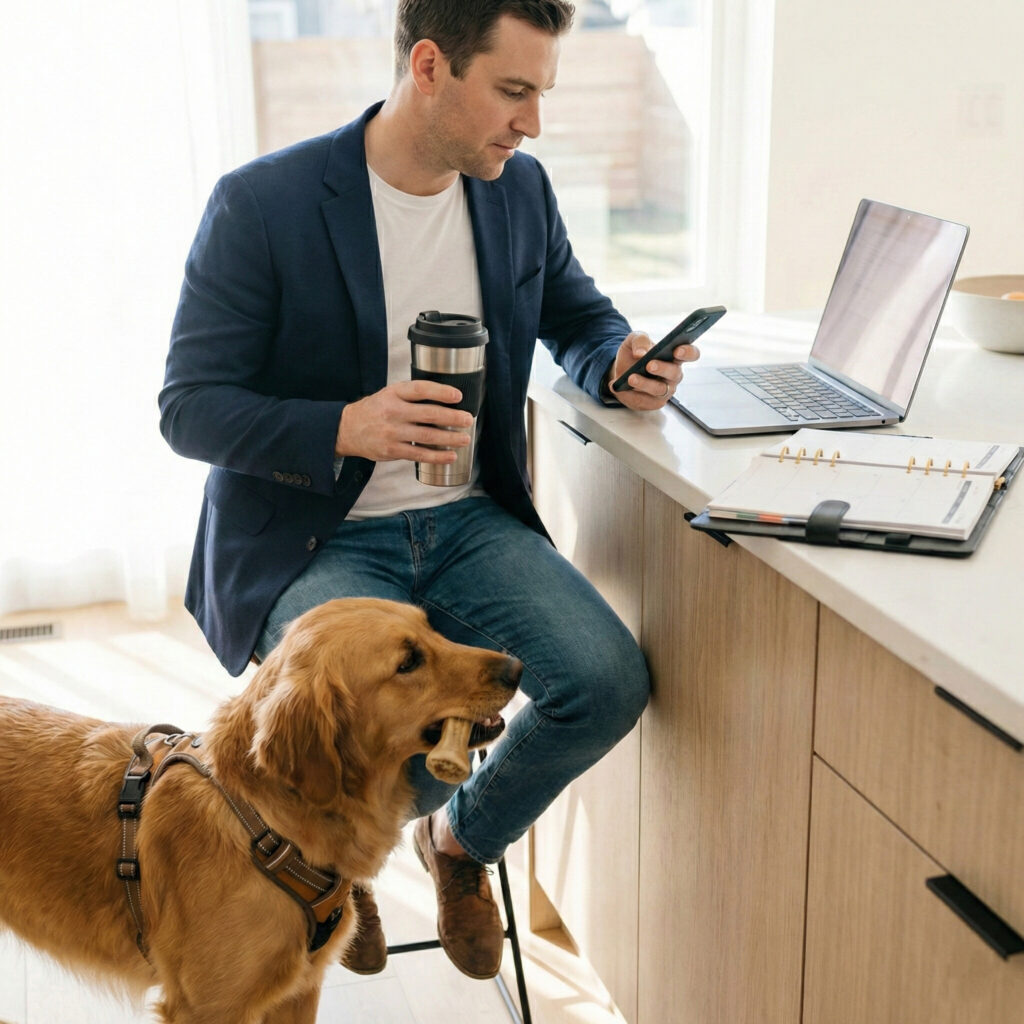
The best routine for a busy dog owner relies on consistency, mental stimulation, and planning. You must wake up earlier for focused morning exercise and use puzzle feeders to burn energy before work. During the workday, utilize dog walkers or safe, interactive toys to break up boredom. Evenings should focus on quality connection time, training, and a final walk before bed to ensure a calm night.
Summary Table
| Time of Day | Key Activity | Goal |
| Early Morning | Quick potty, intensive 20-30 min walk/play, breakfast in a puzzle toy. | Burn off overnight energy and tire the brain before you leave. |
| Mid-Day (While Gone) | Dog walker visit OR interactive toys left behind (e.g., frozen stuffed toy). | Break up the day, allow a potty break, provide mental stimulation. |
| Immediately Post-Work | Immediate potty break followed by greeting and reconnection. | Relief for the dog and positive reunion. |
| Early Evening | The main exercise session (longer walk/fetch) followed by dinner. | Physical exhaustion and nutritional needs. |
| Late Evening | Short training session, cuddling, final potty break before bed. | Mental bonding, relaxation, and ensuring a quiet night. |
The Challenge of the Busy Dog Parent
You love your dog. They are part of your family. But you also have a demanding job, a social life, family obligations, and a need for sleep. The modern world is busy, and fitting the needs of a canine companion into a packed schedule is a major challenge for many people.
The resulting guilt is real. You might feel bad when you leave for work in the morning, as they give you “sad eyes.” You might feel exhausted coming home, knowing your dog has been waiting all day and needs energy right when you have none left.
The good news is that you do not need to be a stay-at-home dog parent to raise a happy, healthy, and well-adjusted dog. Dogs thrive on routine and predictability. By creating a structured schedule that focuses on quality time over quantity of time, you can meet all your dog’s needs without sacrificing your career or sanity.
This guide details how to build that routine.
The Core Pillars of Success
Before looking at the hourly schedule, it is important to understand the principles that make a busy routine work.
1. Consistency is Everything
Dogs are creatures of habit. They feel safe when they know what to expect next. If you feed them at 7:00 AM on Monday, they will expect food at 7:00 AM on Tuesday.
A predictable routine reduces a dog’s anxiety. When they know exactly when their walk, food, and cuddle times are coming, they are less likely to act out during the “down times” when you are busy.
2. Quality vs. Quantity
If you only have 30 minutes with your dog in the morning, make those 30 minutes count. Standing in a park looking at your phone while your dog sniffs one bush is low-quality time.
Spending 20 minutes doing focused fetch, practicing commands, or jogging together is high-quality time. Engaged, focused interaction tires a dog out faster than passive time.
3. Mental Stimulation is Crucial
Physical exercise is obvious, but busy owners often forget mental exercise. A 15-minute training session where a dog has to think and problem-solve can be as tiring as a one-hour walk. A “bored” dog is a destructive dog. Using brain games is the secret weapon for busy owners.
Morning Mayhem: Starting the Day Right
The morning sets the tone for the entire day. If you rush out the door, leaving an energized dog behind, you are setting them up for anxiety and potential destructiveness.
Wake Up Earlier
This is the hardest advice, but it is necessary. You need to wake up 30 to 45 minutes earlier than you currently do. This time is dedicated entirely to your dog so that when you need to get ready for work, they are calm.
Efficient Exercise
In the morning, you need “high-yield” exercise. A slow neighborhood stroll won’t cut it.
- Jogging: If your dog is fit, a steady jog burns energy fast.
- Intense Fetch: Find a safe spot for 15 minutes of constant sprinting.
- Flirt Pole: This is a toy that looks like a fishing pole with a lure at the end. It is incredible for burning energy in a small backyard in just 10 minutes.
Breakfast is a Job
Never feed a healthy dog from a standard bowl if you are busy. Breakfast should be earned. Use a puzzle feeder, a snuffle mat, or hide small piles of kibble around the living room for them to hunt down.
Eating this way takes longer and works their brain, making them sleepy right as you are getting ready to leave.
The Calm Departure
When it is time to leave, make it boring. Do not give sad hugs or high-pitched goodbyes. This increases separation anxiety. Simply put them in their safe area (crate or designated room), give a final safe chew toy, and walk out the door without fanfare.
Read Also: How Dogs Adjust to New Schedules
The Workday Gap: Managing the 9-to-5
This is the longest stretch of time your dog spends alone. Your goal here is to prevent boredom and ensure they have a potty break if needed.
Environment Enrichment
Don’t just leave your dog in an empty room. Make the environment interesting.
- Safe Chew Toys: Leave out hard rubber toys that cannot be destroyed.
- Background Noise: Leaving a radio on a classical station or a TV on a nature channel can provide comforting background noise and drown out outside sounds that might trigger barking.
- A View (Or Not): Some dogs love looking out the window at passersby. For others, this causes high anxiety and barking. Know your dog. If the window riles them up, close the blinds.
The Importance of the Frozen Kong
A hollow, hard rubber toy (like the popular Kong brand) stuffed with food and frozen overnight is essential for busy owners. Fill it with peanut butter, plain yogurt, or wet dog food.
Freezing it makes it last much longer. Give this to your dog right before you leave. Licking is soothing for dogs, and working at the frozen treat will occupy them for the first hour you are gone, transitioning them into nap time.
Hiring Help: Dog Walkers and Daycare
If you work full-time away from home, you really should invest in help, especially if you have a puppy or a high-energy breed.
- Mid-Day Dog Walker: A 30-minute visit from a professional dog walker around lunchtime breaks up the day, allows for a potty break, and provides some human interaction.
- Doggy Daycare: Even just one or two days a week at daycare can make a huge difference. They spend the whole day playing with other dogs and come home completely exhausted.
Evening Wind-Down: Reconnecting and Relaxing
The evening routine is where many busy owners struggle because they are tired. However, this is the most critical time for bonding.
Immediate Action Upon Arrival
When you walk in the door, your dog will be incredibly excited. Do not ignore them, but do not rile them up further. Calmly put down your bags, leash them up, and take them outside immediately for a potty break.
Once the urgent business is taken care of, take five minutes to actively greet them with pets and happy talk.
The Main Event: Exercise
Before you sit on the couch or start making your own dinner, you must tend to the dog’s physical needs. This is usually the longest walk or play session of the day. Aim for at least 45 minutes to an hour, depending on the breed. This is your time to decompress from work while your dog sniffs and explores.
Dinner and Training Combined
Just like breakfast, dinner is an opportunity for training. You can use their kibble as rewards for a quick 10-minute training session practicing sit, stay, or tricks. This is excellent mental bonding.
Cuddle Time and Calmness
After exercise and dinner, the dog should be ready to settle down. This is when you get your reward. Allow the dog to sit with you while you watch TV or read. This passive bonding is very important for their sense of belonging to the “pack.”
Final Potty Break
Right before you go to bed, take them out one last time. This ensures everyone sleeps through the night without accidents or whining.
Weekend Warriors: Catching Up
Weekends are when busy owners can handle the tasks that are too time-consuming during the work week.
The Long Adventure
Plan one “big” activity for the weekend. This could be a long hike on a trail, a trip to the beach, or an extended session at the dog park. This extra-large dose of activity helps lower their overall energy baseline for the upcoming week.
Bulk Preparation
Use Sunday to prepare for the week ahead.
- Meal Prep: Pre-measure their food into containers for the whole week to save seconds in the morning.
- Stuff Toys: Prepare 5 frozen Kongs on Sunday night so you have one ready for every workday morning.
- Grooming: Do the brushing, nail trimming, or bathing on Saturday so you don’t have to worry about it when you are tired after work.
Conclusion
Being a busy professional and a great dog owner is absolutely possible. It does not require you to be superhuman; it requires you to be organized and consistent.
By prioritizing focused morning exercise, utilizing enrichment tools like frozen toys for the hours you are gone, and dedicating your early evening to connection, you can ensure your dog lives a fulfilled life.
Remember that your dog does not need you 24 hours a day; they just need to know they can count on you during the specific times you have dedicated to them. Stick to the routine, and both you and your dog will be happier for it.