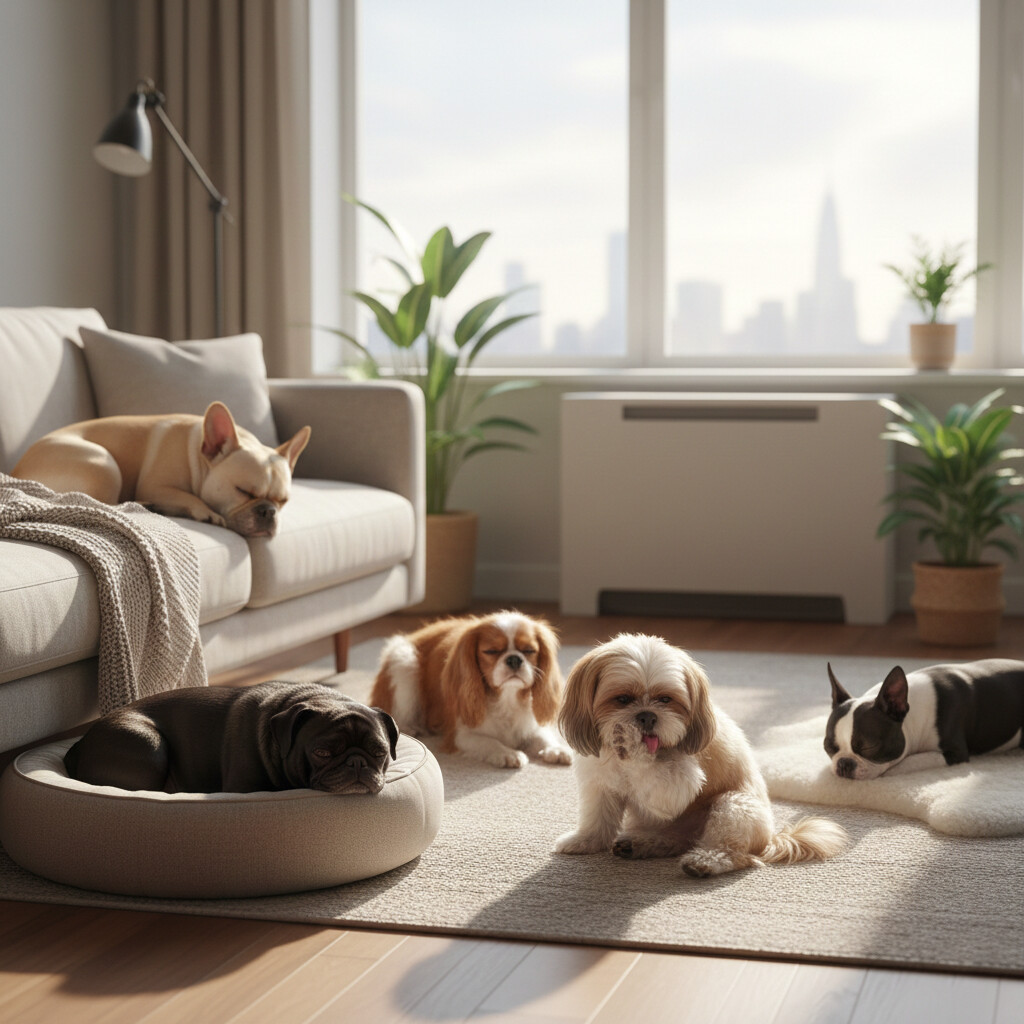
The best dog breeds for apartment living are those that are adaptable, possess moderate to low energy levels, and are generally quiet. Top choices include the French Bulldog, Cavalier King Charles Spaniel, Havanese, Pug, and, surprisingly, the Greyhound. While size is a factor, temperament is far more critical; a lazy large dog is often a better apartment companion than a high-energy small terrier. Hypoallergenic breeds like the Bichon Frise and Poodle are also excellent for smaller, enclosed spaces where allergens can accumulate.
Summary Table: Top Apartment Dog Breeds
| Breed | Size | Energy Level | Barking Tendency | Grooming Needs | Best For |
| French Bulldog | Small | Low | Low | Low | Relaxed owners |
| Cavalier King Charles | Small | Low-Medium | Low | Medium | Cuddlers |
| Greyhound | Large | Low | Low | Low | Quiet spaces |
| Pug | Small | Low | Low-Medium | Low | Families |
| Bichon Frise | Small | Medium | Low | High | Allergy sufferers |
| Havanese | Small | Medium | Low-Medium | High | Companionship |
| Shih Tzu | Small | Low | Low | High | Seniors/Families |
| Bulldog | Medium | Low | Low | Low | Laid-back lifestyle |
Best Dog Breeds for Apartment Living
Living in an apartment or condo doesn’t mean you have to give up the dream of owning a dog. In fact, many breeds thrive in smaller spaces, preferring a cozy sofa to a sprawling backyard. The secret to finding the perfect apartment dog isn’t just looking for the smallest animal possible. It is about matching the dog’s energy level, noise level, and temperament to your lifestyle and building regulations.
A high-energy Jack Russell Terrier might go stir-crazy in a studio, while a massive Great Dane might happily snooze the day away on a rug.
This guide breaks down the best breeds for city living, helping you navigate strict stratas, close neighbors, and limited square footage to find your ultimate urban companion.
Read Also: The Importance of Early Socialization for Puppies
Critical Factors for Apartment Dogs
Before falling in love with a puppy, you must evaluate three specific traits that will make or break your apartment living experience.
Energy Level vs. Size
It is a common misconception that small dogs are automatically better for apartments. Many small breeds are working dogs (terriers) with boundless energy that needs to be burned off. If they don’t get enough stimulation, they become destructive.
Conversely, some large breeds are “low energy” and require only a few short walks a day. Focus on energy first, size second.
The “Bark Factor”
In a house, a barking dog is an annoyance. In an apartment, it is a lease violation. You need a breed that isn’t prone to “nuisance barking.” Watchdogs that bark at every footstep in the hallway will quickly make you unpopular with neighbors.
Separation Anxiety
Apartment dogs often need to be comfortable being left alone without howling. Breeds that are too dependent (known as “Velcro dogs”) may struggle if you work long hours away from home.
Top Small Breeds for Apartment Living
Small dogs are the obvious choice for portability and space-saving. However, these specific breeds are chosen because they are also chill, friendly, and sturdy.
French Bulldog
The Frenchie is currently one of the most popular city dogs for a reason. They are incredibly adaptable and rarely bark. They are built for lounging and don’t require miles of running.
A short walk around the block and some indoor play are usually enough to keep them happy.
- Pros: Very quiet, low exercise needs, easy to groom.
- Cons: Can be expensive to insure due to health issues (respiratory), prone to overheating in apartments without AC.
Cavalier King Charles Spaniel
If you want a dog that is essentially a living stuffed animal, the Cavalier is it. They are affectionate, gentle, and incredibly eager to please. They are small enough to fit in a carrier but sturdy enough for long city walks. They are generally quiet, though they will alert you if someone is at the door.
- Pros: Extremely friendly with neighbors and other dogs, very affectionate.
- Cons: Prone to heart issues, sheds moderately.
Pug
Pugs are the clowns of the dog world. They pack a lot of personality into a compact body. They are notorious homebodies who love nothing more than sleeping on the couch and eating.
They are generally not yappy dogs, though they do make a variety of funny snorting and grunting sounds.
- Pros: Great with kids, requires minimal exercise, very loving.
- Cons: Sheds surprisingly heavily, prone to breathing difficulties, and overheating.
Havanese
The Havanese is the National Dog of Cuba and was bred specifically to be a companion. This means they are happy just being near you.
Unlike some small dogs that can be snappy, Havanese are sturdy and generally tolerant. They are smart and easy to train, which is helpful for hallway etiquette.
- Pros: Playful but not hyper, affectionate, manageable size.
- Cons: Coat requires daily brushing or regular professional grooming, and can suffer from separation anxiety.
Read Also: How Dog Breeds Affect Personality?
The “Gentle Giants”: Large Breeds for Small Spaces
Don’t rule out big dogs. If your building doesn’t have a weight restriction, these breeds are often calmer indoors than their smaller counterparts.
Greyhound
It sounds counterintuitive to put a racing dog in an apartment, but retired Greyhounds are famously known as “40mph Couch Potatoes.” They are sprinters, not marathon runners. After a good zoomie at the dog park, they will sleep for 18 hours. They are quiet, gentle, and clean.
- Pros: Very quiet, very low energy indoors, short coat.
- Cons: Need a safe, enclosed area to run occasionally, cannot be off-leash in unfenced areas due to prey drive.
English Bulldog
Different from the Frenchie, the English Bulldog is heavier and thicker, but just as lazy. They are incredibly mellow and have a low center of gravity that makes them less likely to knock over your apartment furniture than a lanky Labrador. They are content with short strolls.
- Pros: Excellent temperament, very low energy.
- Cons: Prone to serious health issues, can be stubborn, and drool can be an issue in small spaces.
Hypoallergenic Options for Close Quarters
In a small apartment, dander and hair accumulate faster than in a large house. Hypoallergenic breeds are great for keeping the air cleaner and your furniture fur-free.
Bichon Frise
The Bichon is a happy-go-lucky powder puff. They are one of the friendliest breeds you can find. While they have bursts of energy (the famous “Bichon Blitz”), they are generally manageable with daily walks. Their hair grows continuously and doesn’t shed, making them great for allergy sufferers.
- Pros: Hypoallergenic, cheerful, easy to train.
- Cons: Professional grooming is required every 4-6 weeks, can be difficult to potty train.
Poodle (Toy and Miniature)
Poodles are second only to Border Collies in intelligence. In an apartment, this is a huge plus because they learn house rules quickly. They are elegant, athletic, and don’t shed. The Toy and Miniature varieties are perfect for tight spaces.
- Pros: Highly trainable, no shedding, odorless.
- Cons: High mental stimulation needs (they get bored easily), requires regular grooming.
Breeds to Approach with Caution
While every dog is an individual, certain breeds are generally harder to manage in apartments:
- Border Collies/Australian Shepherds: These are high-drive working dogs. Without a job or a yard, they often become destructive and neurotic.
- Beagles/Hounds: They are vocal. That “baying” sound travels through walls and will not amuse your neighbors.
- Siberian Huskies: High energy, high shedding, and very vocal (howling).
Read Also: How to Introduce a Puppy to Other Pets?
Essential Tips for Apartment Living with a Dog
Once you have chosen your breed, success comes down to routine and management.
Mastering the Potty Routine
In a house, you open the back door. In an apartment, you have to put on shoes, grab a leash, wait for the elevator, and walk outside.
- Establish a schedule: Take the puppy out at the exact same times every day.
- Use a cue word: Teach your dog to “go” on command to save time during bad weather.
- Indoor options: For tiny breeds or high-rise living, consider a grass patch on the balcony or high-quality pee pads as a backup.
Enrichment is Key
Since your dog doesn’t have a backyard to patrol, you must provide mental stimulation indoors.
- Puzzle Toys: Feed your dog meals out of puzzle feeders or snuff mats to burn mental energy.
- Scent Work: Hide treats around the apartment and let your dog “hunt” them.
- Window TV: If your dog isn’t reactive to people/dogs outside, set up a perch so they can watch the world go by.
Neighbor Etiquette
- Soundproofing: heavy rugs and curtains help dampen sound if your dog barks or plays loud games.
- Elevator manners: Train your dog to sit in the corner of the elevator and focus on you, ignoring other passengers.
- The “Tired Dog” Rule: A tired dog is a good neighbor. Ensure your dog gets their exercise before you leave for work.
Conclusion
Finding the best dog breed for apartment living is about honesty. Be honest about how much time you can dedicate to exercise and how much noise your building can tolerate. The French Bulldog and Cavalier King Charles Spaniel remain top tier choices for their manageable size and sweet nature. However, don’t overlook the lazy luxury of a Greyhound or the hypoallergenic benefits of a Poodle.
By choosing a breed that matches your energy level and committing to their mental and physical enrichment, you can raise a happy, healthy dog in even the smallest of city studios. Your apartment isn’t a cage; it’s a cozy den for your new best friend.