
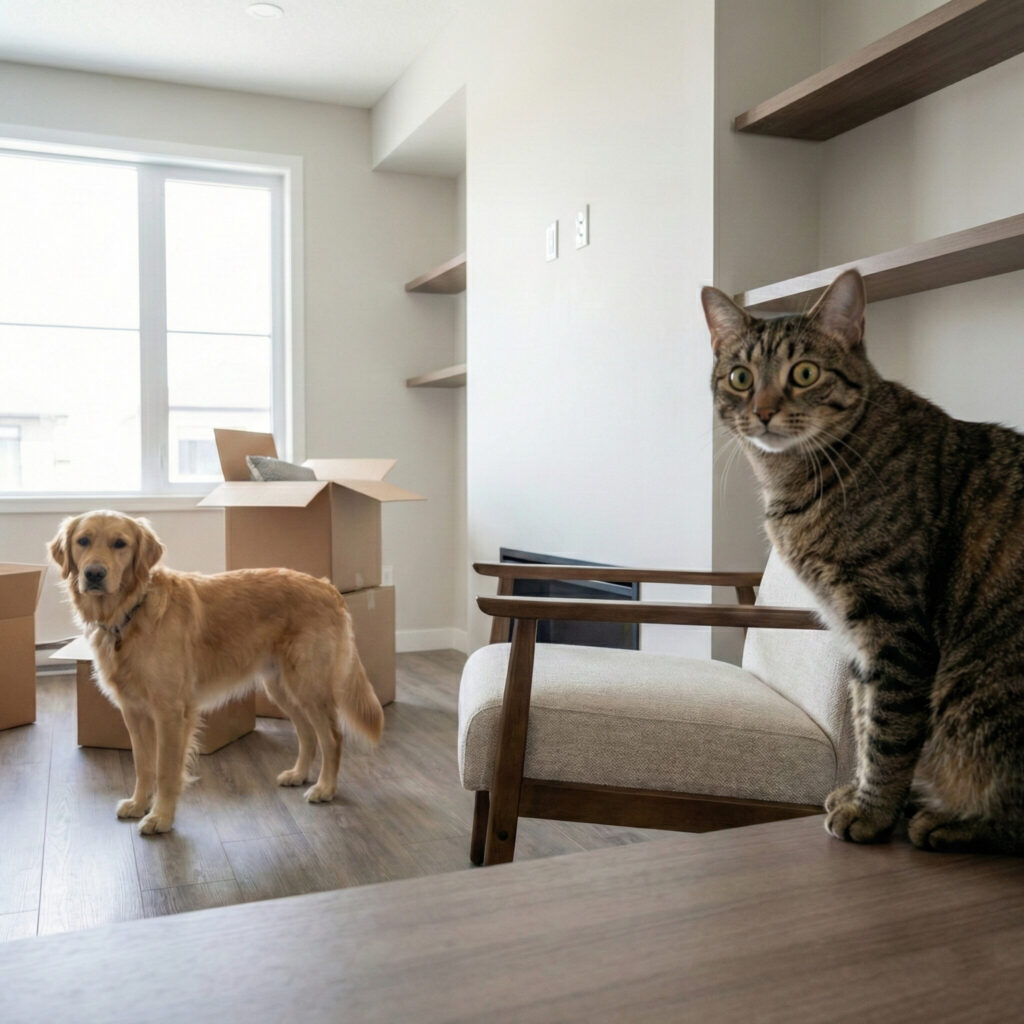
Generally, dogs adapt more quickly to new environments than cats. Dogs are pack animals that look to their human owners as their secure base; if their owner is present and calm, they feel safe regardless of the location. Cats are solitary, territorial animals. Their security is tied to a known physical space they have marked with their scent. Moving to a new environment removes that security system, making the adjustment period longer and more stressful for felines.
Summary Table
| Feature | Dogs (Canine) | Cats (Feline) |
| Primary Security Base | Their social group (owner/family). | Their physical territory (the home). |
| Typical Adjustment Speed | Faster (days to weeks). | Slower (weeks to months). |
| Main Stressor in New Place | Change in routine or owner’s absence. | Loss of familiar scents and hiding spots. |
| Exploration Style | Often eager, follows the owner. | Cautious, prefers to hide first, explores slowly. |
| Best Help Strategy | Maintain routines and provide exercise. | Change in routine or the owner’s absence. |
Adaptability: Cats vs Dogs in New Environments
Moving to a new home is one of the most stressful life events for humans. For our pets, it can be terrifying. They do not understand concepts like mortgages, better school districts, or job relocations. They only know that everything familiar, the smells, the sounds, the layout of their world, has suddenly vanished.
When bringing a pet into a new environment, whether it is moving house, going on vacation, or rehoming an animal from a shelter, their ability to cope varies significantly. The most common question pet owners ask is: Who handles it better, cats or dogs?
While every animal is an individual with a unique personality, their species plays a massive role in how they perceive change. Dogs and cats evolved differently, and these evolutionary paths dictate how they find security. Understanding these differences is the key to helping them settle in.
This guide will explore the biological reasons behind canine versus feline adaptability and provide practical steps to make the transition smoother for both.
Read Also: Dogs vs Cats: Who Understands Human Emotions Better
The Evolutionary Basis: Packs vs. Territories
To understand why dogs and cats react differently to new places, we must look at their ancestors.
Dogs tend to be more adaptable to new locations because they are social pack animals.
Cats tend to be less adaptable to new locations because they are solitary, territorial hunters.
Canine Adaptability
Dogs are masters of reading human emotion. In a new environment, a dog’s primary coping mechanism is looking to its owner for cues. If you are stressed, frantic, and upset during a move, your dog will mirror that anxiety. If you are calm and upbeat, they will likely perceive the new environment as safe.
How Dogs Process a New Environment
When a dog enters a new home, they primarily use their sense of smell to investigate. While they might be nervous, their instinct to stay close to their social group usually overrides the fear of the unknown space.
Dogs thrive on routine. The structure of their day, when they eat, walk, and sleep, provides comfort. A new house disrupts the location, but if you maintain the timing of these events, the dog adjusts faster.
Signs of Stress in Dogs in New Places
Even though they adapt faster, dogs still experience significant stress during moves. You need to watch for these signs:
- Pacing or Panting: Inability to settle down, even when tired.
- Whining or Barking: Increased vocalization triggered by unfamiliar sounds.
- Destructive Behavior: Chewing doors, baseboards, or furniture (often signs of separation anxiety exacerbated by the new location).
- House Soiling: Accidents inside the house, even in fully potty-trained dogs, are often due to anxiety or confusion about where the new “outside” door is.
- “Velcro” Behavior: Refusing to leave your side, following you from room to room constantly.
Read Also: Cats vs Dogs: Who Learns Faster?
Feline Adaptability
Cats are often unfairly labeled as aloof or difficult during moves. In reality, they are experiencing a profound loss of security.
A cat’s sense of security is tied to scent. Cats have scent glands on their cheeks, paws, and flanks. They rub against doorways, furniture, and your legs to create a comforting “scent map” that says, “This place is mine; it is safe.”
When you move to a new house, that map is gone. The new house smells alien, perhaps even smelling of previous pets, which is highly threatening to a cat.
How Cats Process a New Environment
Unlike dogs, who may want to explore immediately, a cat’s instinct in a new place is to hide. This is a survival mechanism. In the wild, an unfamiliar open space makes them vulnerable to predators. Hiding allows them to observe the new environment from a position of safety until they feel brave enough to venture out.
Forcing a cat to explore before they are ready is counterproductive and will increase their fear.
Read Also: Dog vs Cat Training: Why One Is Easier
Signs of Stress in Cats in New Places
Cats are subtle creatures, and their stress signs can be easily missed or misinterpreted as bad behavior.
- Hiding: Spending all day under a bed, inside a closet, or behind a sofa.
- Refusing to Eat: Stress can shut down a cat’s appetite. This is dangerous; if a cat doesn’t eat for more than 24-48 hours, they risk fatal liver issues (hepatic lipidosis).
- Litter Box Issues: Urinating or defecating outside the box. This is often an attempt to spread their own scent faster to feel secure, or a fear of the litter box location.
- Over-grooming: Licking themselves until bald spots appear, a self-soothing behavior.
- Aggression: Hissing or swatting at owners or other pets due to fear.
Head-to-Head Comparison Factors
When directly comparing the two species, several factors define how smoothly the transition goes.
1. Speed of Adjustment
- Winner: Dogs. Most dogs, provided their family is present, will settle into a new routine within a few days to a couple of weeks.
- Cats: Cats usually take several weeks, sometimes months, to fully feel confident in a new territory.
2. Impact of Past Experience
If an animal was poorly socialized or lived in an unstable environment previously (like a shelter animal), adjustment is harder for both species. However, dogs with a trauma history may cling harder to their new owner, while cats with a trauma history will hide deeper and longer.
3. Age Factors
- Puppies and Kittens: Young animals of both species adapt faster than adults. The world is new anyway, so a new house is just another adventure.
- Senior Pets: Older dogs and cats struggle more. Vision or hearing loss makes navigation difficult, and cognitive decline can increase confusion in new surroundings.
Helping a Dog Adapt
Help your canine companion adjust by focusing on leadership, routine, and positive association.
- Keep the Routine: Feed and walk them at the exact same times you did in the old house. Routine equals safety.
- Establish the Potty Spot Immediately: The very first thing you should do upon arrival is take the dog on leash to their new designated bathroom area. Praise them heavily when they go.
- Set Up a Safe Zone: Before unpacking everything, set up their bed, water bowl, and favorite toys in a central living area where you will be spending time.
- Burn Off Anxious Energy: A tired dog is a calmer dog. Ensure they get plenty of physical exercise (long walks) and mental stimulation (puzzle toys) during the transition days.
- Do Not Coddle Fear: If your dog is acting nervous, stay calm and confident. If you excessively comfort them while they are showing fear behaviors, you may inadvertently validate that there is something to be afraid of. Act like everything is normal.
Read Also: How Cats and Dogs Learn From Humans
Helping a Cat Adapt
Helping a cat requires patience and respect for their need for territorial control. The “sink or swim” method of just letting them loose in a new house rarely works well.
- The Sanctuary Room (Crucial Step): Do not give your cat a run of the entire new house immediately. Upon arrival, place them in one quiet room (like a spare bedroom or bathroom) with the door closed.
- Equip the Sanctuary: This room must contain their litter box, food, water, bedding, and hiding spots (like a cardboard box with a blanket).
- Scent Swapping: Bring items that smell like the rest of the house into their room, and take their bedding out into the rest of the house. This helps spread scents passively.
- Use Synthetic Pheromones: Products like Feliway diffusers mimic the calming facial pheromones cats use to mark territory. Plug these into the new house a day before arriving if possible.
- Slow Introduction: Only open the door to the sanctuary room once the cat is eating, using the litter box normally, and approaching you for affection. Let them explore the rest of the house at their own pace, always keeping the sanctuary room door open as a retreat.
Conclusion
When considering adaptability in new environments, the dog wins the sprint, but the cat finishes the marathon in its own time.
Dogs rely on their social bond with you to feel safe, making them generally quicker to adjust as long as you are there. Cats rely on their physical knowledge of the environment to feel safe, a process that cannot be rushed.
The most important takeaway for any pet owner is to manage expectations based on the species. Do not expect your cat to act like a dog, and do not assume your dog is fine just because they aren’t hiding under the bed.
By understanding the biological needs of your pet, social reassurance for the dog, and territorial security for the cat, you can turn a stressful move into a successful transition to a new forever home.